

Restore Thinning Hairline Before You Lose Your Head
Is It Too Late to Restore Your Thinning Hairline?
Restoring a thinning hairline is possible for most people — especially when you act early. Here are the most effective ways to do it:
- Scalp Micropigmentation (SMP) — A non-surgical cosmetic solution that recreates the look of a fuller hairline immediately, with no recovery time.
- FDA-approved medications — Minoxidil and finasteride can slow hair loss and stimulate regrowth with consistent use.
- PRP therapy — Platelet-rich plasma injections stimulate dormant follicles and can increase hair density.
- Lifestyle changes — Improving diet, reducing stress, and switching to gentle hair care habits can support and preserve existing hair.
- Hair transplant surgery — A surgical option (FUE or FUT) that permanently relocates follicles to thinning areas.
Noticing your hairline pulling back or your temples getting thinner is unsettling. For many people, it quietly chips away at confidence — one glance in the mirror at a time.
You're not alone. Up to 50% of men will notice a receding hairline by age 50. Women aren't immune either — they commonly experience a widening part or a broader-looking forehead as hairline thinning sets in.
The good news? Around 73% of alopecia cases are nonscarring, which means hair loss in many cases can be slowed, managed, or visually corrected.
The catch is timing. Hair follicles that have been miniaturized for too long can eventually stop producing hair altogether. That's why what you do now matters more than what you do later.
This guide walks you through everything — from what's actually causing your hairline to thin, to the treatments that work, to what you can realistically expect from each one.
Understanding Why Your Hairline is Thinning
To restore thinning hairline issues effectively, we first have to look under the hood-or in this case, under the scalp. Hair loss isn't usually a "one-size-fits-all" problem; it's a complex interplay of biology, habits, and time.
The Genetic Factor and DHT
If you've ever looked at family photos and seen a recurring theme of high foreheads, you're likely looking at the work of genetics. Genetics is responsible for a staggering 95% of male and female pattern hair loss cases. This condition, medically known as androgenetic alopecia, is driven by a hormone called Dihydrotestosterone (DHT).
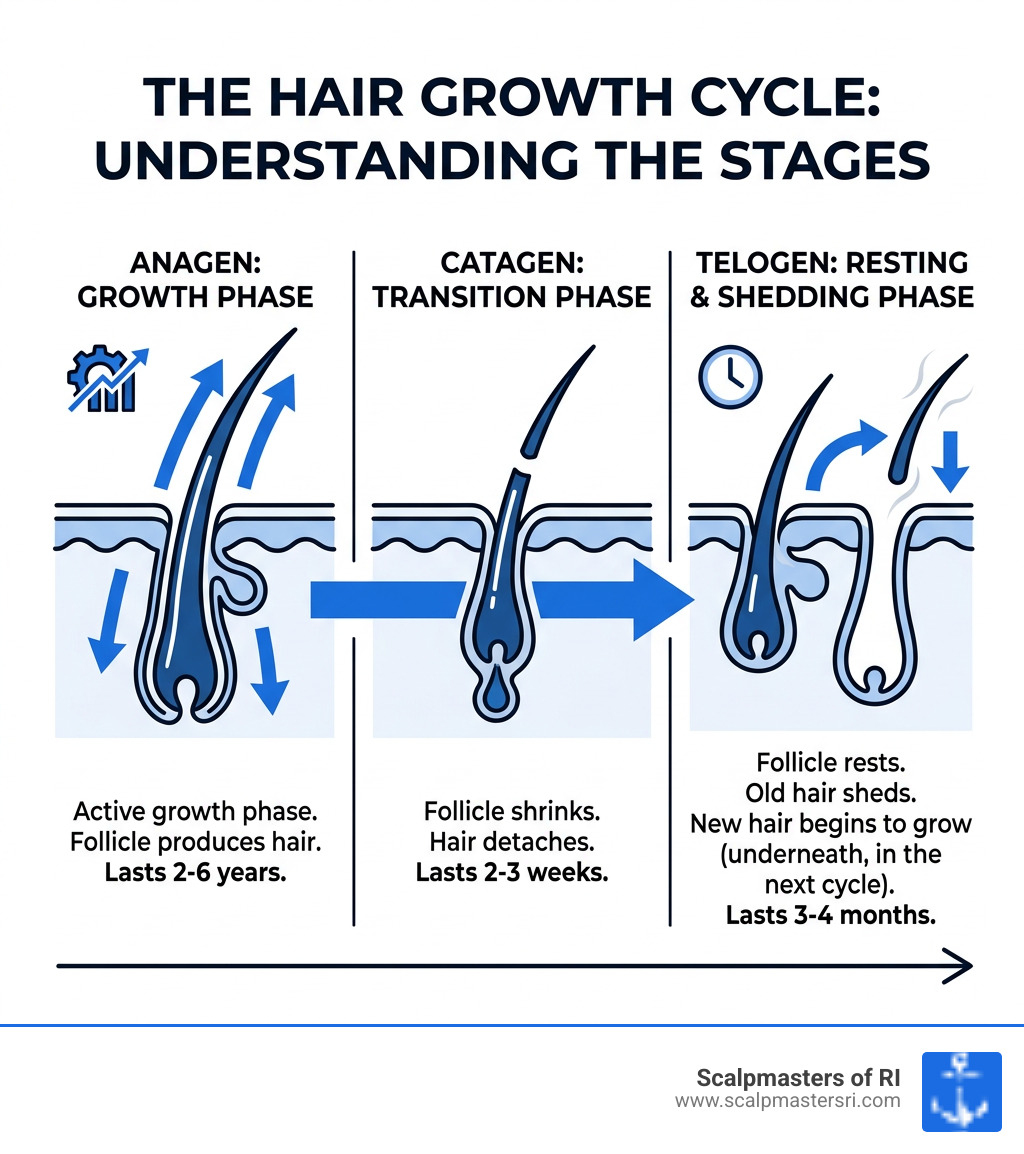
In people with a genetic predisposition, hair follicles at the temples and hairline are hypersensitive to DHT. When DHT binds to these follicles, it causes them to shrink-a process called miniaturization. Instead of growing thick, healthy strands, the follicle begins producing thinner, shorter, and more brittle hair. Eventually, the follicle may stop producing hair altogether.
Traction Alopecia and Physical Stress
It's not always about hormones. Sometimes, we are our own worst enemies when it comes to our hairlines. Traction alopecia is hair loss caused by repeated pulling or tension on the hair. This is common if you frequently wear tight ponytails, buns, or braids. Over time, this constant tension damages the follicle and can lead to permanent scarring if not addressed.
The Environmental Impact
Our environment also plays a role. Excessive heat from styling tools like flat irons and blow dryers can weaken the hair shaft, making it more prone to breakage right at the root. Furthermore, scalp inflammation caused by poor hygiene or harsh chemical treatments can disrupt the delicate ecosystem your hair needs to thrive. Understanding these Receding Hairline Solutions starts with identifying which of these factors is at play in your life.
Identifying Early Signs of Recession
The best time to restore thinning hairline concerns was yesterday; the second-best time is today. But how do you know if you're actually losing hair or just being paranoid?
- Temple Thinning: This is often the first red flag. You might notice the hair around your temples looks "wispy" or that you can see more of your scalp when your hair is pulled back.
- The "M" Shape: In men, the hairline typically recedes in a distinct "M" pattern as the temples move backward faster than the center.
- Excessive Shedding: While it's normal to lose 50-100 hairs a day, seeing a significant increase on your pillow or in the shower drain can indicate that your hair is entering the "telogen" (resting) phase prematurely.
- A Change in Texture: If your once-thick hair now feels like peach fuzz at the front, miniaturization is likely occurring.
For more detailed insights, check out our Blog: Receding Hairline in Men: Expert Insights and Proven Solutions.
The Role of Hormones and Environment
Beyond DHT, other hormones can wreak havoc. Cortisol, known as the "stress hormone," can push hair follicles into a resting state, leading to a condition called telogen effluvium. This often manifests as sudden thinning rather than a gradual recession.
Your lifestyle and diet also serve as the foundation for hair health. If your body isn't getting the nutrients it needs, it will deprioritize hair growth to save energy for vital organs. Think of your hair as a luxury item for your body-if the budget is tight, the luxury items are the first to go!"
Understanding Your Hairline Restoration Options
When you decide to restore thinning hairline density, you’ll find yourself at a crossroads: do you go the medical route, the surgical route, or the cosmetic route? Each has its own set of pros and cons.
FDA-Approved Medications: The Long Game
The two heavy hitters in the medical world are Minoxidil and Finasteride.
- Minoxidil (Topical): Available over the counter, it works by widening blood vessels and opening potassium channels, allowing more oxygen and nutrients to reach the follicle. It typically takes 4–6 months to see results.
- Finasteride (Oral): This is a prescription medication that specifically blocks the conversion of testosterone into DHT. It’s highly effective at slowing loss, with many men seeing regrowth after 9–12 months. However, it does come with a small risk of side effects, so a doctor's consultation is a must.
Advanced Non-Surgical Treatments
- PRP Therapy (Platelet-Rich Plasma): We take a small sample of your blood, spin it in a centrifuge to concentrate the platelets, and inject it back into your scalp. These platelets are packed with growth factors. Research shows PRP can increase hair density by dozens of hairs per square centimeter.
- Low-Level Laser Therapy (LLLT): This involves using medical-grade lasers (often in a cap or comb) to stimulate cellular activity in the follicles. It’s a "slow and steady" approach, with results appearing after about 4–6 months of consistent use.
- Exosome Therapy: A newer, cutting-edge option that uses cellular messengers to signal dormant follicles to wake up.
Surgical Hair Transplants: FUE vs. FUT
If you’re looking for a permanent relocation of hair, surgery is an option.
- FUT (Follicular Unit Transplantation): A strip of skin is removed from the back of the head, and follicles are harvested from it. It’s faster but leaves a linear scar.
- FUE (Follicular Unit Extraction): Individual follicles are extracted one by one. It takes longer and is often more expensive, but it leaves tiny, nearly invisible dots rather than a scar.
The Reality Check: Even the best transplant is limited. Natural hair density is 50 to 100 hairs per square centimeter, while transplants are often limited to about 20 grafts per square centimeter. This is where cosmetic solutions like SMP become invaluable.
Scalp Micropigmentation: A Non-Surgical Solution for Hairline Restoration
At Scalpmasters of RI, we specialize in a approach called Scalp Micropigmentation (SMP). Think of it as the ultimate "art meets science" solution.
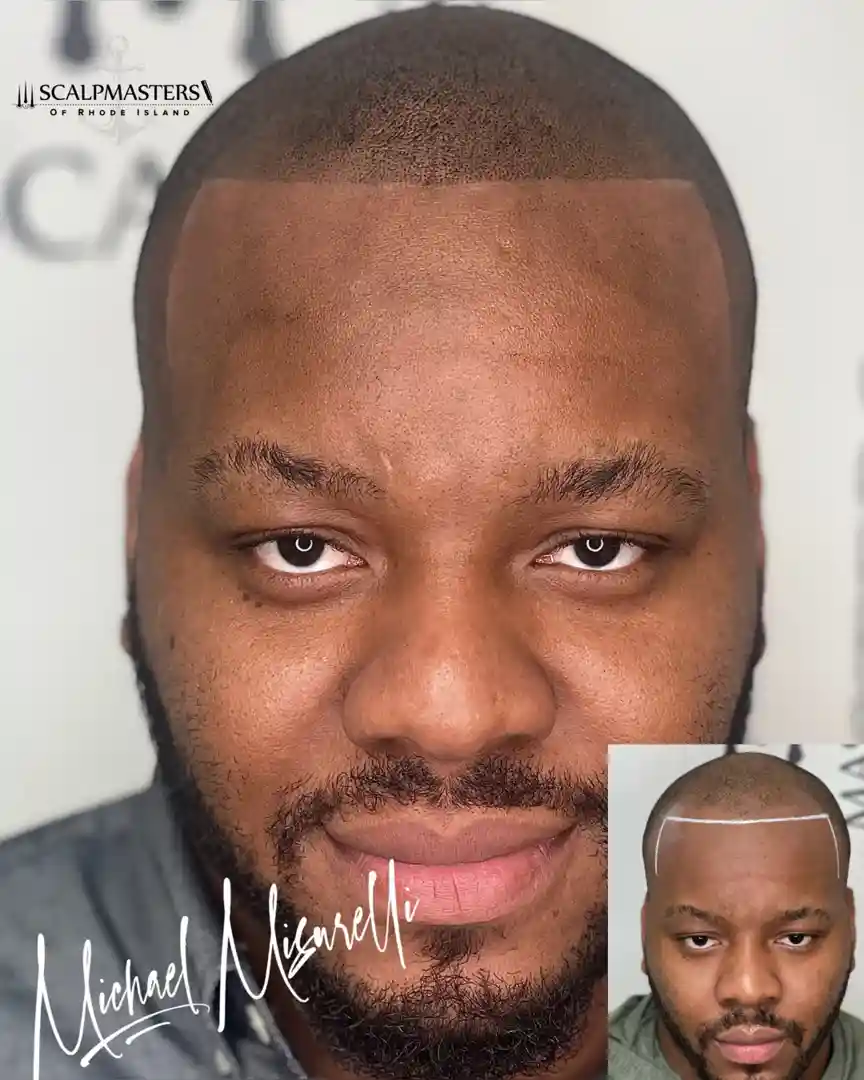
SMP is a specialized process where we use micro-needles to deposit pigment into the scalp. This creates the appearance of tiny hair follicles. Whether you want to "fill in" a thinning area to make your hair look denser or recreate a sharp, clean hairline from scratch, SMP offers immediate results.
Unlike surgery, there is no downtime. Unlike medications, there are no side effects. It’s an ideal SMP for Thinning Hair solution for those in Rhode Island, Massachusetts, and across New England who want to look younger and more confident without the "surgical look."
We pride ourselves on our artistry. A natural hairline isn't a straight line; it's a soft, feathered transition that matches your facial structure. We help you decide Is SMP Right for You by assessing your goals and current hair pattern. For many, Scalp Micropigmentation for Hair Density is the final piece of the puzzle that makes their hair look "finished."
Lifestyle Habits to Support Hair Growth
While clinical treatments do the heavy lifting, your daily habits provide the support system. You wouldn't put cheap gas in a Ferrari, so don't give your hair poor fuel!
The Power of Nutrition
Your hair is primarily made of a protein called keratin. To produce it, your body needs a specific "menu" of nutrients:
- biotin: Often called Vitamin H, it’s essential for hair protein production.
- iron: Helps red blood cells carry oxygen to your cells, including hair follicles. Anemia is a leading cause of thinning in women.
- zinc: Plays a crucial role in hair tissue growth and repair.
- omega-3 fatty acids: These provide the oils that keep your scalp hydrated and your hair shiny.
Scalp Care and Styling Practices
We often recommend a more "hands-on" approach to scalp health. Daily scalp massages can increase blood flow to the area, ensuring your follicles get the nutrients they need. Many people find success using rosemary oil, which some studies suggest can be as effective as 2% minoxidil for certain types of thinning.
How you style your hair also matters. If you’re trying to restore thinning hairline areas, avoid "suffocating" the hair with heavy waxes or gels. Instead, look for Styling Tips to Minimize the Appearance of a Receding Hairline. Choosing the right cut can also make a world of difference; see The Ultimate Guide to Haircuts for Men with Receding Hairlines for inspiration.
Stress Management and Prevention
Since high cortisol levels can literally shut down hair production, finding ways to "de-stress" isn't just good for your mind—it’s good for your scalp. Whether it's yoga, weightlifting, or just getting an extra hour of sleep, your hair will thank you. For a deeper dive into prevention, visit our Blog: How to Prevent Receding Hairline.
Frequently Asked Questions about Hairline Restoration
Can I regrow my hair at the temples naturally?
It depends on the cause. If your thinning is due to stress, poor nutrition, or tight hairstyles, you can often see significant regrowth by fixing the underlying issue. However, if the cause is genetic (androgenetic alopecia), natural remedies like diet and massage may only slow the process. In these cases, medical or cosmetic intervention is usually required to see a real difference.
How long does it take to see results from treatments?
Patience is the name of the game here.
- SMP: Immediate results after the first session (usually requires 2-3 sessions for perfection).
- Minoxidil/Finasteride: 3 to 9 months.
- PRP: 3 to 6 months.
- Hair Transplant: 12 to 15 months for full results.
When should I see a dermatologist for hair loss?
You should schedule an appointment if your hair loss is sudden, patchy, or accompanied by an itchy or painful scalp. A professional can perform a "pull test" or a scalp biopsy to determine the exact cause. If you're interested in the latest clinical research, you can Explore Mayo Clinic studies to see what new treatments are on the horizon.
Are there side effects to these treatments?
Topical minoxidil can sometimes cause scalp irritation or unwanted hair growth on the face if it drips. Finasteride has a small risk of sexual side effects. Surgery carries risks of infection or scarring. This is why many of our clients in Cranston and Boston choose SMP—it provides a guaranteed "fuller" look without the medical risks.
Conclusion
Attempting to restore thinning hairline issues can feel like a race against time, but it’s a race you can win. Whether you choose to fight back with medications, invest in the permanence of a transplant, or opt for the immediate confidence boost of Scalp Micropigmentation, the key is taking that first step.
At Scalpmasters of RI, we’ve seen how a restored hairline can change a person's entire outlook on life. You don't have to settle for "losing your head" over hair loss. From our clinic in Cranston, we serve the entire New England region with a commitment to artistry and natural results.
Ready to see what's possible? Explore our Receding Hairline Solutions and let us help you build a personalized plan to get your confidence back. Your hairline doesn't define you—but a great one certainly feels good!
Learn More
What's New
Latest Hair Loss Solutions & Guides