

Hairline Reconstruction Costs and What to Expect for Your Wallet
What Does Hairline Reconstruction Actually Cost?
Hairline reconstruction cost is one of the first things people want to understand when they start exploring their options — and for good reason. It's a significant investment, and the price range is wide enough to cause real confusion.
Here's a quick snapshot to orient you:
| Procedure Type | Typical Cost Range |
|---|---|
| Scalp Micropigmentation (SMP) | Lower end of the spectrum |
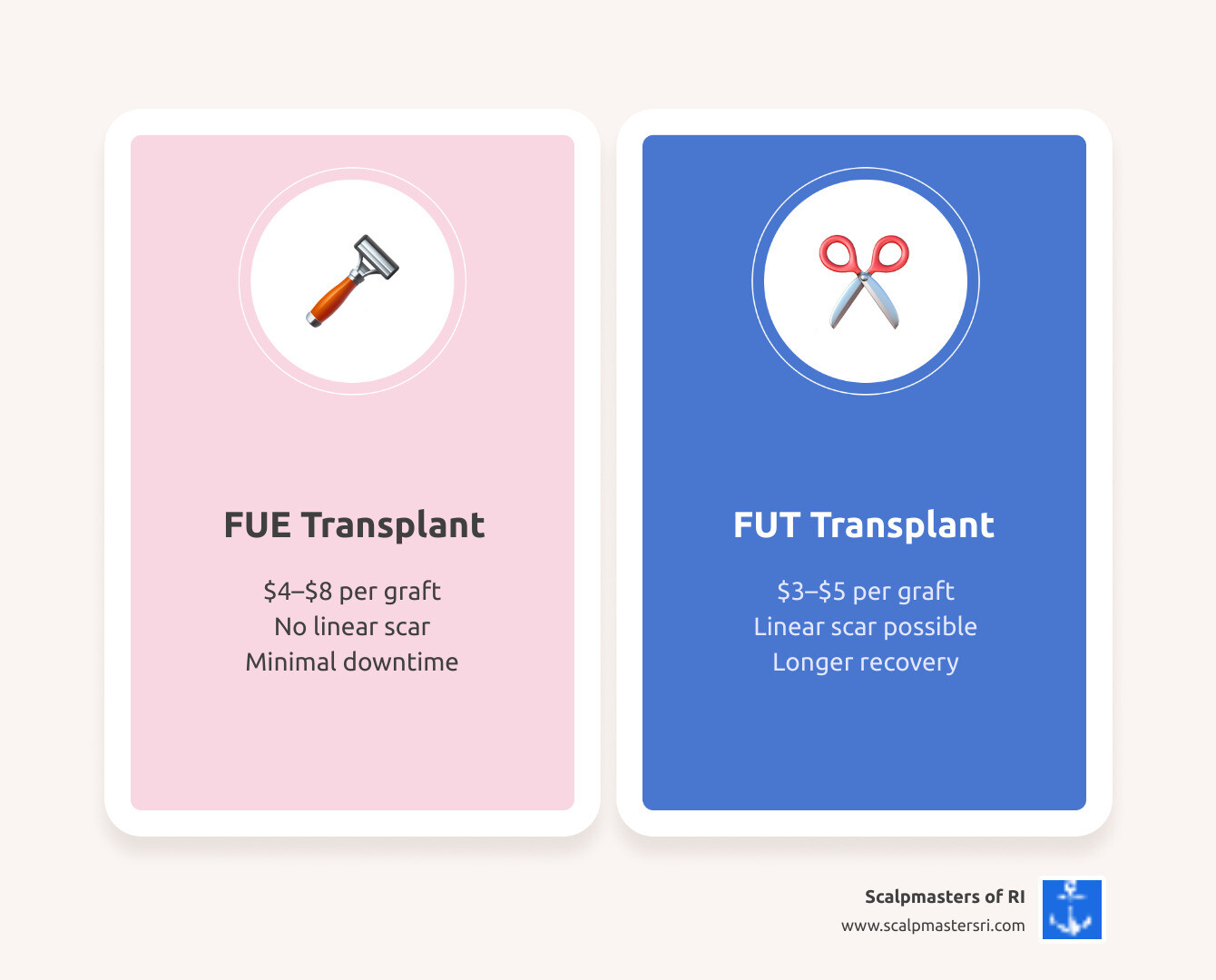
| FUT Hair Transplant (per graft) | $3 – $5 per graft |
| FUE Hair Transplant (per graft) | $4 – $8 per graft |
| Hairline-Only Transplant (1,000–2,000 grafts) | $4,000 – $15,000+ |
| Hairline Lowering Surgery | $5,000 – $19,000 (Canada) |
| Full Restoration (2,500–4,000+ grafts) | $9,000 – $20,000+ |
Note: Costs vary by location, clinic, surgeon experience, and procedure complexity.
Hair loss affects roughly 70% of men and 50% of women at some point in their lives. For many people, it's not just about looks — it hits confidence hard. A receding hairline or thinning scalp can make you feel self-conscious every single day.
The challenge? Figuring out what you'll actually pay is harder than it should be. Clinics price things differently. Some charge per graft. Others bundle everything. Some quote low but leave out anesthesia, facility fees, and follow-up care.
This guide cuts through that confusion. Whether you're considering a surgical transplant, a non-surgical option like scalp micropigmentation (SMP), or something in between, you'll walk away knowing what to budget — and why the numbers vary so much.
Understanding the Total Hairline Reconstruction Cost
When we talk about the total hairline reconstruction cost, we aren't just looking at a single receipt. For most of our neighbors in Rhode Island, Massachusetts, and Connecticut, the final price tag is a combination of surgical technique, the sheer volume of hair being moved, and the artistic skill required to make it look like nature intended.
In the New England area, especially around hubs like Boston and Providence, pricing is often structured in one of two ways: per-graft or per-session. Surgical clinics typically favor per-graft pricing, where you pay for every individual follicular unit transplanted. If you only need a minor "touch-up" to fill in receding temples, your costs might stay on the lower end. However, if you are looking to lower a high hairline or fill in significant thinning across the frontal scalp, the graft count—and the price—will climb.
Surgical Hairline Reconstruction Cost Factors
The method of extraction is a primary driver of your budget. There are two heavy hitters in the surgical world:
- FUT (Follicular Unit Transplantation): Often called the "strip method," this involves removing a strip of skin from the back of the head. It is generally more affordable per graft because it is less labor-intensive for the surgeon. However, it does leave a linear scar, which might be a deal-breaker if you like to wear your hair short.
- FUE (Follicular Unit Extraction): This is a more modern, minimally invasive technique where individual follicles are harvested one by one. Because it requires more time and precision, FUE usually costs 30% to 40% more than FUT. The upside? No linear scar and a much faster recovery time.
Beyond the technique, the "artistry" fee is real. Creating a hairline isn't like filling a pothole; it requires placing single-hair grafts in an irregular, staggered pattern to mimic a natural growth line. Surgeons with decades of experience in the New England region often command higher fees because they have the "eye" for this delicate work.
Non-Surgical Alternatives and Hairline Reconstruction Cost
If the thought of surgery—or the surgical price tag—makes you hesitate, you aren't alone. Many people in Cranston and the surrounding New England area are turning to non-surgical alternatives that offer a similar aesthetic boost without the scalpels.
Scalp Micropigmentation (SMP) is the leader in this category. Instead of moving hair follicles, we use specialized pigments to mimic the appearance of natural hair follicles. For a receding hairline, SMP can "fill in" the thin areas or create a brand-new, sharp, and youthful hairline that looks like a clean buzz cut.
The hairline reconstruction cost for SMP is significantly lower than surgery because there are no operating room fees, no anesthesiologists, and no expensive graft harvesting. It’s a series of sessions that build density and shape over time. While it doesn't grow physical hair, the visual result is often just as transformative for one's confidence.
More info about SMP vs. Transplants
Key Factors Influencing Your Restoration Budget
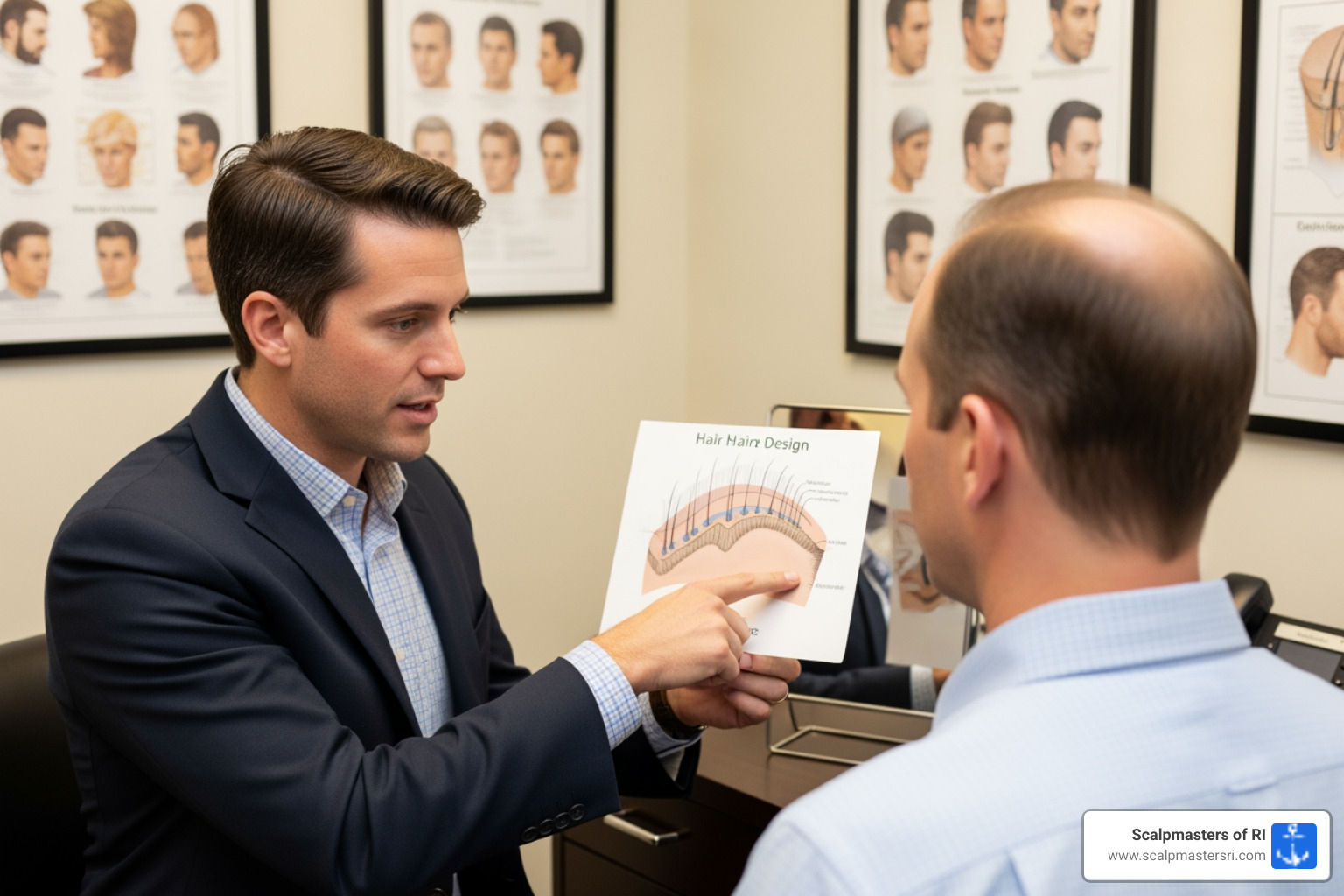
When you sit down for a consultation in Boston or Rhode Island, you’ll find that several "behind-the-scenes" factors influence your quote.
- Geographic Location: It’s no secret that living in New England comes with a higher cost of living. Clinics in major metropolitan areas like Boston or Manhattan often have higher overhead costs—rent, insurance, and staff wages—which are reflected in their pricing.
- Clinic Reputation and Surgeon Expertise: You are paying for a result that sits right on your face. High-profile surgeons who specialize exclusively in hair restoration often charge a premium. As the saying goes, "If you think a professional is expensive, wait until you hire an amateur."
- Anesthesia and Facility Fees: Some clinics include these in the per-graft price, while others bill them as separate line items. General anesthesia is more expensive than local "twilight" sedation, though most hairline procedures only require the latter.
- Supplementary Treatments: Many surgeons now recommend Platelet-Rich Plasma (PRP) therapy to accompany a transplant. This involves using growth factors from your own blood to enhance graft uptake and hair density. Studies show that PRP before implantation can actually improve the thickness and survival rate of the new hair. While beneficial, this can add $1,000 to $3,000 to your total bill.
Impact of the Norwood Scale on Hairline Reconstruction Cost
The Norwood Scale is the universal language of male pattern baldness. It ranges from Stage 1 (minimal loss) to Stage 7 (extensive loss).
- Norwood 2-3: These patients usually only need hairline work—filling in the temples or slightly lowering the front. This might require 1,000 to 1,500 grafts.
- Norwood 4-5: At this stage, the hairline has receded significantly, and the crown may be thinning. This often requires 2,500 to 4,000 grafts, likely split across two surgical sessions.
The more advanced your hair loss, the higher the hairline reconstruction cost. It’s not just about the number of grafts; it’s also about the availability of donor hair. If your donor area (the back of your head) is sparse, the surgeon has to work much harder—and more slowly—to harvest enough hair, which increases the labor cost.
More info about receding hairline solutions
Hidden Fees and Post-Operative Expenses
The "sticker price" of the procedure is rarely the final amount you’ll spend. We always advise our clients to budget for the "after" phase:
- Medications: To keep your existing hair from falling out around the new transplant, you’ll likely need a maintenance plan. Prescription medications like Finasteride or Minoxidil can cost anywhere from $30 to $100 per month.
- Post-Op Care Kits: Specialized shampoos, saline sprays, and ointments to protect the grafts during the first two weeks can add a few hundred dollars.
- Follow-Up Appointments: While some clinics include these, others may charge for long-term check-ups.
- Lost Wages: Most surgical procedures require 7 to 10 days of downtime. If you can't work from home, you need to factor in the cost of a week or two of unpaid leave.
Comparing Long-Term Value and Maintenance
When evaluating hairline reconstruction cost, it's helpful to look at it as a "cost per year" rather than a one-time hit.
A surgical transplant is intended to be permanent. The follicles moved from the back of your head are genetically resistant to DHT (the hormone that causes balding). However, the hair around the transplant is still susceptible to loss. This means you might need a second procedure 5 to 10 years down the line to fill in new gaps.
Scalp Micropigmentation (SMP), on the other hand, requires a "refresh" or touch-up every 4 to 6 years as the pigment naturally fades. Because SMP is non-invasive and doesn't rely on a finite supply of donor hair, it is often viewed as a more flexible, long-term solution for those who want to maintain a specific look without repeated surgeries.
More info about hair loss treatments for men
Financing and Insurance Realities
We get this question a lot: "Will my insurance cover this?"
The short answer is: Almost never. Insurance companies classify hairline reconstruction as an elective cosmetic procedure. It’s in the same category as a nose job or Botox.
The rare exceptions include:
- Trauma or Burns: If you lost hair due to an injury or a fire.
- Reconstructive Surgery: If the hair loss is a result of a tumor removal or a congenital malformation.
Since most of us are paying out of pocket, financing is key. Many New England clinics partner with third-party lenders like CareCredit or Alphaeon. These companies offer medical loans that allow you to pay off the procedure in monthly installments—sometimes with 0% interest if paid within a certain timeframe (usually 6 to 24 months).
More info about financing options
Frequently Asked Questions about Hairline Reconstruction
Does insurance cover the cost of hairline reconstruction?
As mentioned, insurance generally does not cover the hairline reconstruction cost for standard male or female pattern baldness. It is viewed as a "self-improvement" expense. However, if your hair loss is tied to a documented medical trauma or a specific disease (like certain types of scarring alopecia), it is worth having your doctor submit a "letter of medical necessity" to your provider. Just don't hold your breath—approvals are rare.
More info about SMP and transplants
What is the average price per graft in major cities?
In the New England area, you can expect to see a wide range. In Boston, premium clinics often charge between $5.00 and $8.00 per graft for FUE. If you travel to smaller towns or look for "budget" clinics, you might find prices as low as $3.00 per graft, but be wary. In this industry, you often get what you pay for. A "cheap" transplant that looks unnatural will cost you twice as much to fix later.
How does recovery time impact the overall cost?
Recovery isn't just about healing; it's about your wallet. For a surgical transplant, you should plan for at least 7 days of "social downtime" where your head will have visible scabbing and redness. For those in high-visibility jobs in the Boston corporate world, this might mean taking two weeks off. If you choose SMP, the "recovery" is usually just a day or two of slight redness, meaning you won't lose any income from missed work.
Conclusion
At Scalpmasters of RI, we believe that everyone deserves to feel confident when they look in the mirror. Whether you choose the surgical route or the artistic precision of scalp micropigmentation, the goal is the same: a natural-looking, age-appropriate hairline that restores your sense of self.
The hairline reconstruction cost is an investment in your quality of life. While the numbers can seem high at first, many of our clients in Cranston, Providence, and across New England find that the boost in self-esteem and the end of "hat-wearing days" is worth every penny.
When you're ready to explore your options, we encourage you to look beyond the price tag and focus on the artistry and experience of the provider. After all, your hairline is the frame for your face—make sure it’s a masterpiece.
Learn More
What's New
Latest Hair Loss Solutions & Guides