
Scalp Micropigmentation Correction: Can Bad SMP Be Fixed?

Yes, most bad scalp micropigmentation can be corrected. The right fix depends on exactly what went wrong: pigment that is too dark, a hairline that looks fake, dots that are too big, patchy blending, or color that has turned blue or gray over time. Some of these problems can be layered over with more careful SMP. Others need a different first step before any new pigment goes in. At Scalpmasters RI, we start every scalp micropigmentation correction with an honest look at your scalp, not a sales pitch for more sessions.
What Makes SMP Look Bad in the First Place
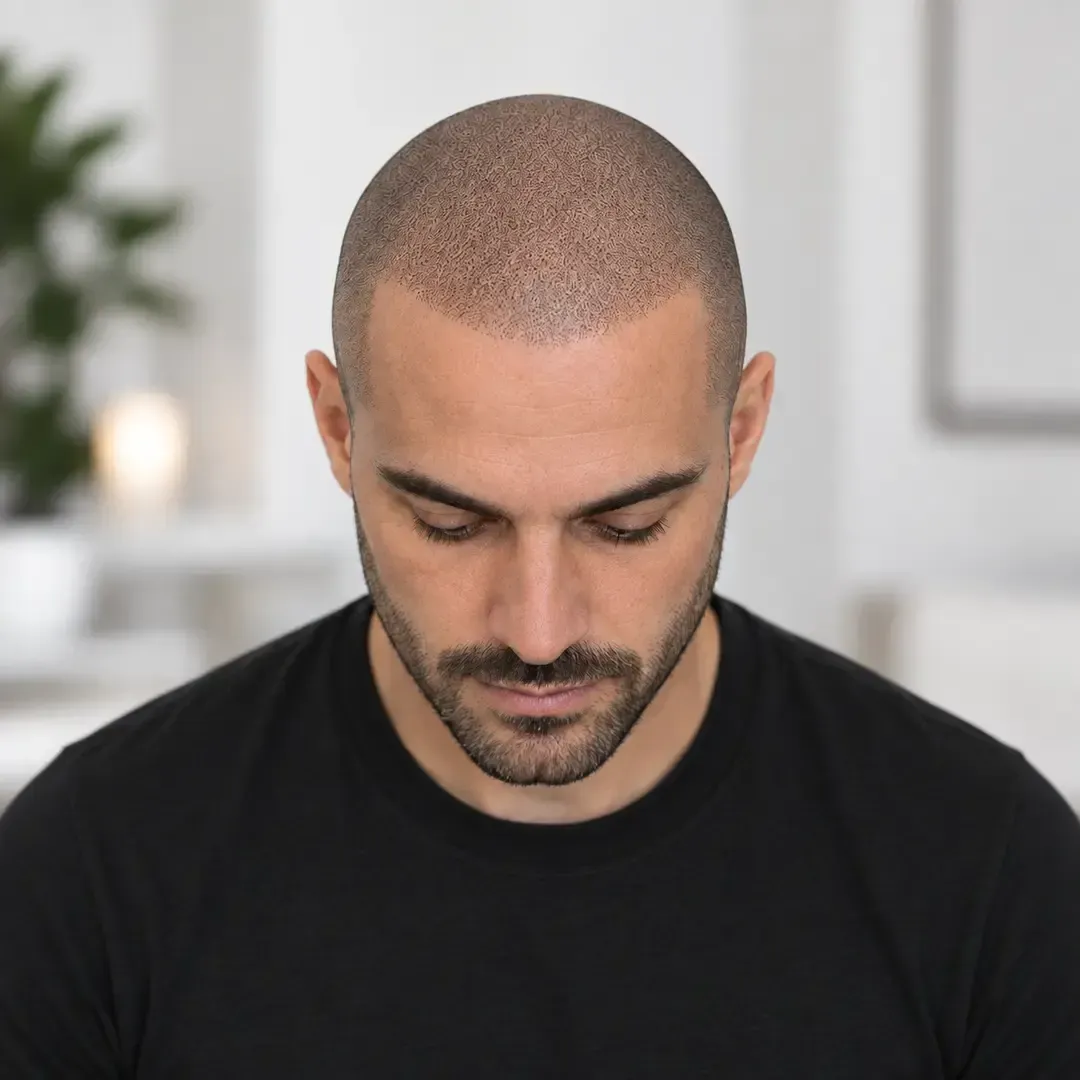
Bad SMP usually comes down to a handful of repeatable mistakes. The most common is pigment placed too dark or too saturated, which can look like a solid block of color instead of individual hair follicles. Oversized dots, or dots placed too close together, are another common issue, since real hair follicles are small and irregular, not uniform. Poor blending between the hairline and the surrounding skin is a third problem, and it is often the first thing people notice in photos or bright light.
Discoloration is also common, especially in older SMP work. Pigment that was mixed incorrectly can shift color over time, turning blue, gray, or reddish instead of aging the way natural hair does. If you are searching for a way to fix bad scalp micropigmentation, these are usually the exact issues we are working to correct. Recognizing which one, or which combination, applies to you is the first step toward a real solution.
What We Look At Before Recommending a Fix
Every scalp micropigmentation correction starts with a close, honest evaluation, not a quote over the phone. We look at how deep the existing pigment sits in your skin, since pigment placed too deep is harder to lighten and blends less naturally with new work. We check the color itself under different lighting, because a dot that looks fine indoors can look blue or purple in daylight. We also look at your natural hair growth pattern, your skin tone, and how your hairline compares to a hairline you could realistically have grown on your own.
This last part matters more than most people expect. Michael Misurelli, our founder, spent over 20 years as a licensed barber before he became an SMP artist, working with hairlines and scalps every single day. That background shapes how we judge a hairline: not just whether the dots are neat, but whether the shape and density look like something a barber would actually see on a real head of hair. You can see examples of that approach in our gallery of before and after results.
Your Options: More SMP, Color Correction, or Removal First
Not every case of bad SMP can be fixed by adding more pigment on top. If the existing work is too light, poorly blended, or has thin, patchy coverage, we can often correct it by carefully layering new dots around and between the old ones, adjusting size, color, and placement as we go. This is the most common bad SMP repair we do, and it usually takes fewer sessions than a first-time treatment, since some of the structure is already there.
If the existing pigment is too dark, oversaturated, or has shifted to an off color like blue or gray, adding more SMP on top will not solve the problem. It can actually make it worse. In these cases, we will tell you honestly that lightening the area first, through saline or laser removal handled by a qualified provider, gives you a better long-term result than trying to camouflage bad pigment with more pigment. We would rather point you in the right direction than sell you a fix that will not hold up.
Correction work is priced differently than a first-time SMP treatment, since every case depends on how much of the existing work needs to be lightened, adjusted, or rebuilt. We will not hand you a flat number over the phone, because guessing at a price without seeing your scalp in person would not be honest. What we can tell you is that correction consultations are always free, and we walk you through real pricing and a session plan before you commit to anything.
Fixing an Unnatural Hairline Specifically
A hairline that looks unnatural is one of the most common reasons people search for scalp tattoo correction. This usually happens when the hairline was drawn too straight, too low, too high, or without the small irregularities a real hairline has. Real hairlines are not a single clean line. They have soft, uneven edges, slightly different density near the temples, and small variations that photograph as natural instead of drawn on.
Fixing an unnatural SMP hairline usually means redesigning the shape first, based on your face, your age, and how your hair would realistically recede over time, and then rebuilding the density with softer, more irregular placement. We also plan for the future here, since a hairline that looks right today but ignores future thinning can end up looking unnatural again in a few years. This is where a barbering background helps again, since Michael has spent decades looking at how real hairlines sit on real heads.
What to Expect at Your Correction Consultation
We start every correction case with a free, in-person consultation, not a diagnosis from a few photos. We ask what studio did the original work if you know it, what bothers you most about the result, and what you were hoping for originally. From there, we take clear photos in natural light and walk you through exactly what we see, using plain language instead of technical jargon.
We serve clients across Rhode Island, Massachusetts, and Connecticut who are searching for SMP correction near me after a disappointing result somewhere else. Many of them tell us they wish they had come in for a second opinion before their first session, not after. If that sounds like where you are now, you are not behind. You can also read about common signs of botched SMP and why some clients regret their SMP on our blog before your visit, so you know what questions to ask.
Once a correction plan is finished, it is maintained the same way any SMP is: with sunscreen or a hat during peak sun, gentle cleansing, and an occasional touch-up session every few years as pigment naturally softens. Correction is not a one-time fix you then have to protect forever on your own. We stay part of the plan afterward, so if anything looks like it is fading unevenly, you have somewhere to come back to instead of starting your search over.
The Bottom Line on Scalp Micropigmentation Correction
Most bad SMP can be corrected, but the right fix depends on what actually went wrong. Dark or oversaturated pigment, an unnatural hairline, oversized dots, poor blending, and discoloration all need slightly different approaches, and no honest artist will tell you that more pigment fixes every problem. At Scalpmasters RI, we evaluate your specific case first and tell you plainly whether SMP correction, color work, or removal comes first.
You do not have to live with a result you are unhappy with, and you do not have to guess whether it can be fixed.
Book a free correction consultation and we will look at your scalp in person, explain your options honestly, and build a plan around the result you actually wanted the first time.
Learn More
What's New
Latest Hair Loss Solutions & Guides