
Scalp Micropigmentation After Chemotherapy: When It Helps and When to Wait

Yes, scalp micropigmentation can help many people whose hair came back thin, patchy, or not at all after chemotherapy. But timing matters just as much as the treatment itself. If your hair is still changing month to month, waiting is usually the smarter move before any pigment goes in. At Scalpmasters RI, we talk through where you are in regrowth before we talk about scheduling anything, because scalp micropigmentation after chemotherapy works best on a scalp that has settled into its new normal.
Why Timing Matters More Than the Treatment Itself
Hair regrowth after chemotherapy does not always come back the way it looked before, and it often keeps changing for months after treatment ends. Texture, color, density, and even the pattern of where hair grows back can shift as your body recovers. If we place pigment based on a pattern that is still changing, the result can look mismatched a few months later. That is why we ask about your treatment timeline before we talk about SMP at all.
Many oncologists and dermatologists recommend waiting until regrowth has been stable for a good stretch of time, often close to a year, before considering a cosmetic procedure like SMP, though the right timeline is different for everyone. Your care team knows your treatment history and scalp better than we do, so we always encourage clients to get clearance from them first. This is not us trying to slow you down. It is us trying to make sure the work we do still looks right two years from now, not just two months from now.
So how do you know if regrowth has settled? A few general signs are hair that has stopped actively shedding, a color and texture that have stayed consistent for several months in a row, and a pattern that looks the same at your last two check-ins instead of still filling in. These are general signs, not a medical determination, so your oncologist or dermatologist is still the best judge of your specific timeline. We simply ask about these details so we are not guessing on your behalf.
What SMP Can Do for Hair Loss After Chemo Treatment
It helps to know that hair often grows back a different color or texture than it was before chemotherapy, at least at first. Regrowth can come in curlier, grayer, or finer than your original hair, and it may keep evolving for a while after treatment ends. Because SMP pigment is matched to your current hair color, this is one more reason we wait for regrowth to settle before choosing a shade that will actually blend once your hair finishes changing.
SMP for chemo hair loss usually falls into one of two situations, depending on how your regrowth came back. For clients whose hair grew back thin or patchy, density SMP is often the right fit. It adds soft pigment in the gaps between regrowth, which softens the contrast between scalp and hair and makes coverage look fuller without touching the hair that did come back. This is close to the work we already do for clients with diffuse thinning, and you can see how we approach it on our density SMP page.
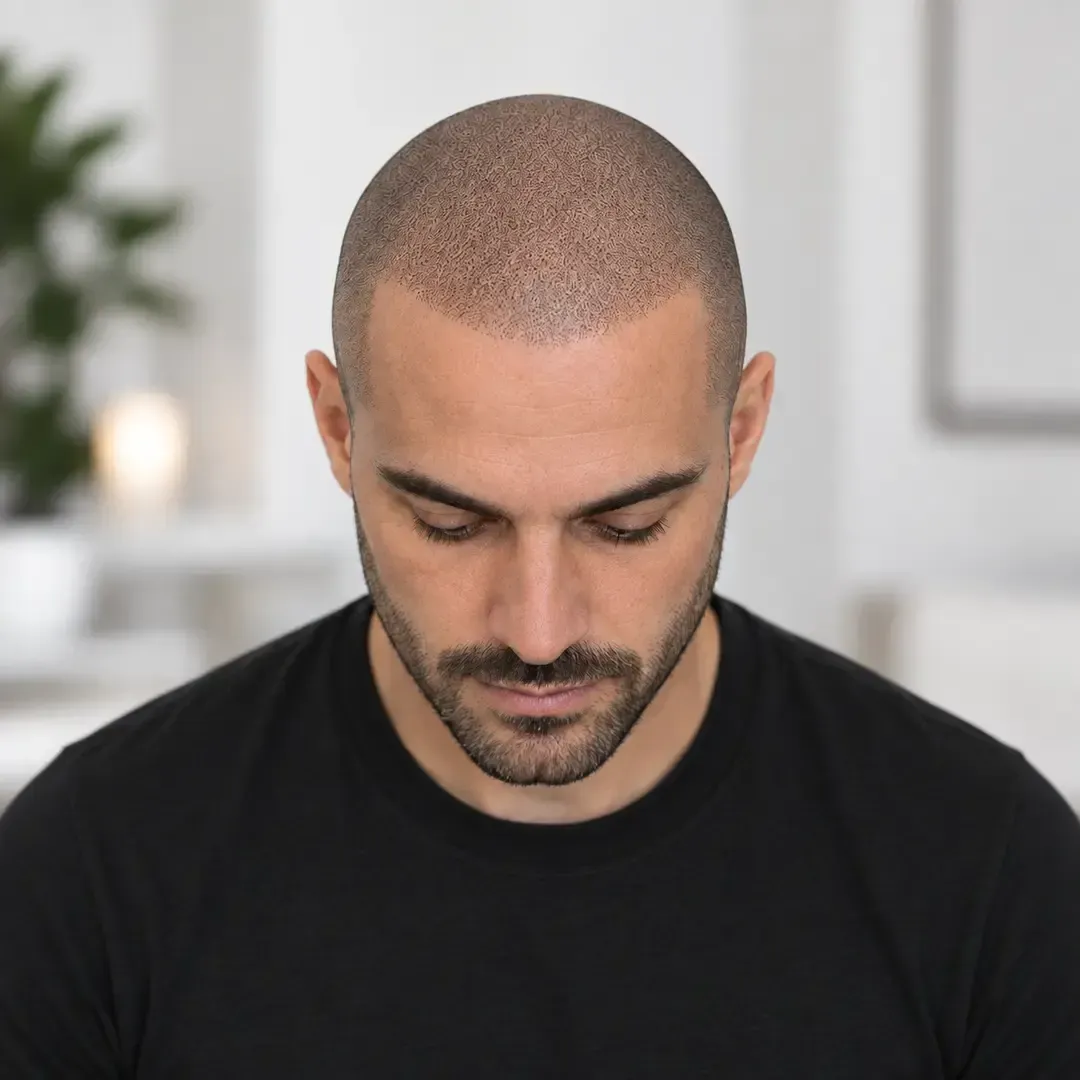
For clients dealing with permanent hair loss after chemotherapy, where regrowth did not return or came back very sparse, SMP can recreate the look of a closely shaved head across the whole scalp. This is similar to how we work with clients who have alopecia totalis or alopecia universalis, and our SMP for alopecia page covers that approach in more detail. Either way, the goal is the same: a natural-looking result that matches where your hair truly is right now, not where it used to be.
What SMP Cannot Do
SMP is a cosmetic pigment treatment, not a medical treatment, and it will not regrow hair or change how your body is recovering. If your hair is still actively shedding or your regrowth pattern has not settled, SMP cannot fix that, and starting too early usually means redoing work later. We would rather tell you that plainly now than let you book a session that will not hold up.
Chemotherapy and radiation can also change how sensitive or how quickly healing your scalp is, even after treatment ends. We ask about your full treatment history, including radiation to the scalp, because it can affect how we plan sessions and how much time we build in between them. None of this means SMP is off the table. It just means we plan around your body instead of a standard timeline that was not built with chemo patients in mind.
What We Look At Before Moving Forward
Every consultation starts with a conversation, not a sales pitch. We ask where you are in your recovery, whether your care team has cleared cosmetic procedures, and what your regrowth has looked like over the past several months. We look at your scalp in person to see how even or uneven the coverage is, and we are honest if we think it is still too early to start.
Most clients need two to four sessions to build up natural-looking density, which is similar to how we approach other alopecia-related cases. We space sessions out to let your scalp heal between visits, and we can slow that pace down further if you need more recovery time. There is no reward for rushing through this, so we would rather add an extra session than push for a result that does not look right.
If the timing is right, we build a plan around your comfort, not just the calendar. Sessions can be spaced further apart if you need more recovery time between visits, and we pay attention if certain areas of your scalp are more sensitive than others. You can see examples of how this kind of work looks in our gallery of before and after results, and when you are ready, a free consultation is the easiest way to find out where you stand.
The Bottom Line on Scalp Micropigmentation After Chemotherapy
Scalp micropigmentation after chemotherapy can genuinely help once your regrowth has settled, whether that means filling in thin, patchy coverage or recreating a fuller look after permanent hair loss. It is not a fix for hair that is still changing, and it is not a race against a specific deadline. The right time is different for every client, and getting clearance from your care team is always step one.
At Scalpmasters RI, we want you to feel informed before you decide anything, not talked into a session before you are ready. If you are unsure whether your regrowth has stabilized enough to explore SMP, book a free consultation and we will give you an honest answer, even if that answer is to wait a little longer.
Learn More
What's New
Latest Hair Loss Solutions & Guides