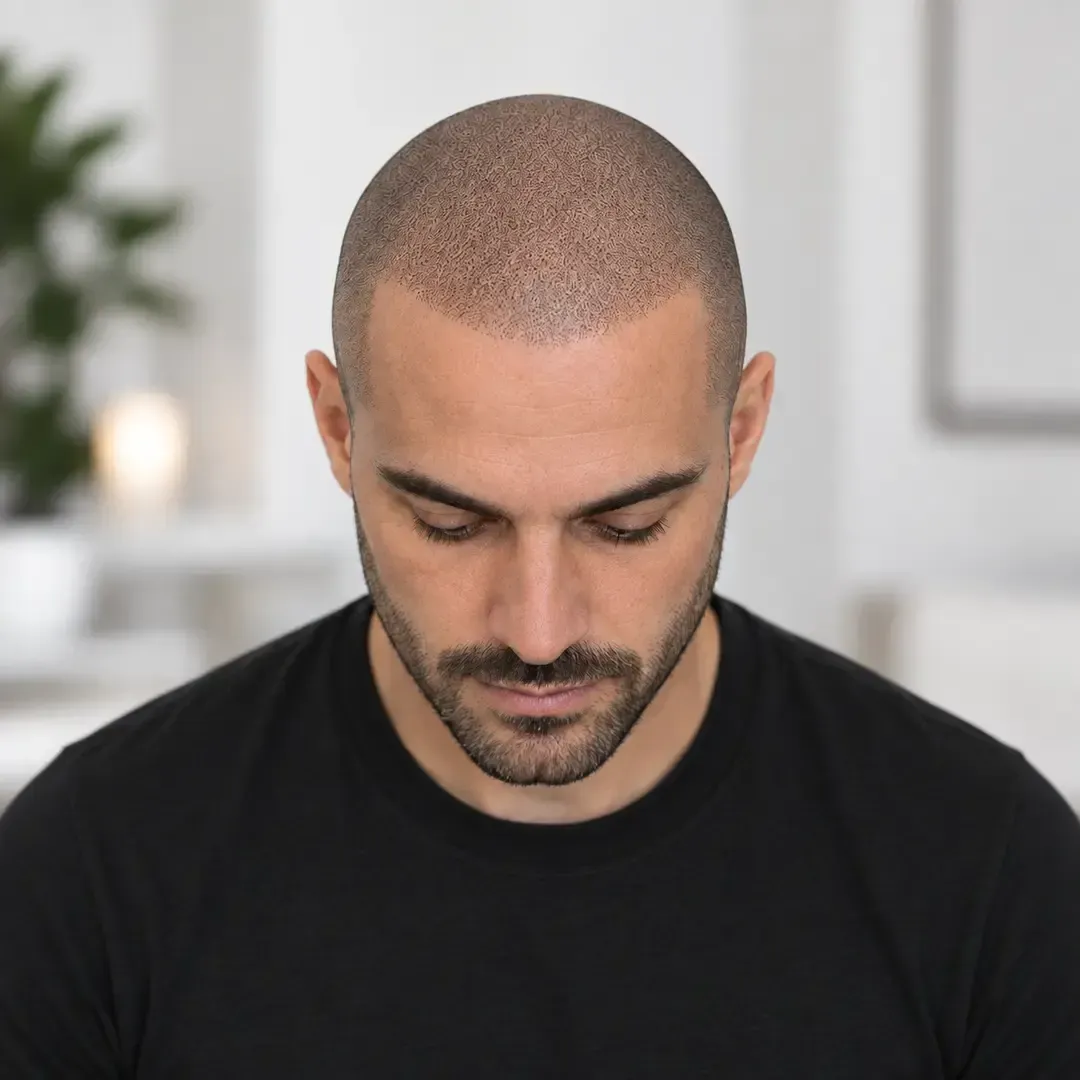

All About SMP Hair Tattoo
What Is an SMP Hair Tattoo? A Quick Comparison Guide
An SMP hair tattoo — short for scalp micropigmentation — is one of the most effective non-surgical options available today for people dealing with hair loss, thinning, or scalp scars.
If you're comparing your options, here's a fast breakdown:
| SMP Service Option | Best For | Key Benefit |
|---|---|---|
| Shaved/Buzz Cut Look | Complete baldness, advanced hair loss | Full scalp coverage, razor-sharp hairline |
| Density Therapy | Thinning hair, widening part lines | Reduces scalp visibility through existing hair |
| Scar Camouflage | FUE/FUT transplant scars, burns | Blends scars with surrounding follicles |
| Alopecia Treatment | Alopecia areata, traction alopecia | Restores uniform appearance to patchy areas |
| Women's SMP | Female pattern hair loss, postpartum shedding | Works with existing hair, no shaving required |
Hair loss affects millions of people. In the US alone, roughly 50 million men and 30 million women are impacted — and about one in three women will experience some form of pattern hair loss in their lifetime.
The emotional toll is real. Many people spend years hiding their scalp under hats, styling around thinning areas, or skipping photos altogether.
SMP offers a permanent, low-maintenance alternative to surgery, medication, and daily cover-up products. But not all SMP services are the same — the technique, pigment, practitioner skill, and treatment style all vary significantly.
This guide walks you through everything you need to compare your options confidently, especially if you're exploring clinics across Rhode Island, Massachusetts, or Connecticut.
Comparing Your SMP Hair Tattoo Service Options
When you begin researching hair restoration options in New England, the choices can feel overwhelming. From invasive hair transplants to messy topical fibers, finding a solution that fits your lifestyle is key. If you are living in Rhode Island, Massachusetts, or Connecticut, you want a treatment that looks natural in every light — whether you're walking around Providence, RI, commuting to Boston, MA, or heading down to Hartford, CT.
An SMP hair tattoo has emerged as the go-to alternative for those who want immediate, reliable, and maintenance-free results. However, choosing the right service option requires understanding how this specialized treatment works and how it can be customized to your specific hair loss pattern.
What is an SMP Hair Tattoo and How Does It Work?
To understand scalp micropigmentation, we first have to bust a major myth: SMP is not your grandfather’s traditional tattoo.
While a traditional body tattoo uses thick needles, mixed-color inks, and penetrates deep into the dermis, an SMP hair tattoo is a highly specialized, medical-grade cosmetic procedure. We use state-of-the-art microneedles and advanced pointillism techniques to deposit tiny, precise micro-dots of pigment into the upper dermal and epidermal layers of the scalp (usually at a shallow depth of about 0.5 mm).
To learn more about the fundamentals, check out our guide on What is SMP.
By depositing the pigment at this shallow depth, we avoid the "blowout" effect common in traditional tattoos, where the ink spreads and turns into a blotchy blur. Additionally, we use specialized, carbon-based grayscale pigments rather than standard tattoo inks. Because black tattoo ink is often made by mixing various colors, traditional tattoos can change color over time, shifting to unnatural shades of blue, green, or orange. Carbon-only pigments, however, simply fade into lighter shades of gray, perfectly mimicking the natural shadow of a shaved hair follicle.
The ultimate goal of SMP is follicle replication. By matching the pigment shade to your skin tone and remaining hair color, we create an optical illusion. Your brain naturally counts these microscopic shadows as actual hair pores, making the treated area look like a dense, natural head of hair. For a deeper medical overview of this process, you can read the Scalp Micropigmentation (SMP): All You Need to Know - ISHRS guide.
Comparing SMP Hair Tattoo Styles: Shaved Look vs. Density Therapy
Depending on your stage of hair loss, we typically recommend one of two primary SMP approaches: the classic Shaved Look or Density Therapy.
For men with advanced male pattern baldness, a completely bald crown, or a highly receded hairline, the Shaved Look is a game-changer. It recreates the appearance of a fresh, clean, close-cropped buzz cut. Rather than looking like you are losing your hair, it looks like you made a stylish, intentional choice to shave it.
On the other hand, if you have longer, thinning hair, you do not need to shave your head to get incredible results. Density Therapy works by layering pigment between your existing hair strands. This reduces the high contrast between your scalp and your hair, making your hair look significantly thicker. This is particularly beneficial for women experiencing female pattern hair loss or diffuse thinning along a widening part line.
To help you compare, we’ve broken down the key differences:
| Feature | Shaved/Buzz Cut Look | Density Therapy |
|---|---|---|
| Primary Goal | Recreate a full, youthful hairline and shaven style | Camouflage the scalp to make existing hair look thicker |
| Hair Length | Shaved down to the skin (wet shaved or short buzz) | Kept at any length (no shaving required) |
| Ideal For | Advanced pattern baldness, total crown thinning | Diffuse thinning, widening parts, early hair loss |
| Technique | Replicating individual follicle dots uniformly | Layering pigments between hairs to reduce scalp contrast |
For a comprehensive breakdown of these techniques, explore our SMP Scalp Micropigmentation Complete Guide.
Ideal Candidates: Treating Alopecia, Thinning, and Transplant Scars
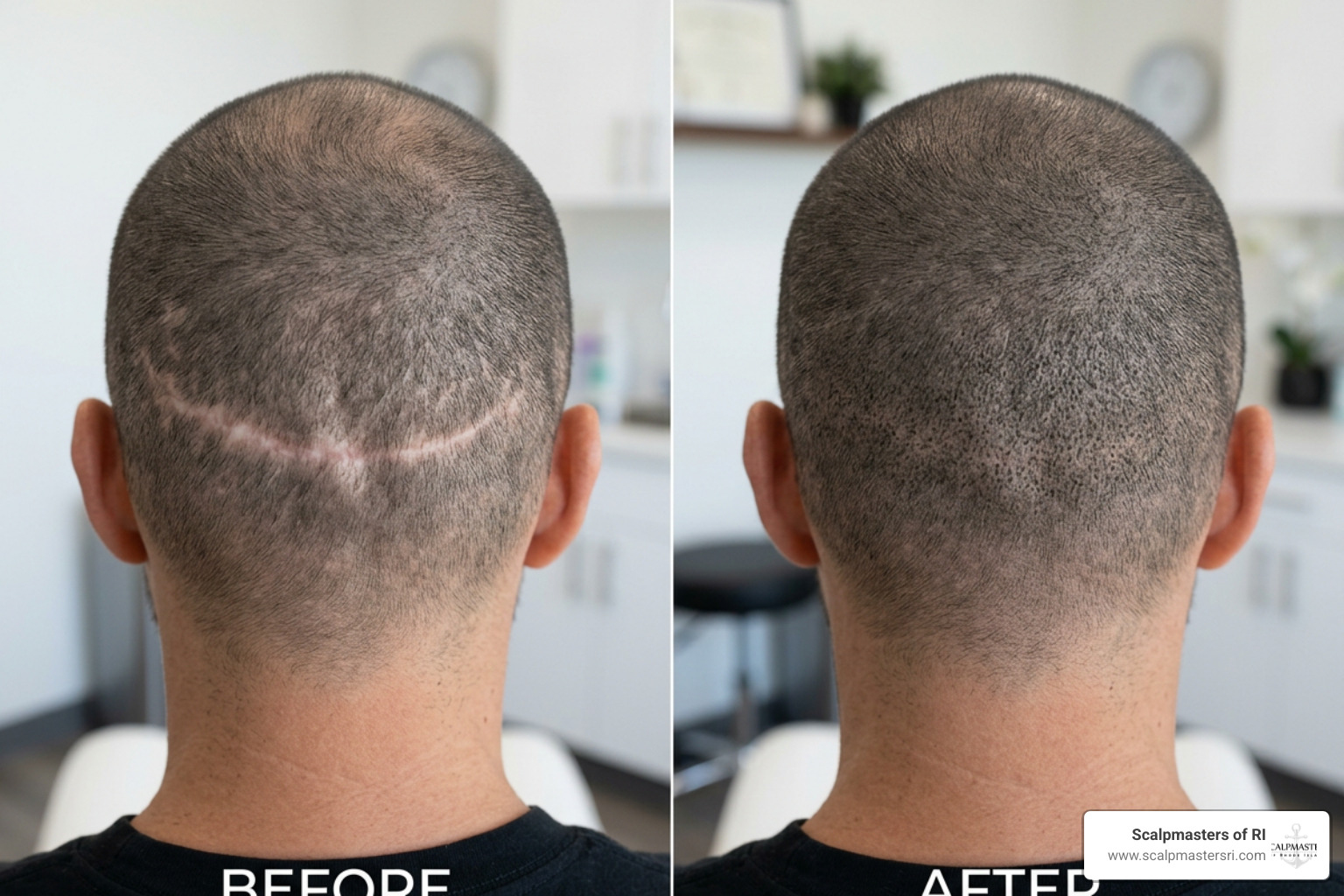
An SMP hair tattoo is incredibly versatile, making it an excellent solution for a wide variety of hair loss conditions.
- Male and Female Pattern Baldness: Whether you are dealing with a receding hairline, a thinning crown, or diffuse thinning, SMP can restore your look.
- Alopecia Areata: This autoimmune condition causes unpredictable, patchy hair loss. Because SMP can be customized to match your natural hair density, we can seamlessly fill in these patches to give you a uniform appearance.
- Hair Transplant Scars: Hair restoration surgeries often leave behind visible scars. Follicular Unit Extraction (FUE) leaves tiny round scars, while Follicular Unit Transplantation (FUT) leaves a linear strip scar across the back of the head. We can apply specialized pigment directly into and around these scars, camouflaging them so you can wear your hair short without worry.
- Traction Alopecia and Postpartum Shedding: For women who have experienced hair loss from tight hairstyles or hormonal shifts after pregnancy, SMP offers a safe, medication-free way to restore the appearance of pre-pregnancy density.
If you want to understand how we target these specific concerns, read more about getting a Hair Loss Tattoo.
The Treatment Process: Sessions, Aftercare, and Longevity
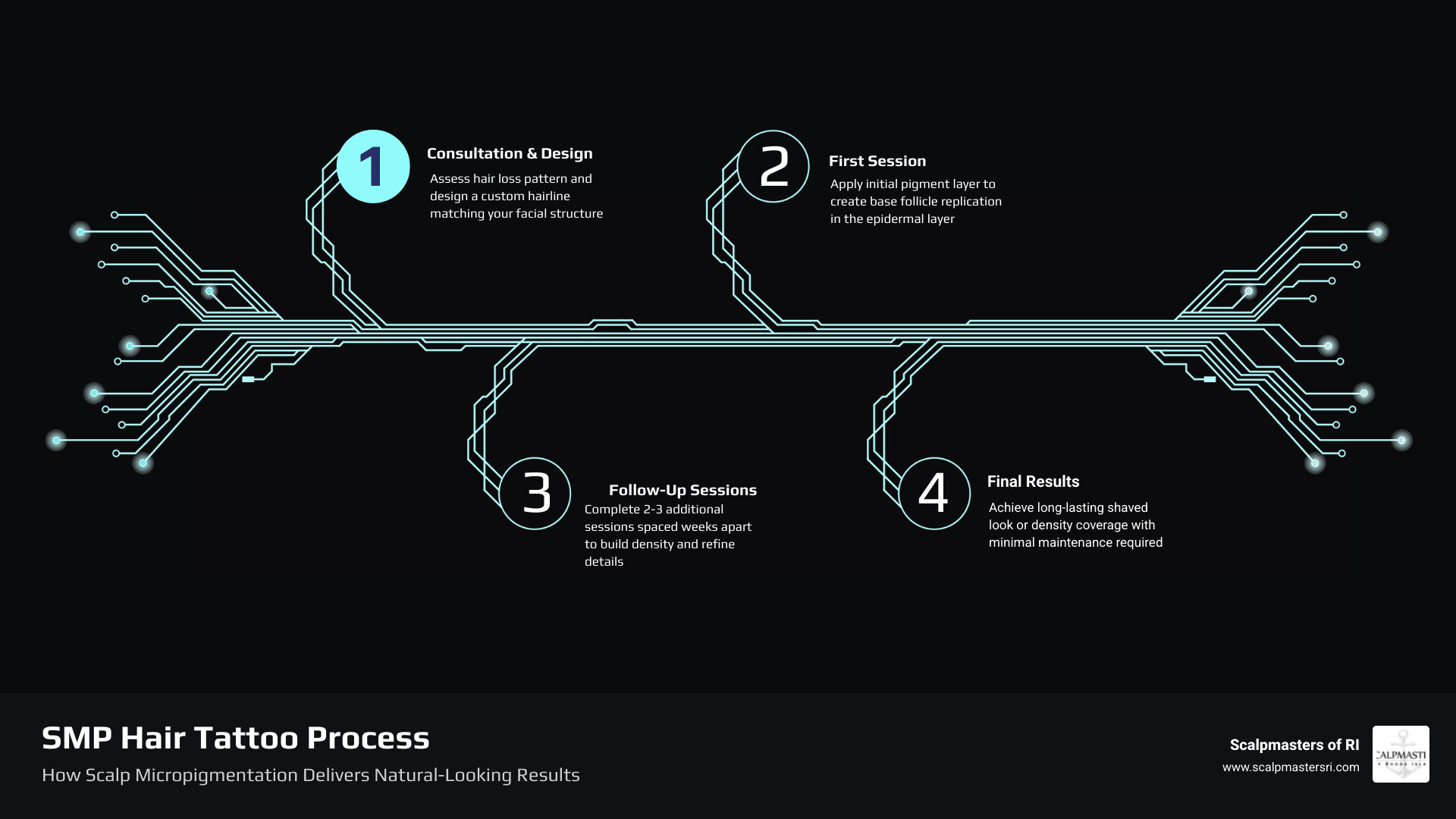
Getting a quality SMP hair tattoo is a progressive journey, not a one-and-done appointment. Achieving a hyper-realistic look requires layering pigment over multiple sessions to build depth and dimension.
The Session Breakdown
Typically, a full treatment requires 3 to 4 sessions, with each session lasting about 2 to 4 hours depending on the size of the treatment area.
- Session 1: We treat this as an "information session" for your skin. We start with a lighter pigment shade to build a safe foundation and see how your skin heals and retains the ink.
- Sessions 2 & 3: We map out more density, layering progressively darker shades to build a multi-dimensional, hyper-realistic look.
- Session 4 (If needed): We perform final touch-ups, ensuring the blend between your natural hair and the pigment is completely seamless.
To learn what to expect during each visit, check out our detailed guide on the Scalp Micropigmentation Procedure.
Aftercare and Healing
Proper healing is vital for optimal pigment retention. After each session, your scalp will experience minor redness, which typically fades within 24 to 48 hours.
- Days 1 to 4: Keep the scalp completely dry. No washing, heavy sweating, or direct sun exposure. This "dry healing" phase allows the micro-dots to close up and lock in the pigment.
- Days 5+: You can gently wash your scalp and moisturize. However, you must avoid heavy cardio, steam rooms, and swimming pools for at least 10 days post-session.
Longevity and Maintenance
While SMP is considered a semi-permanent to permanent cosmetic treatment, the results are not entirely rigid. Over time, your immune system and UV exposure will naturally cause the pigment to lighten. Typically, a high-quality SMP treatment will last 5 to 10 years before you need a brief touch-up to restore its original vibrancy. If you ever change your mind or want to adjust your hairline as you age, the pigment can be easily removed or adjusted with standard tattoo-removal lasers.
For a detailed look at long-term expectations, read our post: Is Scalp Micropigmentation Permanent.
Cost Comparison and Selecting a Qualified New England Practitioner
When researching the cost of an SMP hair tattoo, it is important to understand that pricing is highly customized. Because every head is unique, several factors influence the final cost of your treatment:
- The Area of Coverage: Recreating a small receded hairline is a faster process than treating a completely bald scalp.
- Scar Tissue: Camouflaging dense FUT or FUE transplant scars requires specialized techniques, as scar tissue absorbs pigment differently than healthy skin.
- Skin Type: Oily, dry, or highly sensitive skin can affect how many sessions are needed to achieve perfect pigment retention.
To learn more about how these variables affect pricing, read our guide on Hair Tattoo Cost.
Because there is currently no international licensing body for SMP, choosing a highly qualified practitioner is the most important decision you will make. Do not treat this like a standard body tattoo — general tattoo artists do not have the training, specialized equipment, or carbon-based pigments required for natural scalp work.
When looking for a clinic in New England, look for specialists who focus exclusively on SMP. Whether you are searching for a clinic in Cranston, Providence, Boston, Worcester, Warwick, or Fall River, ensure your practitioner has a robust portfolio of healed before-and-after photos, maintains strict OSHA and HIPAA sanitation standards, and designs conservative, age-appropriate hairlines.
If you are ready to find a trusted local expert, visit Scalp Micropigmentation Rhode Island to explore our local standards and patient results.
Conclusion: Choosing the Best Scalp Micropigmentation in Rhode Island
At Scalpmasters of RI, based in Cranston, we are committed to providing the highest-quality scalp micropigmentation treatments in New England. Our ultimate goal is to restore your confidence with incredibly precise, natural-looking hairlines and density treatments tailored specifically to your features, head shape, and age.
With our founder's extensive artistry and experience, we ensure that every dot matches your natural hair follicle pattern perfectly. If you are tired of temporary fixes, daily hair fibers, or worrying about the wind exposing your scalp, we are here to help.
Take the first step toward a worry-free, maintenance-free look. Explore our comprehensive resources on Demystifying Products and Treatments and book your consultation with our Cranston, RI clinic today!
Learn More
What's New
Latest Hair Loss Solutions & Guides