
Healing Your New Hairline Without the Headache
What You Need to Know About SMP Aftercare Tips Right Now
SMP aftercare tips are the steps you follow after a scalp micropigmentation treatment to protect the pigment, prevent fading, and get the best possible results.
Here are the most important ones at a glance:
- Keep your scalp dry for the first 4 days — no washing, no sweating
- Start gentle cleansing on day 5 using lukewarm water and a sulfate-free, fragrance-free shampoo
- Pat dry — never rub — after washing
- Avoid strenuous exercise for at least 10 days
- No swimming, saunas, or steam rooms for at least 30 days
- Protect from sun exposure with SPF 30+ sunscreen or a hat, daily
- Don't pick or scratch scabs — let them shed naturally between days 5–12
- Moisturize regularly once the initial healing phase passes
- Wait 7–10 days before shaving, and use an electric foil shaver first
- Schedule your follow-up sessions — most people need 2–3 sessions for even pigment retention
You just invested in a new look. That investment deserves protection.
Scalp micropigmentation creates thousands of tiny micro-impressions in your scalp, each one designed to mimic a real hair follicle. Those dots are also micro-wounds. And like any wound, they need the right conditions to heal properly.
The problem? Most people walk out of their first session feeling great — and then accidentally undo their results by washing too soon, hitting the gym, or stepping into the sun without protection.
The full healing process takes two to four weeks, with most people feeling back to normal around day 10. But the deeper skin layers keep settling well beyond that. What you do in those first 30 days has a direct impact on how sharp, natural, and long-lasting your results will be.
This guide covers everything — from the first hours after treatment all the way through long-term maintenance — so your new hairline heals exactly the way it should.
Why Proper SMP Aftercare Tips Matter for Your Results

At Scalpmasters of RI, we take immense pride in the artistry of your new hairline. However, once you leave our Cranston clinic, the "baton" is passed to you. Roughly 25% of your final result depends on how you handle the healing process. Following SMP aftercare tips isn't just about avoiding a "bad" result; it’s about ensuring the follicle blending looks seamless and the pigment stays exactly where it was placed.
When we perform the procedure, we are meticulously placing pigment to mimic natural hair. If you ignore the rules—like sweating too early or scrubbing the scalp—the body's natural healing response can push that pigment out or cause it to blur. This is why understanding what to expect from your scalp micropigmentation results is so important. Proper care ensures that the crisp, clean dots we create remain looking like actual hair follicles rather than messy ink blotches.
Our New England clients often ask why the rules are so strict. The answer is simple: we want your confidence to last for years, not weeks. Following SMP aftercare | important steps to follow! is the difference between a result that looks like a tattoo and a result that looks like a real, dense head of hair.
Protecting the Pigment in the Dermis
To understand the "why" behind the rules, we have to look at the science of the skin. During the procedure, we create thousands of micro-wounds to deposit ink into the dermis layer. Because these wounds are open, your body wants to heal them.
If you get the scalp wet or sweat excessively in the first 48–72 hours, the moisture can expand your pores. This allows the pigment to be absorbed deeper or even "bleed" out of the site, leading to significant fading. Additionally, the oxidation process—where the pigment reacts with oxygen to reach its final color—needs a stable environment. By following scalp micropigmentation aftercare tips maximize your SMP results, you allow the skin to seal over the pigment, locking it in place for the long haul.
Essential SMP Aftercare Tips for Long-Term Vibrancy
Healing doesn't end when the scabs fall off. In the Rhode Island and Massachusetts area, we deal with varying climates—from humid summers to harsh, dry winters. Both extremes can affect your SMP.
- UV Protection: This is the number one enemy of SMP. UV rays break down pigment particles over time.
- Moisture Balance: A dry, flaky scalp makes the pigment look dull. A healthy, moisturized scalp keeps the "follicles" looking vibrant.
- Touch-Up Awareness: Even with perfect care, your body will slowly process the pigment. Expect a touch-up every 4–6 years to keep things crisp.
The 30-Day Recovery Timeline: From Treatment to Total Healing
Healing is a journey, not a sprint. Your scalp will go through several phases, and it’s helpful to know that what you see on day 7 isn't the final result. According to the SMP aftercare: day-by-day guide to heal right - domepeace, the process is as much about patience as it is about products.
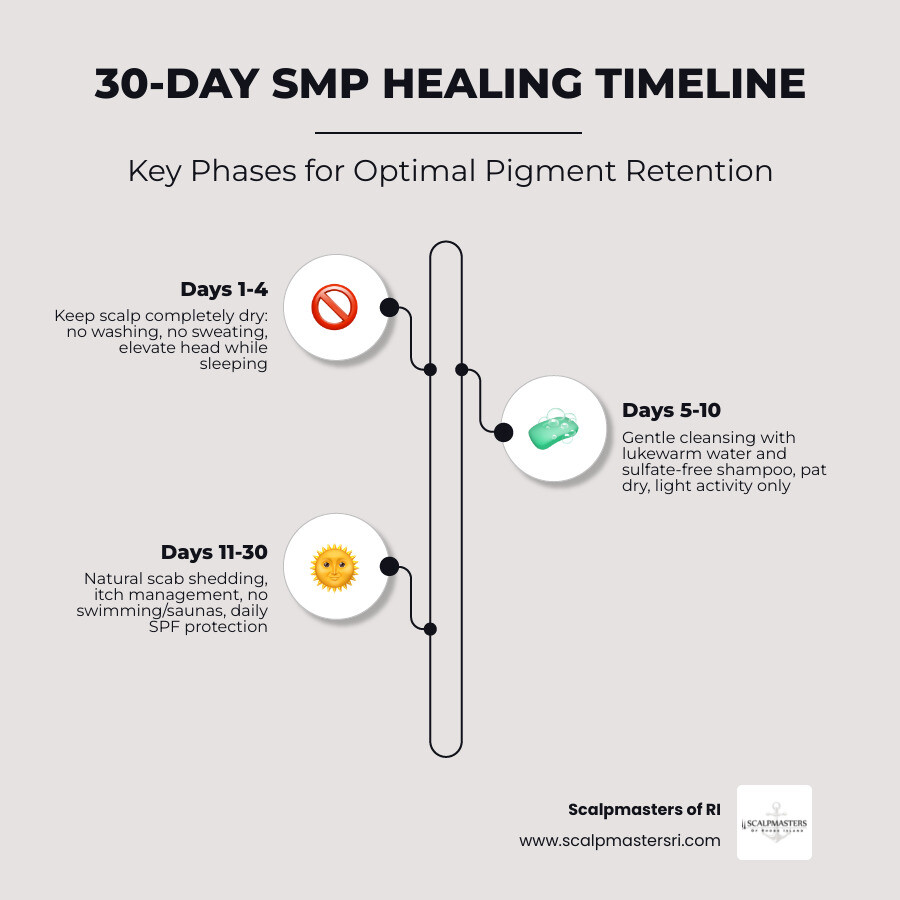
Days 1-4: The Critical Dry Phase
These are the most important days for your new hairline. Your scalp is essentially a series of tiny open wounds.
- No Washing: Do not let a single drop of water touch your head. This includes rain! If you live in a rainy area like Providence or Boston, keep an umbrella handy.
- No Sweating: This means no gym, no heavy lifting, and no long walks in the sun. Sweat contains salt and bacteria that can irritate the area and pull the pigment out.
- Head Elevation: We recommend sleeping with your head slightly elevated for the first two nights. This helps reduce any minor swelling.
- Clean Pillowcase: Swap your pillowcase for a fresh, clean one to prevent any bacteria from entering the micro-wounds while you sleep.
Days 5-10: Gentle Cleansing and SMP Aftercare Tips
By day 5, the micro-wounds have typically closed, and you can begin to reintroduce moisture—carefully.
- The First Wash: Use lukewarm water. Avoid hot water, as it can strip the skin’s natural oils and irritate the healing tissue. Use a sulfate-free, fragrance-free shampoo.
- Pat Dry: This is vital. Never rub your scalp with a towel. Gently pat the area dry with a clean, soft towel.
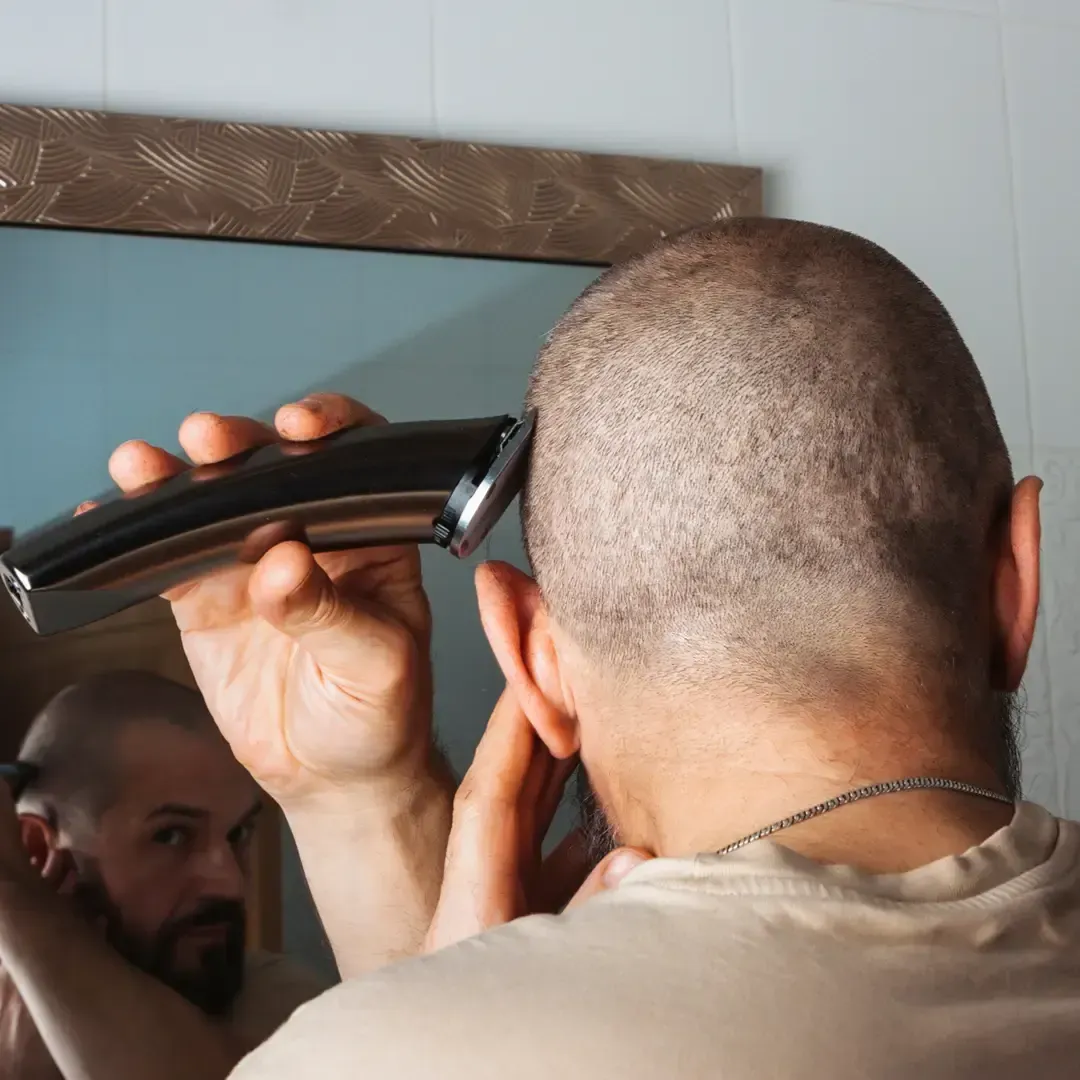
- Shaving: You can use an electric foil shaver starting around day 7, but be extremely gentle. Avoid traditional razor blades until at least day 30.
- Light Exercise: You can return to light activity (walking, light stretching), but keep it under 20 minutes and ensure you don't break a heavy sweat.
Days 11-30: Settling and Shedding
This is the "ghosting" phase, and it can be a bit scary if you aren't prepared for it.
Between days 5 and 12, scabs will naturally shed. You might see what looks like pigment coming off with the scab. Don't panic. This is surface pigment; the ink in the dermis remains intact. As the scabs fall off, the SMP might look light or patchy. This is because a new layer of skin is forming over the pigment. By week 4, the color will "re-emerge" as the skin settles.
- No Scratching: It will itch. Do not scratch. Scratching can pull out pigment that hasn't fully settled.
- No Swimming/Saunas: Chlorine and salt water are harsh chemicals that can bleach or blur the pigment before it is fully locked in. Stay out of pools, the ocean, and saunas for a full 30 days.
Grooming and Lifestyle: Shaving, Sweating, and Swimming
Managing your new look requires a shift in your grooming routine. To maintain scalp micropigmentation maintenance tips for long lasting results, you need the right tools.
| Tool Type | When to Use | Safety Level |
|---|---|---|
| Electric Foil Shaver | Day 7-10+ | High - Gentle on healing skin |
| Clippers (T-Liner) | Day 7+ | Medium - Avoid digging into skin |
| Wet Razor Blade | Day 30+ | Low - Use only on fully healed skin |
| Electric Rotary Shaver | Day 14+ | Medium - Use with caution |
The Gym Return Ladder:
- Days 1–5: Zero exercise.
- Days 6–10: Light walking, no heavy sweating.
- Days 11–14: Moderate weight lifting, avoid "grunting" or straining that causes head pressure.
- Day 15+: Full return to the gym, but wash your scalp immediately after to remove sweat.
Long-Term Maintenance and Sun Protection
Once you hit the 30-day mark, your SMP is "safe," but its lifespan depends on your daily habits.
Sunlight is the #1 cause of SMP fading. In New England, even on cloudy days in Boston or Cranston, UV rays are present. Use a broad-spectrum SPF 30+ every single day. If you are going to be at the beach or golfing all day, wear a hat.
Avoid skincare products that contain high levels of alcohol or AHAs (Alpha Hydroxy Acids) on your scalp. These are designed to chemically exfoliate the skin, which can speed up the fading of your pigment. Stick to gentle, moisturizing cleansers.
SMP results can last several years, but touch-up sessions may be needed every 4-6 years to maintain the appearance. If you notice the color turning slightly "dull" or the dots losing their crispness, it’s time to give us a call for a refresh.
Pre-Care and Recognizing Complications
Success starts before you even sit in our chair. Knowing the things to know before you start your scalp micropigmentation can make aftercare much easier.
- Moisturize Pre-Care: One week before your session, moisturize your scalp 3–4 times a day. This makes the skin supple and easier to work with.
- Medication: Avoid blood thinners like aspirin or fish oil for a week prior, as these can increase bleeding and push pigment out during the session.
Signs of Infection: While adverse reactions are extremely rare (we follow strict clinical sterilization protocols), you should know what to look for. If you experience:
- Excessive redness that spreads after day 3.
- Purulent drainage (pus) or oozing.
- Pain that radiates away from the scalp.
- Fever or chills.
In these cases, contact a medical provider immediately, then notify us.
Frequently Asked Questions about SMP Aftercare
When can I wash my head after SMP?
You should wait a full 4 days. On day 5, you can gently wash with lukewarm water and a mild, sulfate-free shampoo. Do not use a washcloth or loofah; use your hands and very light pressure.
What happens if I sweat during the first week?
Sweat contains salt, which can act as a drying agent and pull the pigment out of the micro-wounds. If you accidentally sweat, pat the area dry immediately with a clean paper towel. Do not rub.
Why does my SMP look patchy or light after 10 days?
This is a normal part of the healing process called "ghosting." As the scabs fall off, a layer of dead skin cells covers the pigment, making it look dull. As the skin exfoliates naturally over the next two weeks, the pigment will re-emerge and look darker and sharper.
Conclusion
At Scalpmasters of RI, we believe that scalp micropigmentation is more than just a procedure—it’s a life-changing restoration of confidence. Our founder’s artistry in Cranston ensures that every dot is placed with precision, but the final masterpiece is a joint effort between our team and your aftercare routine.
By following these SMP aftercare tips, you ensure that your new hairline remains a source of pride for years to come. Whether you are in Rhode Island, Connecticut, or Massachusetts, we are here to guide you through every step of the journey.
Ready to take the next step in your hair restoration journey? Schedule a consultation for receding hairline solutions and let us help you achieve the look you’ve always wanted.
Learn More
What's New
Latest Hair Loss Solutions & Guides