

Don't Let It Go: Top Hair Restoration Options in CT
Why Connecticut Hair Restoration Is Worth Taking Seriously
Connecticut hair restoration covers a range of solutions that help people regain a fuller, more natural-looking hairline.
Hair loss is deeply personal. It can quietly chip away at your confidence — in social situations, at work, even just looking in the mirror. Whether you're noticing a receding hairline, thinning on top, or scalp scars that bother you, you're far from alone.
The good news? Connecticut residents have access to proven hair restoration options today. Some deliver immediate, natural-looking results without any downtime at all.
This guide breaks down how you can find what fits your life, your goals, and your comfort level.
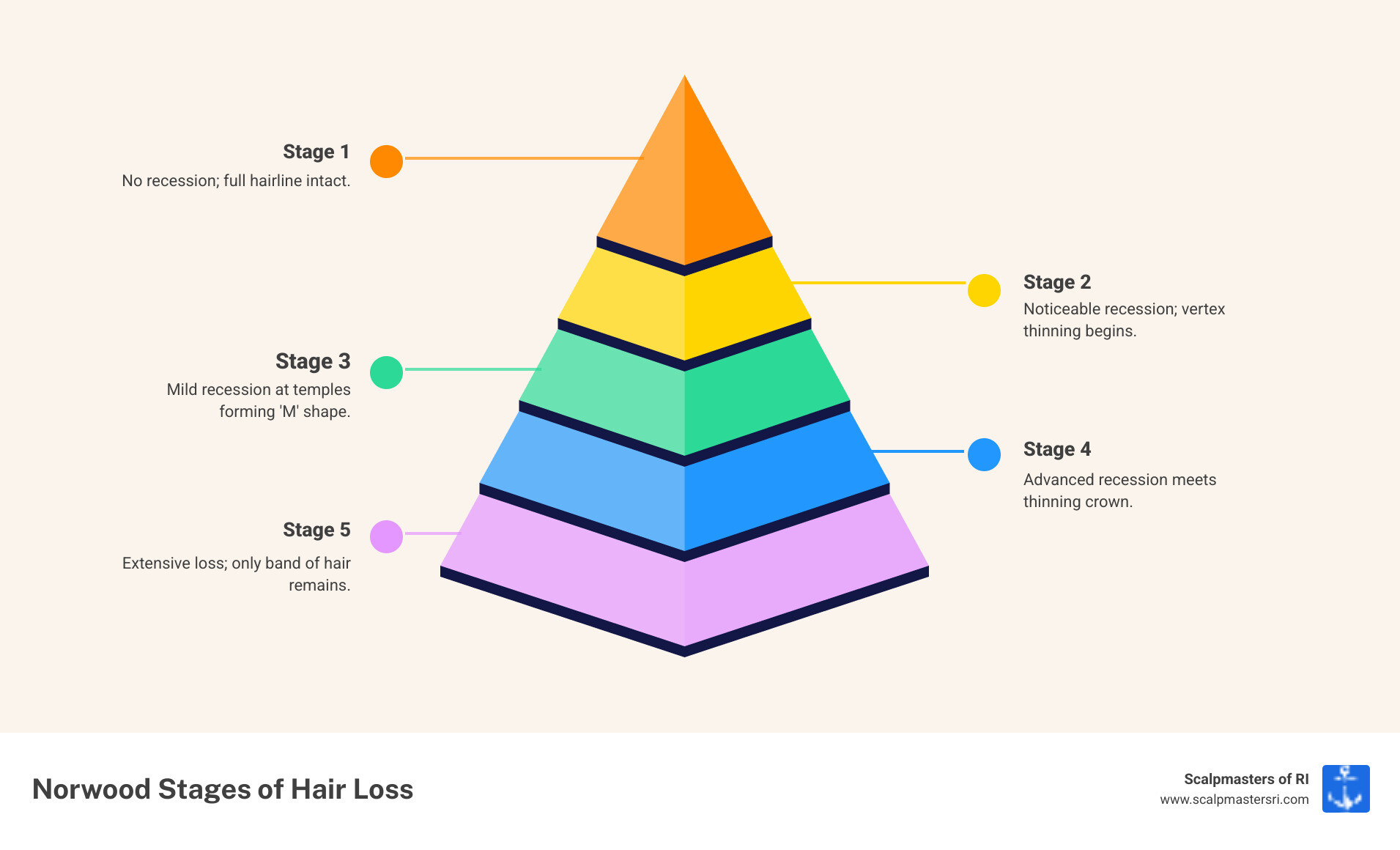
Understanding Hair Loss in the Constitution State
Living in Connecticut often means balancing a professional life in cities like Hartford or Stamford with the active, outdoor lifestyle of the New England coast. When hair loss begins, it doesn't just change your reflection; it can change how you engage with that lifestyle. To find the right connecticut hair restoration path, we first have to look at why the hair is leaving in the first place.
Genetics and DHT Sensitivity
The most common culprit for Connecticut men and women is Androgenetic Alopecia, better known as male or female pattern baldness. This is largely driven by genetics and a hormone called Dihydrotestosterone (DHT). According to the American Hair Loss Association, DHT is the primary trigger for miniaturizing hair follicles. In those with a genetic predisposition, DHT causes follicles to shrink over time until they stop producing visible hair entirely.
Stress and Environmental Triggers
Let’s be honest—life in the Northeast can be high-pressure. Whether it's the daily commute on I-95 or the demands of a high-stakes career, chronic stress can trigger conditions like Telogen Effluvium, where hair is pushed prematurely into the shedding phase. Furthermore, environmental factors and seasonal changes in New England can sometimes exacerbate scalp dryness and irritation, affecting overall hair health.
Male vs. Female Thinning
While men typically see a receding hairline or a growing "bald spot" on the crown, women often experience diffuse thinning across the entire top of the scalp. This can make the part line look wider and the scalp more visible under bright office lights or sunlight.
Alopecia Areata and Nutritional Deficiencies
In some cases, hair loss isn't a slow fade but happens in sudden patches. This is often Alopecia Areata, an autoimmune condition. Other times, the body might be lacking essential nutrients like iron, Vitamin D, or protein, which are the building blocks of healthy hair. Understanding these triggers is the first step toward choosing a restoration method that actually works for your specific situation.
Exploring Your Options: Hair Restoration in Connecticut
When you begin searching for connecticut hair restoration, you will find various paths. While some involve long-term medical commitments or invasive procedures, modern technology has introduced more efficient alternatives. The right choice depends on your type of hair loss, how quickly you want to see a change, your budget, and whether you want to restore actual growth, improve cosmetic appearance, or both.
Understanding Traditional and Medical Approaches
There are several well-known hair restoration routes that Connecticut residents often research before making a decision. Surgical hair transplantation, including FUE and FUT, aims to move hair follicles from one part of the scalp to another. For the right candidate, this can be effective, but it is still a procedure that involves healing time, higher costs, and results that develop gradually over many months.
Medical options are also common. Topical and oral treatments are often used to slow shedding or support existing follicles. Some people also explore PRP therapy as part of a broader hair loss plan. These approaches may help in specific cases, but they typically require consistency, patience, and ongoing maintenance. Results can vary depending on the cause of hair loss, the stage of thinning, and how your body responds.
That is why many people looking into connecticut hair restoration compare these options against a solution that offers immediate visual improvement without surgery.
Scalp Micropigmentation: A Modern, Non-Invasive Solution
For many of our clients, the wait for results or the uncertainty of long-term treatments is a dealbreaker. This is where Scalp Micropigmentation (SMP) has changed the game for connecticut hair restoration.
SMP is a highly specialized process where we use medical-grade pigments and precision needles to create thousands of tiny, follicle-like impressions on the scalp. It is essentially the art of "simulating" hair.
- Follicle Simulation: We match the pigment to your natural hair color and skin tone, recreating the look of a full head of hair that has been closely shaved.
- Non-invasive: There are no scalpels, no stitches, and no "donor areas" to worry about.
- Immediate Results: Unlike other methods that take a year to show progress, you walk out of your first SMP session with a visible hairline.
- Density Enhancement: For those with thinning hair, especially women, SMP can be used to "shade" the scalp, reducing the contrast between skin and hair to make your existing locks look significantly thicker.
- Scar Camouflage: If you have existing scalp scars from previous procedures, SMP is the gold standard for blending that scar into the surrounding hair.
Another reason SMP stands out is versatility. It can work for clients who keep their hair very short, clients with diffuse thinning who want the scalp to show less, and clients who have already tried other solutions and still feel self-conscious. It can also complement a transplant by making the overall result appear denser and more balanced. For busy professionals, active parents, and anyone who does not want to plan life around recovery, that convenience matters.
Whether you are looking for Scalp Micropigmentation in Stamford CT or Scalp Micropigmentation in Hartford CT, this solution offers a level of precision and "instant gratification" that traditional methods simply cannot match. For a deeper dive, you can check out our Scalp Micropigmentation Connecticut Complete Guide.
What to Expect: Choosing Your Connecticut Hair Restoration Provider
Choosing a provider is the most important decision you'll make. This isn't just a technical procedure; it's an artistic one. Your hairline is the frame for your entire face, so you want someone with a "good eye" as much as a steady hand.
Virtual Consultations and Planning
Most modern clinics, including ours, offer virtual consultations. This allows you to share photos of your hair loss from the privacy of your home and get a personalized plan. During a consultation, we look at your hair loss pattern, skin type, and your goals. Do you want a sharp, "edge-up" look, or a soft, feathered, age-appropriate hairline? These are the details that matter.
A strong consultation should also set realistic expectations. Not every client needs the same hairline density, darkness, or shape. A thoughtful provider will talk through what will look natural from up close, in daylight, and over time. This planning stage is where good results begin.
Before-and-After Galleries
Never choose a provider without seeing their work. A reputable connecticut hair restoration specialist should have an extensive portfolio. Look for "real-world" lighting and high-resolution photos. Specifically, look for cases that match your own - if you have a receding hairline, look at how they handle frontal hairlines. If you have diffuse thinning, look at their density work.
It is also smart to look for consistency, not just one or two dramatic transformations. A quality gallery should show different skin tones, hairlines, levels of hair loss, and healed results. This helps you judge whether the provider can create a look that fits your features rather than applying the same template to everyone.
Certifications and Artistic Judgment
While different restoration methods require various qualifications, SMP specialists require a unique set of elite skills. You want a provider who understands "color theory" so the pigment does not heal into an unnatural shade over time and "depth control" so the impressions stay crisp and do not blur. At Scalpmasters of RI, our USP is the deep experience and artistry we bring to every follicle we simulate. We do not just "fill in the blanks"; we design a look that fits your head shape and age.
Price, Value, and Long-Term Thinking
Cost is naturally part of the decision. The cheapest option is rarely the best value when it comes to appearance-based work that sits front and center on your face every day. Instead of focusing only on price, evaluate the overall value: experience, cleanliness, planning, communication, and the quality of healed results. A provider with strong artistic standards can help you avoid the far greater cost of correction work later.
When researching connecticut hair restoration, think beyond the appointment itself. Ask how many sessions are typically needed, what aftercare involves, how touch-ups are handled, and whether the provider is available to answer questions after treatment. A great provider should make the process feel informed, transparent, and tailored to you.
Frequently Asked Questions about Hair Restoration in CT
How long do results last and when are they visible?
One of the biggest advantages of SMP is the timeline. The results are immediately visible. While most clients require 2 to 3 sessions to build up the perfect density and layering, you will see a transformation after session one.
In terms of longevity, SMP is considered a long-lasting solution. The pigments will slowly lighten over several years. Most clients come back for a quick touch-up every 4 to 6 years to keep the color looking fresh and sharp.
What is the comfort level during hair restoration treatment?
We often get asked, "Does it hurt?" Compared to the recovery of invasive surgical procedures—which can involve swelling, soreness, and significant downtime—SMP is very manageable. Most clients describe the sensation as a light "stinging" or "tapping." We use topical numbing agents to ensure you are comfortable throughout the process. Most importantly, there is no "downtime." You can usually return to your daily Connecticut routine immediately, provided you follow basic aftercare like avoiding heavy sweating for a few days.
What qualifications should I look for in a hair restoration specialist?
When vetting a specialist for connecticut hair restoration, look for:
- Specialized SMP Training: This is not the same as traditional tattooing. The equipment and pigments are entirely different.
- Portfolio of Work: Do the hairlines look natural, or do they look like they were drawn on with a ruler?
- Cleanliness and Licensing: Ensure the facility meets all health department standards for New England.
- Artistic Intuition: Can they explain why they are choosing a certain hairline shape for you?
Conclusion
Hair loss doesn't have to be something you just "accept." Whether you're in the early stages of thinning or have been dealing with a bald scalp for years, there is a solution that fits your lifestyle. Many are finding that the precision, speed, and natural look of scalp micropigmentation provide the best return on investment for their confidence.
At Scalpmasters of RI, we take pride in serving the Connecticut community, including those looking for Scalp Micropigmentation in New Haven CT. We focus on natural hairlines and precision artistry to ensure that when people look at you, they don't see a "procedure"—they just see a more confident version of you.
Don't let your hair loss define your story. Take the first step, book a consultation, and let's restore what you've lost.
Learn More
What's New
Latest Hair Loss Solutions & Guides