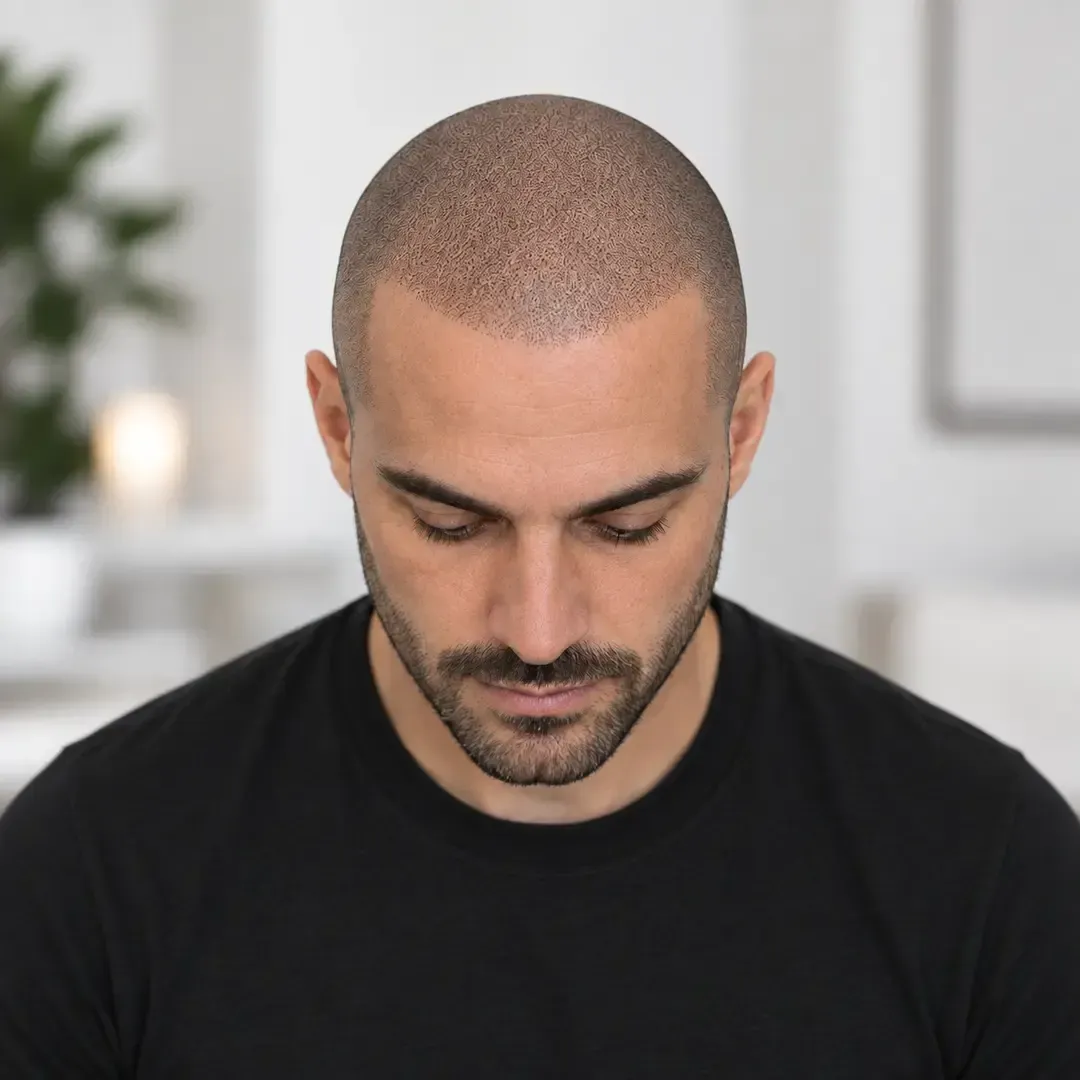

Step-by-Step Guide to Scalp Micropigmentation Consultation
What a Scalp Micropigmentation Consultation Actually Covers
A scalp micropigmentation consultation is your first step toward understanding whether SMP is the right solution for your hair loss — and what your results could realistically look like.
Here's a quick overview of what happens:
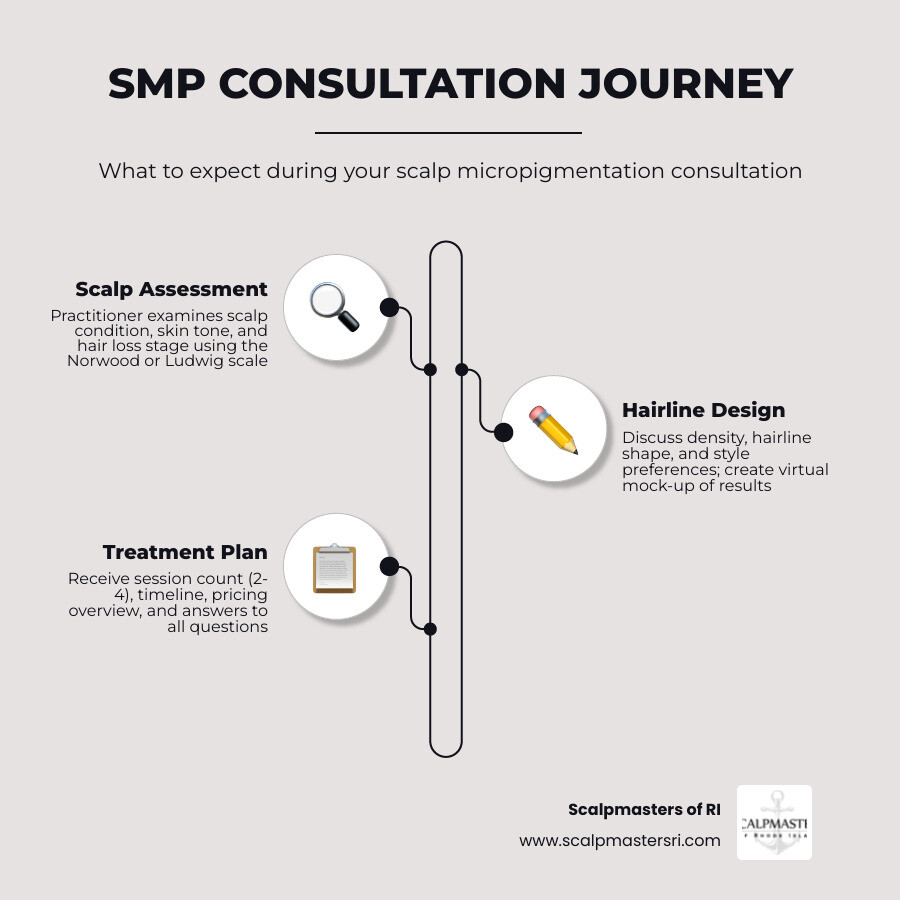
- Scalp and hair loss assessment — The practitioner examines your scalp condition, skin tone, and stage of hair loss.
- Medical history review — You'll discuss any health conditions, medications, or previous procedures like hair transplants.
- Hairline design discussion — You'll talk through the look you want, including density, hairline shape, and style.
- Treatment plan creation — The practitioner outlines how many sessions you'll need (typically 2-4) and the timeline.
- Questions and answers — You get honest answers about results, aftercare, and what to expect long-term.
- Quote or pricing overview — You receive a personalized cost estimate based on your level of hair loss.
Most in-person consultations run 30 to 60 minutes. Remote options — phone, video, or photo-based — are also available and often shorter.
Hair loss affects far more than just appearance. It can quietly chip away at your confidence in ways that are hard to put into words. If you've been researching non-surgical hair restoration options in Rhode Island — whether you're in Cranston, Providence, Warwick, or anywhere across New England — chances are you've come across scalp micropigmentation (SMP).
But before committing to treatment, most people have the same question: What actually happens at a consultation?
This guide walks you through every stage of the SMP consultation process at Scalpmasters of RI — from the moment you reach out to the day you book your first session. No pressure, no guesswork.
What to Expect During a Scalp Micropigmentation Consultation
When you schedule a scalp micropigmentation consultation with us, you are not walking into a high-pressure sales pitch. Instead, think of it as an educational, collaborative chat. Our primary goal is to determine if you are a great candidate for the procedure and to design a customized plan that aligns with your aesthetic goals.
During the session, we will perform a comprehensive scalp and hair analysis. We look at the health of your skin, your remaining hair follicles, and any potential trouble spots, such as dry skin, excess oil, or scars. If you have undergone surgical hair transplants in the past and want to hide the evidence, we can evaluate those areas for scar camouflage.
Next, we review your medical history. This is crucial because certain skin conditions, such as active psoriasis or eczema on the scalp, or recent medications, such as Accutane, can affect how well your skin retains pigment. For general educational information about common hair loss causes and when to seek professional guidance, the American Academy of Dermatology hair loss resource is a helpful external reference.
One of the most exciting parts of the meeting is the hairline design discussion. We will talk about your preferred style-whether you want a soft, natural, feathered hairline or a sharp, clean, modern look. We can even create a virtual mock-up or use a cosmetic pencil to map out a draft hairline directly on your scalp so you can see the potential transformation. This visual guide makes it easy to decide on the best look for your face shape.

To learn more about what scalp micropigmentation is and how it replicates natural hair follicles, check out our detailed guide on What is SMP.
Choosing the Right Scalp Micropigmentation Consultation Format
We understand that our clients lead busy lives. Whether you are living right down the road in Cranston, commuting from Providence or Warwick, traveling from Johnston, Pawtucket, East Providence, North Providence, Lincoln, Smithfield, Coventry, West Warwick, or coming in from Boston, Massachusetts, Connecticut, or elsewhere in New England, we offer multiple consultation formats to fit your schedule.
| Consultation Format | How It Works | Best For | Pros & Cons |
|---|---|---|---|
| In-Person | You visit our clinic in Cranston, RI. We examine your scalp under professional lighting. | Local clients who want the most accurate assessment and a direct look at our studio. | Pros:
Highest accuracy, real-time hairline mock-ups. Cons: Requires travel. |
| Video Call (FaceTime/WhatsApp) | We connect via a live video call to discuss your goals and look at your hair loss in real time. | Clients across New England who want a face-to-face chat without the drive. | Pros:
Convenient, interactive, highly personal. Cons: Dependent on internet connection and camera quality. |
| Phone & Photo Submission | You email or text us clear photos of your scalp from multiple angles, and we follow up with a phone call. | Busy individuals looking for a quick, initial suitability check and an indicative quote. | Pros:
Extremely fast, fits any schedule. Cons: No live physical assessment of scalp texture. |
No matter which format you choose, we ensure you receive the same level of expert advice. Whether you are comparing options in Providence, RI, Warwick, RI, Johnston, RI, Coventry, RI, or anywhere else in New England, choosing the format that makes you feel most comfortable allows you to ask the detailed questions you need to make an informed decision.
How Practitioners Assess Suitability and Hair Loss Stages
We do not believe in a one-size-fits-all approach. To deliver results that look completely natural, we must carefully assess several biological factors:
- Stage of Hair Loss: We use standard clinical charts like the Norwood Scale (for male pattern baldness) and the Ludwig Scale (for female hair thinning) to categorize your hair loss.
- Scalp Condition: An oily scalp, dry skin, or active inflammation can alter pigment absorption. We will guide you on how to prep your skin before your first session.
- Skin Tone & Hair Color: We customize our pigments to match your unique skin tone and remaining hair color. Our advanced carbon-only pigments allow us to create realistic grayscale tones that perfectly mimic natural hair shadows, even for clients with lighter or graying hair.
- Scarring: If you have linear scars from a Follicular Unit Transplantation (FUT) or dot scars from Follicular Unit Extraction (FUE), we assess the texture of the scar tissue. Scar tissue behaves differently than healthy skin, requiring specialized depth and spacing.
For a deeper look into the science of pigment placement and scalp layers, read our resource on How Scalp Micropigmentation Works: A Step-by-Step Guide. You can also view our full range of solutions on our Scalpmasters of RI Services page.
Key Questions to Ask During Your Scalp Micropigmentation Consultation
A consultation is a two-way street. While we assess your scalp, you should evaluate us! To ensure you choose a reputable clinic, we recommend asking these essential questions during your appointment:
- What training and certifications do you hold?(Ensure your artist is specifically trained in SMP, which is highly distinct from traditional body tattooing).
- Can I see your portfolio of healed results?(Fresh SMP always looks darker and crisper; healed photos show the true quality of the work).
- What type of pigments do you use?(Medical-grade, carbon-only pigments are preferred because they do not discolor or turn blue/green over time).
- What is your touch-up and correction policy?(Find out if they offer a quality guarantee for the months following your treatment).
- How do you keep your equipment sterile?(Confirm the use of single-use, medical-grade needles and strict hygiene protocols).
To help you navigate this decision, we have put together an expert checklist on How to Choose Scalp Micropigmentation Clinic. Having these questions ready when researching clinics in the Boston, MA area or anywhere in New England will keep you protected and informed.
Understanding SMP Pricing, Sessions, and Timelines
During your scalp micropigmentation consultation, we will map out a clear timeline. Achieving a natural look requires building up density gradually, which is why SMP is never completed in a single session.
- Number of Sessions: Most clients require 2 to 4 sessions to achieve optimal, layered density.
- Spacing: Sessions are spaced 10 to 14 days apart. This healing window allows the skin to recover and the tiny pigment deposits to settle, ensuring we can accurately judge how much more density to add in the next session.
- Pricing Factors: Because everyone's hair loss is unique, treatment costs are highly personalized. Factors that influence your custom quote include the overall size of the treatment area, the hair density we need to match, and whether we are working around complex scar tissue.
- Financing: We believe confidence should be accessible, which is why we discuss flexible payment plans and financing options during our meeting.
For a detailed breakdown of how we structure our treatment packages, read through our Scalp Micropigmentation Clinic Complete Guide.
Next Steps: Preparing for Your SMP Treatment
Once you feel completely comfortable and decide to move forward, we will book your sessions and hand you a personalized pre-care plan. Preparing your scalp properly ensures the skin is in peak condition to receive and hold the pigment.
Before your first appointment, we recommend reading our guide on Things to Know Before You Start Your Scalp Micropigmentation to ensure your treatment goes as smoothly as possible.
Pre-Care Preparation and Long-Term Maintenance
To get the absolute best results from your sessions, we ask our clients to follow a few simple steps:
- Hydrate Your Scalp: Moisturize your scalp twice a day for 14 days leading up to your session. Soft, hydrated skin accepts pigment much easier than dry, tough skin.
- Shaving: If you are going for the classic shaved-head look, we will guide you on when and how to trim your hair before your session.
- Avoid Blood Thinners: Avoid alcohol, caffeine, and blood-thinning medications for 24 hours before your appointment to minimize bleeding and maximize pigment retention.
- Long-Term Protection: Once your treatment is complete, protecting your investment is easy. Apply a daily SPF 30+ sunscreen to prevent UV rays from fading the pigment, and keep your scalp clean and moisturized.
For a complete list of dos and don'ts, check out our SMP Treatment Guide.
Risks, Side Effects, and Realistic Expectations
Scalp micropigmentation is a non-surgical, non-invasive procedure with virtually no downtime. Most clients describe the sensation as a light scratching or a mild sunburn, and many return to work the very next day.
Some temporary redness is completely normal and typically fades within 24 to 48 hours. Because we use bio-compatible, high-quality pigments, your results will look incredibly realistic and typically last 5 to 10 years. Over time, the pigments will naturally and subtly soften, and we recommend a quick touch-up session every 2 to 4 years to keep your hairline looking sharp and fresh.
If you are dealing with hair loss from medical conditions, transplants, or scarring, scalp micropigmentation is widely trusted as a highly effective, non-surgical solution across New England—from Providence and Cranston, RI to Boston, MA and beyond—helping clients regain their natural look and confidence.
Are you ready to see what is possible? Take a look at our Scalp Micropigmentation Before After Guide to view real transformations, or Schedule a consultation for scar camouflage with our team at Scalpmasters of RI today. Let us help you bring back your hairline—and your confidence.
Learn More
What's New
Latest Hair Loss Solutions & Guides