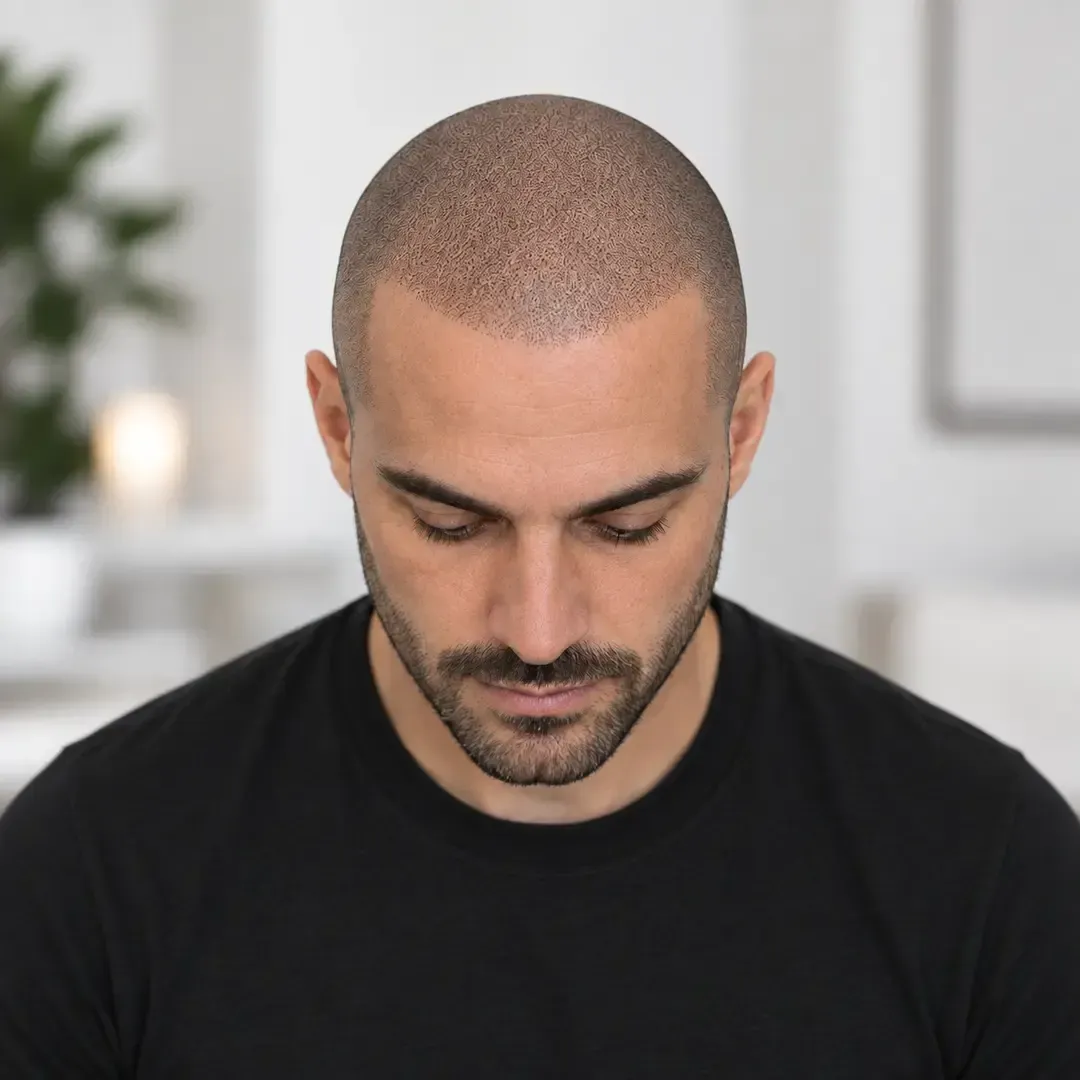

Density and Destiny: Using SMP to Fight Alopecia Universalis
When Hair Loss Feels Permanent: What SMP Can Do for Alopecia
Scalp micropigmentation alopecia treatment is one of the most effective non-surgical options available today for people dealing with total or partial hair loss — and it works by depositing tiny pigment dots into the scalp to replicate the look of real hair follicles.
Quick answer: What is SMP for alopecia?
- What it is: A minimally invasive cosmetic procedure, sometimes called a "hair tattoo," that mimics the appearance of hair follicles on the scalp
- Who it helps: People with alopecia areata, alopecia universalis, androgenetic alopecia, scarring alopecia, and other forms of hair loss
- How it works: A trained practitioner uses micro-needles to deposit pigment into the upper layers of the scalp, creating a realistic density illusion
- How long it lasts: Typically 3–5 years, with optional touch-ups to maintain appearance
- Sessions needed: Usually 2–3 sessions spaced 1–4 weeks apart
- Is it surgical? No — no anesthesia, no downtime, no scarring
Alopecia universalis — the condition where hair is lost across the entire body — can be one of the most psychologically devastating forms of hair loss. Unlike gradual thinning, it can strip away every visible trace of hair, often suddenly and with no reliable medical cure.
For many people, that loss goes far deeper than appearance. It chips away at confidence, identity, and the ability to feel comfortable in everyday situations.
The good news? You don't need surgery or a miracle drug to reclaim how you look and feel. Clinical research shows that SMP delivers immediate improvements in visual density, with one study reporting an average satisfaction score of 8.7 out of 10 immediately after treatment — and a strong link between visual results and patient satisfaction at six-month follow-up.
This guide walks you through exactly how SMP works for alopecia, what the procedure involves, and what kind of results you can realistically expect.
Understanding Scalp Micropigmentation Alopecia Solutions
At its core, scalp micropigmentation is a specialized form of medical tattooing. However, don't let the word "tattoo" mislead you into thinking of traditional body art. Unlike the deep, often blurry ink used for a bicep tattoo, SMP involves the precise application of pigment into the upper layers of the skin—specifically the papillary dermis.
This technique is a 2D camouflage method designed to create a three-dimensional optical illusion. By depositing micro-dots that mimic the size and shape of natural hair follicles, we can "trick" the human eye. As noted in Scientific research on SMP for localized alopecia, the goal is to reduce the contrast between the scalp and the hair, or in the case of total hair loss, to recreate a full "buzz cut" look from scratch.
For those seeking more info about scalp micropigmentation for alopecia, it is important to understand that SMP doesn't grow hair; it manages the shadows of the scalp. Your eye considers how many shadows it sees to determine hair density. By adding these "follicle shadows," we restore the frame of the face and the appearance of a youthful, full head of hair.
How Scalp Micropigmentation Alopecia Treatments Work
The magic of SMP lies in the biology of the scalp. The human scalp has the highest concentration of oil glands on the body, which presents a unique challenge for pigment retention. If the pigment is placed too deep, it can spread and turn a bluish hue due to dermal light scattering. If it's too shallow, it washes away during the natural exfoliation process.
We use a "zero-bleeding" protocol to ensure the pigment sits exactly where it needs to be. Once deposited, the pigment is engulfed by dermal macrophages. Interestingly, research on visual density scores shows that while some fading occurs over the first six months, the correlation between the visual density and patient satisfaction remains incredibly high (ρ = 0.91).
By carefully managing the scalp oil gland concentration, we ensure the micro-dots remain crisp and distinct, preventing the "helmet" look that occurs with poor-quality work.
Suitability for Different Hair Loss Conditions
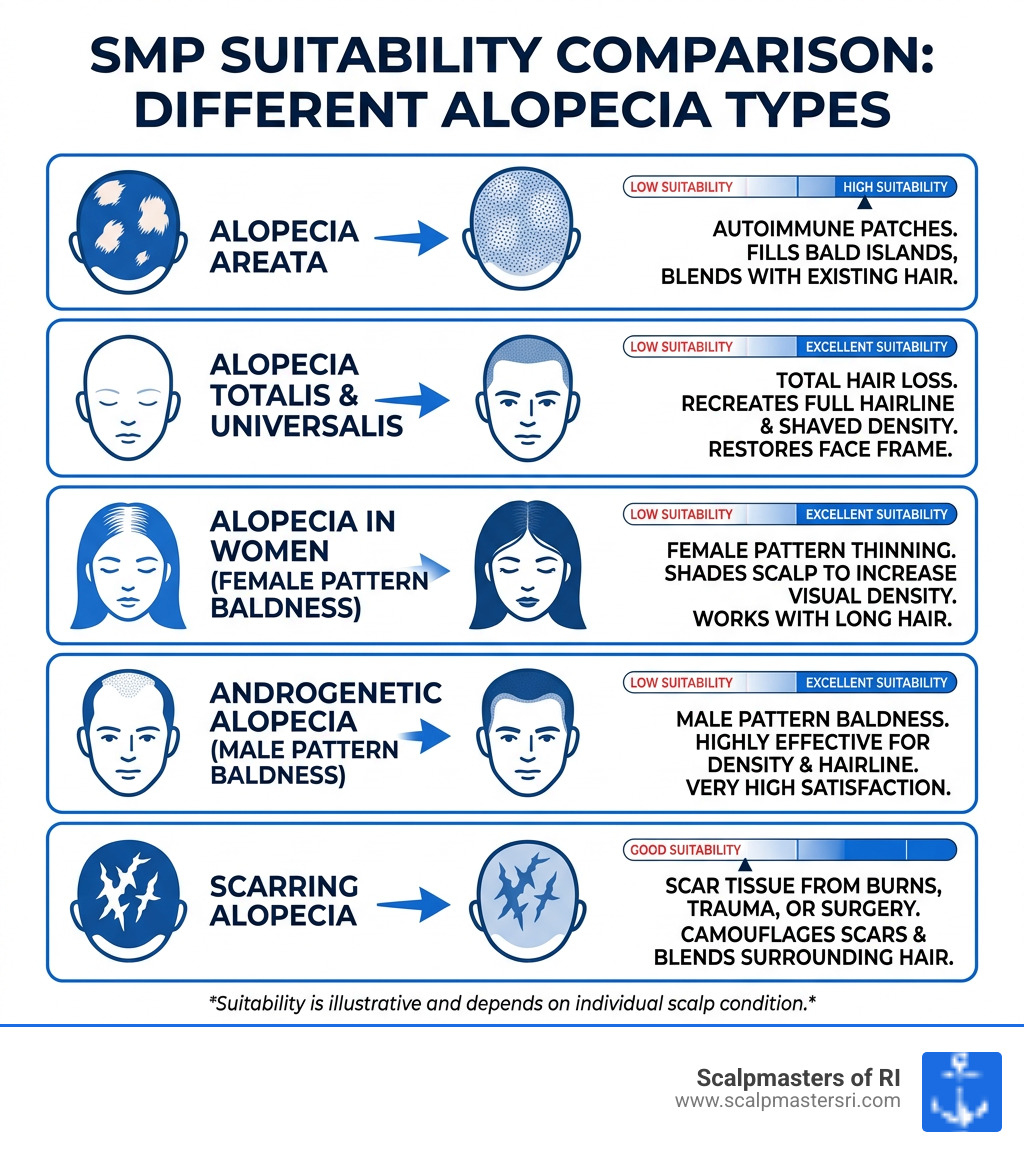
Not all hair loss is created equal, but SMP is remarkably versatile. We tailor our approach based on the specific type of alopecia you are facing:
- Alopecia Areata: This autoimmune condition causes patchy hair loss. We use SMP to fill in these "islands" of baldness, blending them seamlessly with your surrounding natural hair.
- Alopecia Totalis and Universalis: For total loss, we recreate the entire hairline and "shaved look" density across the whole scalp.
- Alopecia in Women: Treatment for alopecia in women often focuses on "densification." Since over 50% of women experience some form of pattern hair loss, SMP is used to shade the scalp so that thinning areas look significantly thicker without the need for a shaved head.
- Androgenetic Alopecia: Standard male or female pattern baldness responds exceptionally well to SMP, with 85.7% of patients reporting they are "very satisfied" with the outcome.
- Scarring Alopecia: While scar tissue is tougher than normal skin, SMP can achieve up to an 85% improvement in the appearance of scars from burns, trauma, or failed hair transplants.
The SMP Procedure: A Step-by-Step Guide to Restoration
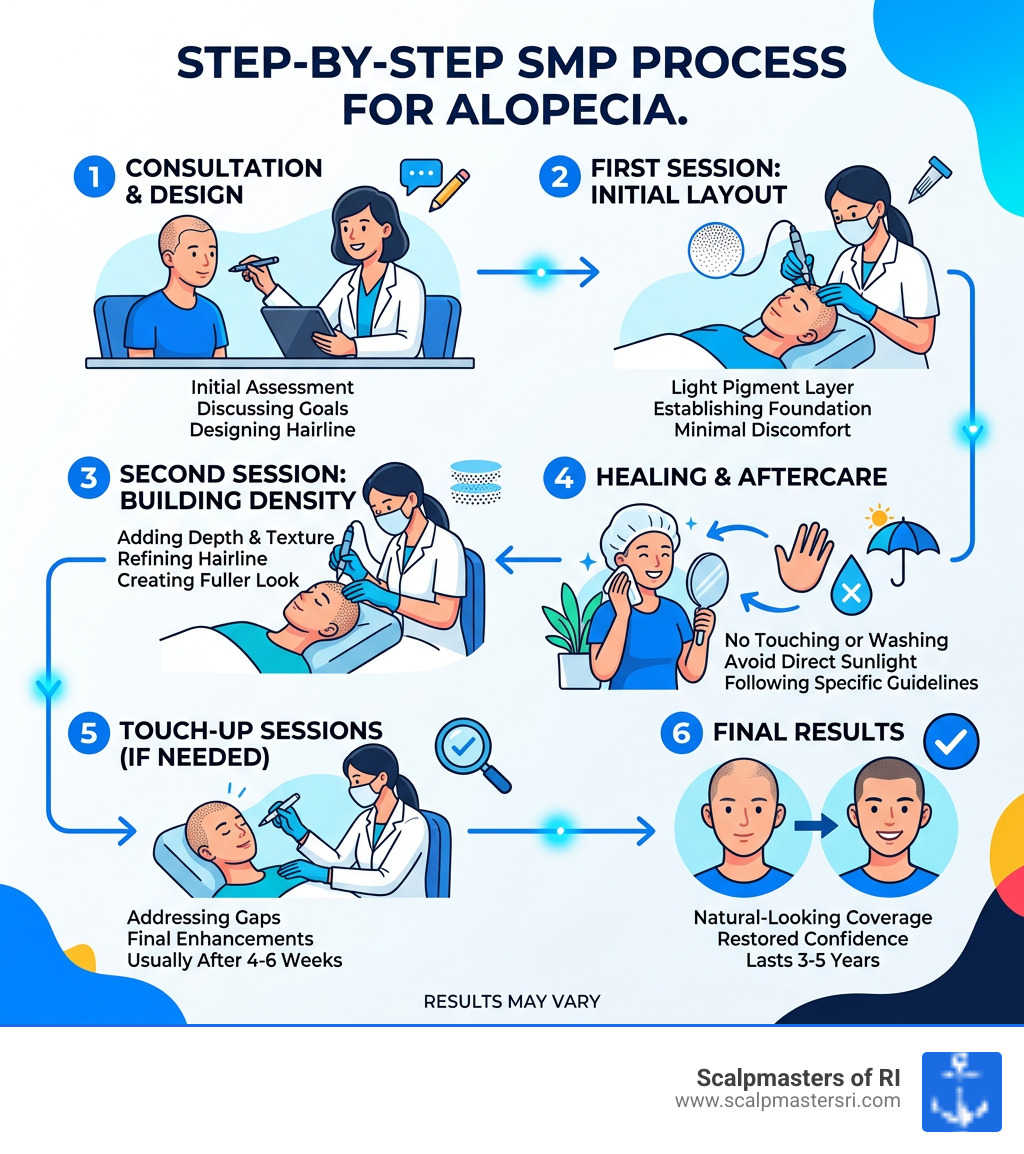
Reclaiming your look is a journey, not a single event. We typically break the process down into three distinct sessions to ensure the most natural, layered result.
- The Consultation: We start by mapping your scalp into zones. We discuss your desired hairline—whether you want a "soft" natural look or a more defined "edge-up."
- Session One (The Foundation): We set the "blueprint." Using a single-point needle (often 0.2mm), we lay down a conservative base of roughly 40 dots per square centimeter. This session establishes the shape and tone.
- Session Two (The Density): About a week later, we add depth. We increase the density to roughly 60 dots per square centimeter, filling in gaps and adjusting the color to match your skin's unique undertones.
- Session Three (The Detail): The final touch. We reach a density of 80–100 dots per square centimeter. This is where we perfect the "transitional zones"—the areas where the SMP meets any existing hair—to ensure there are no harsh lines.
Throughout this process, we adhere strictly to FDA tattoo safety guidelines and medical-grade hygiene standards. Our head tattoo for alopecia technique is designed to be minimally invasive, with many clients even falling asleep during the procedure!
Addressing Patchy Loss with Scalp Micropigmentation Alopecia Techniques
For those with Alopecia Areata, the challenge is the unpredictable nature of the patches. We utilize a randomized distribution technique rather than a grid pattern. This mimics the natural, slightly "imperfect" way hair grows.
If you're looking for more info about treating alopecia with SMP, you'll find that the "blending" phase is critical. We use a gradient approach in transitional zones, slowly decreasing the density of the dots as we move toward areas of full hair growth. This ensures that if your alopecia patches move or change shape, the SMP still looks natural.
Technical Precision and Pigment Choice
We don't use standard tattoo inks. Most commercial inks are a mix of different colors that can eventually break down into blue, green, or purple hues. Instead, we use carbon-only pigments. These are grayscale stable, meaning as they fade over the years, they simply become a lighter version of the original gray/black—just like a natural hair follicle would look under the skin.
Technical precision is everything. We maintain a needle depth of approximately 0.5mm. Research on pigment persistence and skin dynamics shows that this depth is the "sweet spot" for long-term retention without the risk of ink migration. By controlling the depth and using a specialized triple-point needle for denser areas, we avoid the blotchiness associated with inexperienced providers.
Benefits and Long-Term Results for Alopecia Patients
Why choose SMP over other options? For many in New England, the choice comes down to reliability. Hair transplants require a "donor area," which most alopecia patients simply don't have. Wigs and hairpieces can be hot, itchy, and prone to "wardrobe malfunctions."
SMP offers:
- Immediate Results: You walk out of the first session with a visible hairline.
- Low Maintenance: No more powders, fibers, or expensive daily medications. Just get up and go.
- Cost-Effectiveness: When compared to the lifetime cost of hair systems or multiple transplant surgeries, SMP is a clear winner.
- Confidence: Our scalp micropigmentation for alopecia solutions are designed to restore the "you" that you remember.
Generally, your SMP will look its best for 3 to 5 years. Longevity depends on your skin type (oily skin tends to fade faster) and your lifestyle. Because the pigment is placed in the upper dermis, it will eventually be broken down by your immune system and UV exposure. This is actually a benefit—it allows us to adjust your hairline or color as you age and your natural hair potentially grays.
Safety, Risks, and Aftercare Protocols
SMP is incredibly safe, but like any procedure, it requires proper care. Immediately after a session, you can expect some redness, similar to a mild sunburn, which usually subsides within 24 to 48 hours.
To protect your investment, we recommend a strict aftercare protocol:
- Keep it Dry: No washing the scalp or heavy sweating for the first 4 days.
- Sun Protection: Once healed, always use SPF 30+ on your scalp. UV rays are the #1 enemy of SMP pigment.
- No Scratching: As the micro-wounds heal, they may feel itchy. Resist the urge to pick at any tiny scabs, as this can pull the pigment out.
Allergic reactions are extremely rare with our carbon-based pigments, but we always offer a patch test for peace of mind.
Frequently Asked Questions about Scalp Micropigmentation Alopecia
How much does SMP for alopecia typically cost?
While we don't provide fixed pricing without a consultation, the cost is generally based on the "real estate" we need to cover. A small patch of Alopecia Areata will naturally require less time and pigment than a full Alopecia Universalis treatment. We factor in the complexity of the skin (such as scar tissue) and the number of sessions required to reach your desired density. Many clients find that financing options make this life-changing procedure very accessible.
Is the procedure painful for those with autoimmune conditions?
Most clients rate the pain between a 2 and a 5 on a scale of 10. It feels more like a "tingling" or "scratching" sensation than a sharp pain. Because we aren't going deep into the muscle or nerves, it is much more tolerable than a traditional tattoo. We can use topical numbing agents if you have a particularly sensitive scalp, but most people find they don't need them.
How do I choose a qualified practitioner for alopecia cases?
This is the most important step. Don't just go to a local tattoo shop. Look for a specialist who:
- Has a dedicated portfolio of scalp micropigmentation alopecia cases.
- Holds specific SMP certifications (like Level-4 standards).
- Operates in a clean, licensed medical or cosmetic environment.
- Offers a thorough consultation where they explain the "why" behind their technique.
Conclusion
At Scalpmasters of RI, we believe that your hair loss doesn't have to define your future. Whether you are in Rhode Island, Massachusetts, or Connecticut, our mission is to provide the artistry and precision needed to help you reclaim your confidence.
Alopecia can take your hair, but it doesn't have to take your identity. With the right SMP treatment, you can walk out the door feeling like yourself again—no hats or concealers required.
Ready to take the first step? Schedule your scalp micropigmentation for alopecia consultation with us today and let's discuss how we can help you rewrite your story.
Learn More
What's New
Latest Hair Loss Solutions & Guides