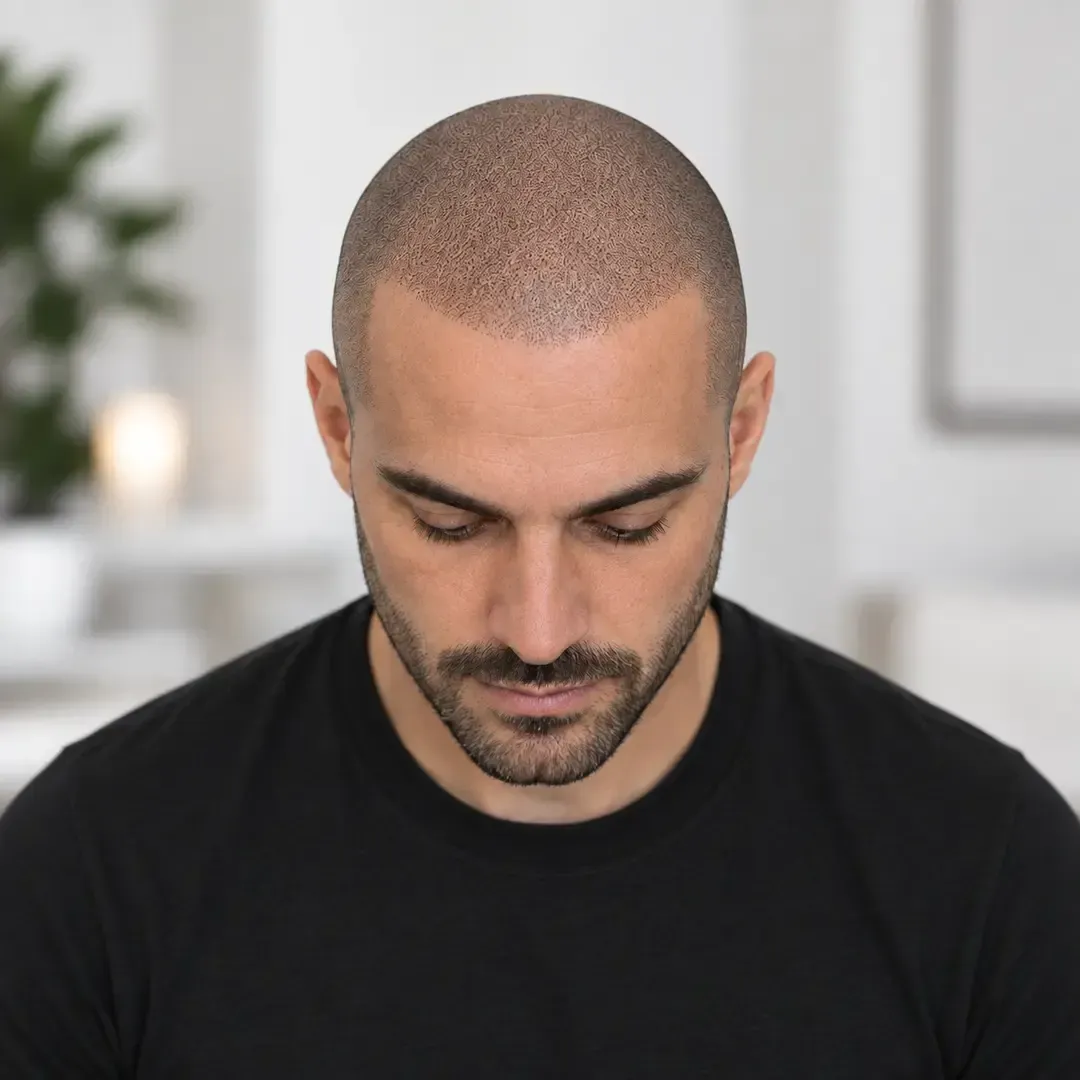

Seeing is Believing with Scalp Micropigmentation Before and After Photos
Why Scalp Micropigmentation Before After Photos Are the Most Honest Proof You'll Find
Scalp micropigmentation before after photos cut through the noise better than any description ever could. They show real people, real scalps, and real results — no guesswork needed.
Here's a quick summary of what SMP before and after transformations typically show:
| Hair Loss Concern | What SMP Can Do |
|---|---|
| Receding hairline | Restores a natural-looking hairline edge |
| Crown thinning | Adds the illusion of density and fullness |
| Diffuse thinning (women) | Reduces scalp contrast along the part line |
| Alopecia patches | Camouflages bare areas with follicle simulation |
| Hair transplant scars | Blends FUT strips and FUE dots into surrounding scalp |
| Total hair loss | Creates a realistic buzz-cut appearance |
Hair loss affects confidence in a real, daily way. Whether you're noticing a wider part, a shrinking hairline, or a scar you've been hiding for years, you want to see what's possible before committing to anything.
That's exactly what SMP before and after galleries are for.
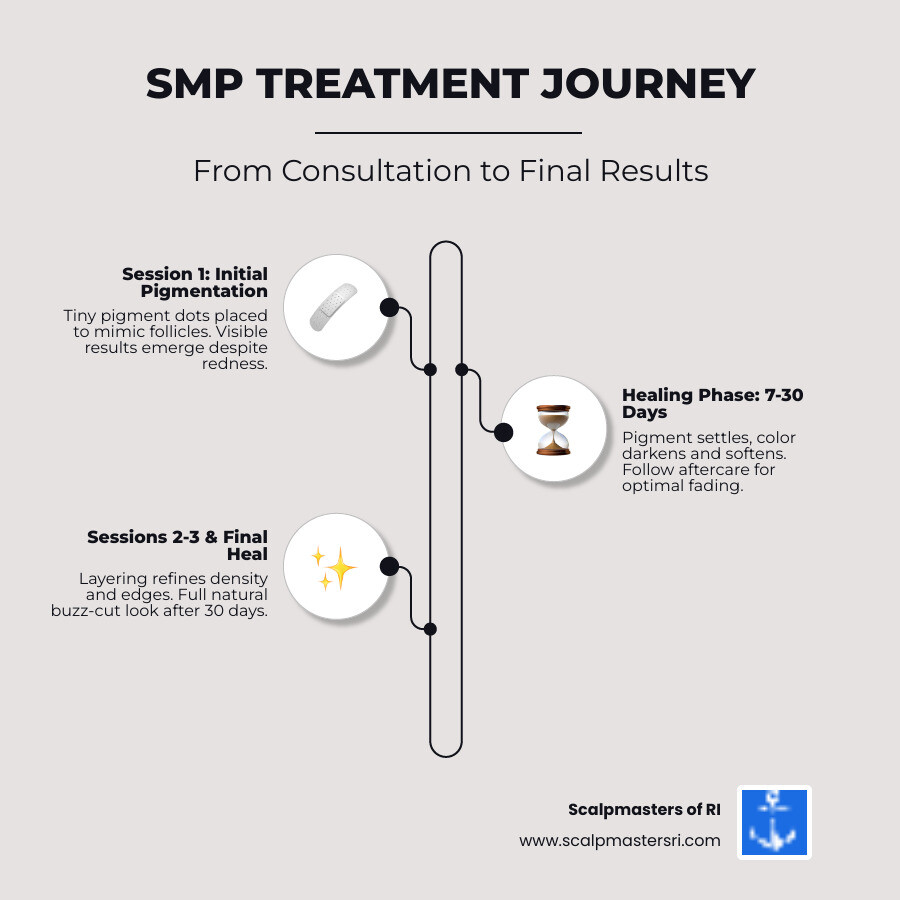
SMP is a non-surgical treatment that places tiny pigment dots into the upper layer of the skin to mimic the look of hair follicles. Results are visible almost immediately after the first session — and they improve further over 2-3 sessions as the pigment is layered and refined.
The results work for men and women, across different skin tones, hair colors, and hair loss patterns. And whether you're in Providence, Cranston, or anywhere in the Rhode Island and New England area, seeing a diverse, honest gallery of local results is the most reliable way to set realistic expectations.
Real Results: Scalp Micropigmentation Before After Transformations for Every Hair Loss Type
When we talk about hair loss, we aren't just talking about one specific look. Everyone’s journey is different, which is why a comprehensive Scalp Micropigmentation Before & After Guide is so essential. Whether you are dealing with the early stages of a receding hairline or advanced thinning, SMP provides a versatile solution that adapts to your specific needs.
In our experience serving the Rhode Island hair restoration community, including clients from Cranston, Providence, Warwick, Boston, and nearby Connecticut, we see a wide variety of patterns. For men, this often follows the Norwood scale, ranging from minor temple recession (Stage 2) to total hair loss on the top of the head (Stage 7). For women, it typically follows the Ludwig scale, which focuses on diffuse thinning across the part line and crown.
If you're looking for professional scalp micropigmentation in Rhode Island, Massachusetts, Connecticut, or the greater New England area, you’ll find that the most impactful transformations are those that respect these natural patterns. SMP isn't about drawing a "one-size-fits-all" shape; it’s about recreating what nature intended for your specific head shape and age.
Hairline Restoration and the "Buzz Cut" Look
The most famous application of scalp micropigmentation before after transformations is the classic "shaved look." For men who have accepted their hair loss but hate the "horseshoe" ring of hair around the sides, SMP is a total game-changer.
By using precise follicle simulation, we can recreate a hairline that looks like a fresh buzz cut. The key to a natural result is the "soft" hairline. As Cranston SMP specialists serving the Providence metro area and greater Rhode Island, we often advise mature clients against a "edge-up" that looks too sharp or juvenile. Instead, we use broken, feathered edges and specialized pigment matching to ensure the dots blend seamlessly with your remaining natural hair. This prevents the dreaded "hair helmet" look and ensures your results age gracefully with you.
Adding Density for Women and Men with Thinning Hair
Not everyone wants to shave their head, and that’s perfectly okay. One of the most requested treatments in our Rhode Island and Southern New England clinics is density work. This is particularly effective for women experiencing diffuse thinning or men who still have hair but can see too much of their scalp through it.
By creating a "shadow effect" on the scalp, we reduce the contrast between the hair and the skin. This makes the hair appear significantly thicker and fuller. In many Before and After Scalp Micropigmentation: Transformative Results, you’ll notice that the "after" photos show a much more defined part line and a crown that no longer glows under bright office lights. This application works beautifully for long hair, allowing you to style your hair with newfound confidence.
The Journey of Scalp Micropigmentation Before After: Sessions and Healing
One of the biggest misconceptions about SMP is that it’s a "one and done" procedure. In reality, achieving those stunning scalp micropigmentation before after results is a journey of layering. We don't want to rush the process; building the density gradually ensures the most realistic depth and texture.
| Feature | Session 1 | Session 2 | Session 3 (Final) |
|---|---|---|---|
| Objective | Foundation & Mapping | Density & Texture | Refinement & Perfecting |
| Appearance | Light "shadow," subtle | Noticeable fullness | Final, seamless blend |
| Redness | Mild to moderate | Mild | Minimal |
| Duration | 3-5 hours | 2-4 hours | 1-3 hours |
When you look at What to Expect from Your Scalp Micropigmentation Results, you’ll see that Session 1 is about setting the "blueprint." It will look light and perhaps a bit sparse. Session 2 is where the magic happens - this is when we add the bulk of the density. Session 3 is the "polishing" phase, where we fill in any tiny gaps and ensure the color is perfectly matched.
For clients visiting our Cranston studio from Providence, Warwick, Boston, or elsewhere in Rhode Island and nearby Massachusetts and Connecticut, understanding this staged process helps set realistic expectations and leads to better long-term satisfaction.
Understanding the 30-Day Healing Timeline
Patience is a virtue, especially when it comes to your scalp. Immediately after your session, the pigment will appear darker and the surrounding skin will be red. This is completely normal. As the skin heals, the "dots" will soften and settle into their final shade.
The first week is critical for aftercare. You’ll need to avoid heavy sweating, swimming, and direct sunlight. Over the next 30 days, your skin will naturally exfoliate, and the pigment will "lock in." What looks like a dark dot on day one becomes a soft, realistic-looking follicle by day thirty.
If you want general background on the treatment itself, the scalp micropigmentation overview can help you better understand why healed results look softer and more natural than fresh session photos.
Specialized Applications: Scar Camouflage and Alopecia
Beyond standard pattern baldness, SMP is a powerful tool for medical and trauma-related hair loss. For many of our clients in the Providence area, SMP is the final piece of the puzzle in their hair restoration journey.
We take great pride in our Gallery of specialized cases. Using medical-grade pigments and advanced skin tone matching, we can help "erase" the visual evidence of past surgeries or conditions that have left the scalp bare.
Camouflaging Hair Transplant Scars with SMP
Hair transplants can be wonderful, but they often leave behind reminders. Older FUT (Follicular Unit Transplantation) methods leave a linear "strip" scar at the back of the head, while FUE (Follicular Unit Extraction) can leave hundreds of tiny white "dot" scars.
The challenge with scar tissue is that it absorbs pigment differently than healthy skin. It requires a specialist's touch—specifically multi-session stippling—to blend the texture of the scar with the surrounding hair. By adding follicle simulation directly into and around the scar, we can make these marks virtually invisible, even if you choose to wear your hair very short. This is one of the most rewarding scalp micropigmentation before after transformations we perform.
How to Evaluate Scalp Micropigmentation Before After Photos Like a Pro
With so many clinics popping up, how do you know who to trust? You have to become a bit of a detective when looking at Reviews and portfolios. A reputable artist won't just show you their best work; they will show you a variety of cases that demonstrate consistent skill.
When browsing a Rhode Island SMP portfolio, look for:
- Consistency in Lighting: If the "before" is in a dark room and the "after" is under bright lights (or vice versa), it’s hard to judge the true result.
- Macro Photography: You should be able to see the individual dots. If the photo is blurry or taken from ten feet away, they might be hiding "blurring" or poor technique.
- Healed Results: Anyone can take a photo of a "fresh" treatment. The real test is how it looks 30, 60, or 365 days later. Ask to see photos of clients who have returned for a one-year touch-up.
Red Flags in Scalp Micropigmentation Before After Galleries
Be wary of "over-saturated" photos where the skin looks unnaturally orange or the pigment looks blue-black. This often indicates heavy filtering. Another red flag is a lack of diversity. A skilled practitioner should be able to show scalp micropigmentation before after results for various ethnicities, ages, and hair colors.
If every hairline in the gallery looks like it was drawn with a ruler and a Sharpie, run! Natural hairlines have slight irregularities and a soft "gradient" of density. Finally, watch out for "fresh vs. healed" discrepancies. If the clinic only shows red, irritated scalps, they may not have enough long-term clients to prove their work lasts.
Frequently Asked Questions about SMP Results
How long do the results last?
SMP is considered semi-permanent. While the "dots" won't wash off, they will gradually fade over time as your skin cells regenerate and you are exposed to UV rays. Typically, you can expect your results to look great for 4 to 6 years. After that, a quick "refresh" session is usually all that’s needed to bring the color back to its original vibrancy. Proper maintenance, like using sunscreen on your scalp, can significantly extend the life of your treatment.
Is the procedure painful?
Most of our clients describe the sensation as a "mild scratching" or a "repetitive poke." It is generally much less painful than a traditional body tattoo because we aren't going as deep into the skin. We also use topical numbing agents to ensure you are as comfortable as possible. On a scale of 1 to 10, most people rate the discomfort around a 2 or 3.
Can SMP be combined with hair transplants?
Absolutely! In fact, many of the best scalp micropigmentation before after results come from a "synergy" approach. SMP can be used to add density to a transplant that didn't quite achieve the thickness the patient hoped for. It’s also the perfect solution for camouflaging the donor scars mentioned earlier. We usually recommend waiting at least 6 to 12 months after your transplant surgery before starting SMP to ensure the scalp is fully healed.
Conclusion
At Scalpmasters of RI, we believe that seeing is believing. Our goal isn't just to "tattoo" a scalp; it’s to restore the confidence that hair loss often takes away. From our home base in Cranston to our clients throughout Rhode Island, Massachusetts, and Connecticut, we are dedicated to the artistry of SMP.
The scalp micropigmentation before after photos you see in our gallery represent more than just pigment—they represent a new lease on life for our clients. Whether you’re looking to redefine your hairline, add density to thinning areas, or hide a scar, we invite you to see the transformation for yourself.
Ready to start your own journey? Book SMP Today and let us help you achieve the look you've been waiting for. Your "after" photo is just a consultation away!
Learn More
What's New
Latest Hair Loss Solutions & Guides