

Unraveling DHT: Your Guide to Female Hair Thinning and Solutions
Understanding DHT's Impact on Women's Hair Health
DHT in women is a hormone that can significantly impact hair health, particularly when it comes to thinning and loss. If you're experiencing hair loss, understanding this hormone is your first step toward finding the right solution.
Quick Answer: What You Need to Know About DHT in Women
- What it is: DHT (dihydrotestosterone) is a potent androgen hormone derived from testosterone through the enzyme 5-alpha reductase
- How it affects hair: DHT binds to hair follicle receptors, causing them to shrink (miniaturize) over time, producing thinner, shorter hairs until growth eventually stops
- Key difference from men: Women typically experience diffuse thinning across the entire scalp (especially the crown), while men see receding hairlines and bald spots
- Main causes in women: Hormonal imbalances (PCOS), menopause, genetic sensitivity to DHT
- Common symptoms: Widening part, overall thinning, increased shedding, visible scalp
- Treatment options: Medical DHT blockers (spironolactone, finasteride), natural alternatives (saw palmetto, pumpkin seed oil), topical solutions (minoxidil)
Hair loss can feel like a slow erosion of confidence and identity , especially for women. Unlike men, women's hair loss is often dismissed as merely cosmetic, yet it deeply affects how you see yourself and interact with the world.
The reality is that androgenic alopecia affects approximately 30 million women in the United States alone. About one-third of all women will experience some form of pattern hair loss during their lives, and after menopause, that number jumps to two-thirds.
The good news? Once you understand what's happening at the hormonal level, you can take informed steps toward managing it. Whether through medical treatments, natural approaches, lifestyle changes, or cosmetic solutions like scalp micropigmentation for thinning hair, options exist to help you regain both your hair's appearance and your confidence.
This guide will walk you through everything you need to know about DHT's role in female hair loss, from the science behind it to the practical solutions available today.
What is DHT and How Does It Cause Female Hair Loss?
Dihydrotestosterone, or DHT, is a powerful androgen hormone. While often associated with men, it's also present in women, albeit in smaller amounts. DHT is primarily formed when an enzyme called 5-alpha reductase converts testosterone into this more potent form. Think of it as a super-charged version of testosterone.
In our bodies, DHT plays various roles. In men, it's crucial for male sexual development during puberty and adulthood, contributing to facial and body hair growth. In women, its role in normal physiology is less significant, but it can become problematic when levels are too high or when hair follicles are particularly sensitive to its effects.
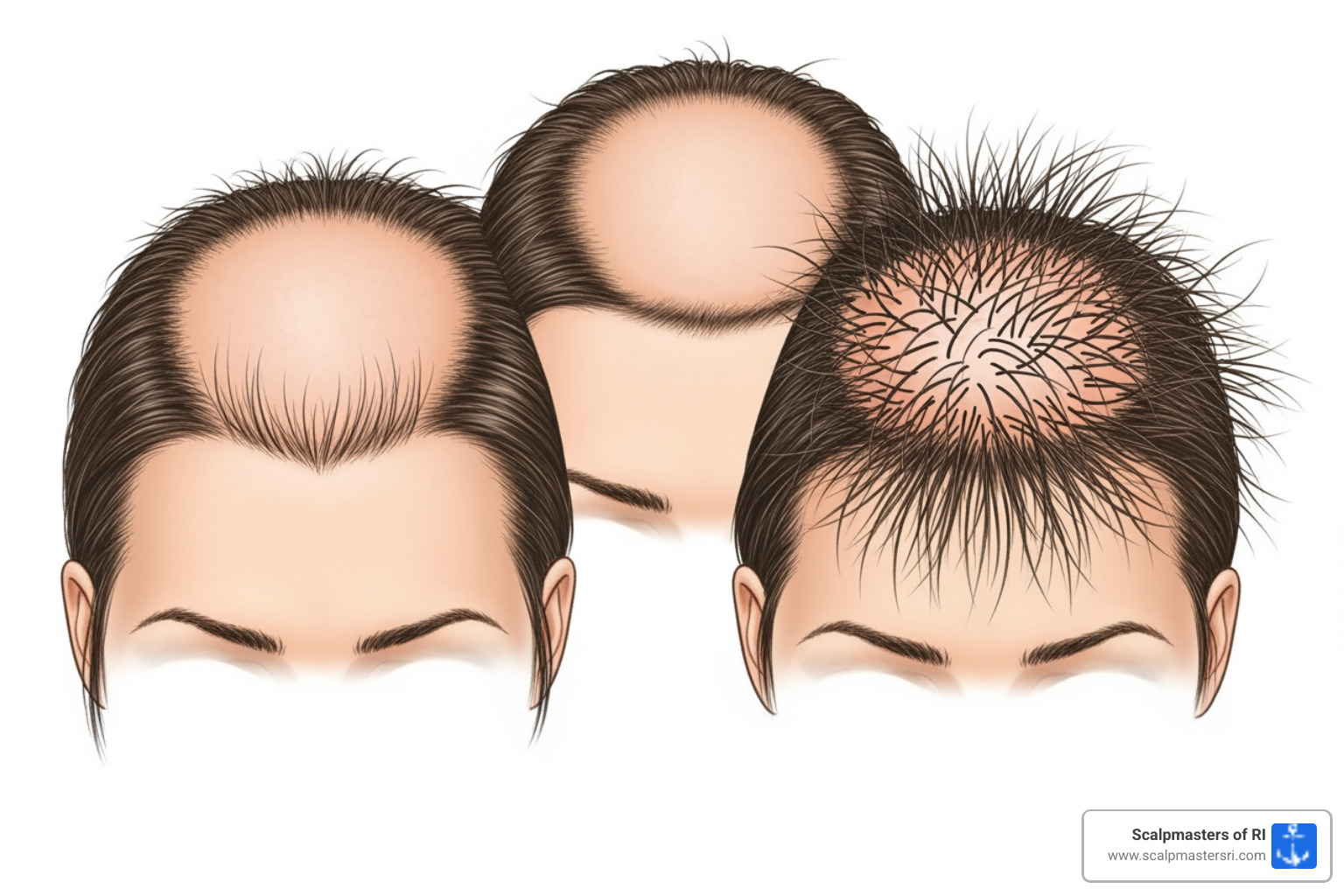
The problem arises when DHT interacts with genetically sensitive hair follicles. When DHT binds to specific androgen receptors in these follicles, it triggers a process called miniaturization. This means the hair follicles begin to shrink, leading to a shorter anagen (growth) phase and a longer telogen (resting) phase. Over time, the hair produced by these follicles becomes progressively thinner, finer, and shorter, eventually resembling vellus hairs (the fine, soft hairs on your body) until the follicle may stop producing visible hair altogether. This gradual shrinking and thinning is the hallmark of Female Pattern Hair Loss (FPHL).
How DHT-Related Hair Loss Differs in Women
While DHT is a common culprit in hair loss for both sexes, the way it manifests differs significantly between men and women. In men, DHT-related hair loss typically follows the Hamilton-Norwood scale, starting with a receding hairline at the temples and thinning at the crown.
For women, DHT in women usually results in a more diffuse pattern of thinning across the entire top of the scalp, rather than distinct bald spots. This is often categorized by the Ludwig scale. You might first notice a widening part, where the scalp becomes more visible through the hair, or a "Christmas tree" pattern of thinning, where the hair loss is more pronounced towards the front of the scalp and gradually widens towards the back. Crucially, women often maintain their frontal hairline, unlike men who experience significant recession.
The Science of Hair Follicle Miniaturization
At the core of DHT-related hair loss is the process of hair follicle miniaturization. Each hair follicle contains androgen receptors. When DHT binds to these receptors, it sends signals that disrupt the normal hair growth cycle.
Normally, hair goes through a growth phase (anagen), a transitional phase (catagen), and a resting phase (telogen). In DHT-sensitive follicles, the anagen phase shortens considerably, meaning hairs don't grow as long or as thick as they should. Simultaneously, the telogen phase lengthens, leading to increased shedding. The hair shaft itself becomes thinner and weaker with each cycle. This progressive thinning ultimately leads to a noticeable reduction in overall hair density and increased scalp visibility. Understanding this process is key to appreciating why early intervention is so critical.
Understanding the Causes and Symptoms of High DHT in Women
High DHT in women is rarely a simple issue; it's often a symptom of underlying hormonal imbalances or genetic predispositions. Unlike men, where high DHT is almost always the cause of pattern baldness, in women, it's a more complex interplay of factors.
One of the most common causes of liftd DHT levels or increased sensitivity to androgens in women is Polycystic Ovary Syndrome (PCOS). PCOS affects roughly 5 to 15 percent of reproductive-aged females worldwide. In women with PCOS, the ovaries may produce excess androgens, including testosterone, which can then be converted to DHT. This hormonal imbalance can lead to various symptoms, including hair loss.
Another significant factor is menopause. As women approach and go through menopause, estrogen levels decline significantly. This shift can lead to a relative increase in androgen activity, including DHT, even if absolute DHT levels aren't extremely high. This hormonal fluctuation can exacerbate hair follicle sensitivity to DHT, resulting in thinning hair or total hair loss in about two-thirds of all women after menopause.
Genetics also plays a crucial role. Some women are simply born with hair follicles that are more sensitive to DHT, regardless of their circulating hormone levels. This genetic predisposition means that even normal levels of DHT can trigger hair loss.
The Role of Genetics and Hormonal Changes in DHT in Women
Our genes dictate how our bodies respond to hormones. For DHT in women, the sensitivity of hair follicles to androgens is largely determined by genetics, particularly the androgen receptor (AR) gene, which can be inherited from either parent. If your mother or grandmother experienced hair thinning, you might be genetically predisposed to it as well.
Hormonal shifts, especially those related to aging and reproductive health, are critical. During menopause, the decrease in estrogen and progesterone creates an environment where androgens, including DHT, can have a more pronounced effect on hair follicles. This doesn't necessarily mean absolute DHT levels soar, but rather that the balance shifts, making follicles more vulnerable. This can lead to a slow erosion of confidence and identity, as many women associate their hair with femininity and vitality. It's a reminder that hair loss is not just a cosmetic issue; it has a significant emotional impact, and we understand the importance of addressing these concerns.
Common Symptoms of High DHT in Women
Recognizing the symptoms of high DHT in women is the first step towards seeking effective treatment. The most noticeable symptom is typically hair thinning, often presenting as a widening part or diffuse thinning across the top of the scalp. You might also notice increased shedding when brushing or washing your hair.
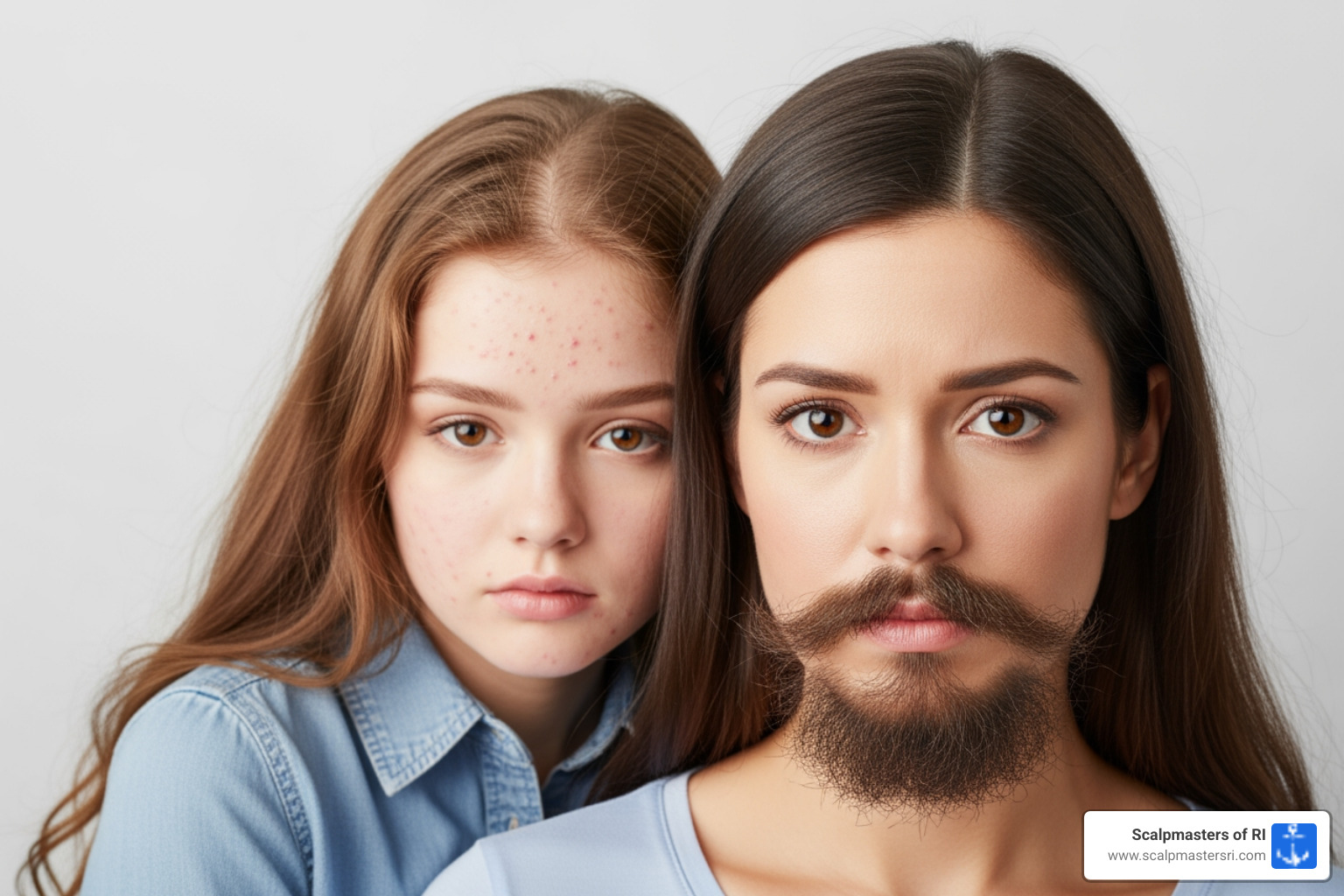
Beyond hair loss, high androgen levels (which lead to high DHT) can manifest in other ways:
- Hirsutism: The growth of coarse, dark hair in areas where women typically don't have much hair, such as the face, chest, or back.
- Acne : Breakouts, especially on the jawline, chin, and back, can be a sign of androgen excess.
- Irregular periods: A common symptom of PCOS, indicating hormonal imbalance.
- Oily skin: Increased androgen activity can stimulate oil production in the skin.
If you experience a combination of these symptoms, especially progressive hair thinning, it's a strong indicator that DHT might be playing a role.
Medical and Natural Treatments for DHT-Related Hair Loss
When it comes to addressing DHT in women, there's a range of options, from prescribed medications to natural remedies and topical solutions. The best approach often involves a combination custom to your specific needs and the severity of your hair loss. Understanding the hair loss industry can feel overwhelming, but we're here to break it down.
| Treatment Type | Effectiveness | Side Effects | Accessibility |
|---|---|---|---|
| Medical DHT Blockers | High for some women, especially post-menopausal | Potential for systemic side effects, birth defects (finasteride) | Prescription required |
| Natural DHT Blockers | Variable, generally less dramatic than prescriptions | Typically mild, but can interact with medications | Over-the-counter supplements, topical applications |
| Topical Solutions (e.g., Minoxidil) | Moderate to high, stimulates growth, doesn't block DHT | Scalp irritation, unwanted hair growth elsewhere | Over-the-counter |
Medical DHT Blockers: Efficacy and Side Effects
For women dealing with DHT in women related hair loss, several medical treatments can be effective:
- Spironolactone: This is an anti-androgen medication often prescribed off-label for female pattern hair loss. It works by blocking androgen receptors and reducing testosterone production, lowering DHT levels. Studies show it helps inhibit androgen binding, making it effective for women with signs of high DHT. While generally well-tolerated, potential side effects include breast tenderness, increased urination, high potassium levels, and menstrual cycle changes.
- Finasteride: Primarily known as a DHT blocker for men, finasteride works by inhibiting the 5-alpha reductase enzyme, reducing DHT production. It is not FDA-approved for women, mainly due to the risk of birth defects if taken during pregnancy. However, some dermatologists prescribe it off-label for post-menopausal women or those using reliable contraception. A study reported increased hair density in women taking 2.5 mg of finasteride daily over 12 months. Side effects can be mild, including headache, depression, nausea, and hot flashes. It's crucial to discuss the risks with your doctor, especially regarding pregnancy.
- Dutasteride: Similar to finasteride, dutasteride is another 5-alpha reductase inhibitor, but it's even more potent, blocking both Type I and Type II 5-alpha reductase enzymes. Like finasteride, it's not FDA-approved for women and carries similar risks regarding pregnancy.
- Minoxidil: Available over-the-counter (e.g., Rogaine), minoxidil is a topical solution (and increasingly, an oral medication) that stimulates hair growth by improving blood flow to the follicles and extending the anagen (growth) phase. It does not directly block DHT but works synergistically with DHT blockers by creating a healthier environment for hair growth.
Exploring Natural DHT Blockers and Topical Solutions
For those seeking natural approaches to DHT reduction, several options have shown promise, though their efficacy can be less dramatic than prescription medications:
- Saw Palmetto: This herb has been studied for its potential to inhibit 5-alpha reductase activity, similar to finasteride. While results can vary, some studies have shown improvements in overall hair quality and increased hair density in patients using saw palmetto supplements.
- Pumpkin Seed Oil: One 2021 study compared pumpkin seed oil to 5% minoxidil topical foam for FPHL and found both led to increased hair growth over three months, suggesting it could be a comparable alternative.
- Green Tea Extract: Green tea contains compounds called catechins, which may have anti-androgenic properties and help inhibit 5-alpha reductase.
- Ketoconazole Shampoo: Often used for dandruff, this antifungal shampoo also has mild anti-androgenic properties and can be used to help improve scalp health and potentially reduce DHT-related inflammation.
- Rosemary Oil: Some research suggests rosemary oil can stimulate hair growth and may be as effective as minoxidil in some cases, possibly by improving circulation and having anti-inflammatory effects.
These natural options can be incorporated into your routine, often as part of a comprehensive strategy to manage DHT in women and support hair health. We also offer Scalp Micropigmentation for Hair Density, a fantastic cosmetic solution for those looking to create the appearance of fuller hair.
Lifestyle, Diagnosis, and When to Seek Help
Managing DHT in women and its impact on hair loss isn't just about medications or topical treatments; lifestyle plays a significant role. Our overall health, diet, and stress levels can all influence hormone production and hair follicle sensitivity.
Lifestyle Factors That Can Influence DHT
- Diet and Nutrition: What we eat directly impacts our body's functions, including hormone regulation.
- Protein Intake: Hair is primarily made of protein, so adequate intake is essential. If you're vegetarian or vegan, ensure you're getting enough, around 40 to 60 grams daily. Lack of protein can indeed cause hair loss.
- Vitamins and Minerals: Deficiencies in essential nutrients like iron, zinc, and vitamin D can contribute to hair loss. Taking appropriate vitamins and minerals can support healthy hair, but always consult your healthcare provider before starting new supplements.
- High-Glycemic Diet: Some research suggests that diets high in saturated fats might increase DHT production, while a Mediterranean diet (rich in fruits, vegetables, and lean protein) may help minimize hair loss.
- Stress Management: Chronic stress lifts cortisol levels, which can disrupt hormonal balance and potentially impact DHT production. Finding ways to cope with stress through exercise, meditation, or mindfulness is crucial.
- Body Mass Index (BMI): While more studied in men, a higher BMI has been linked to more severe hair loss. Maintaining a healthy weight can contribute to overall hormonal balance and hair health.
- Smoking and Alcohol: Smoking is linked to androgenetic alopecia and numerous other health problems. Limiting excessive alcohol consumption also supports overall well-being.
- Sleep Quality: Poor sleep can affect hormone regulation, including those related to hair growth. Prioritizing consistent, quality sleep is beneficial for your entire body.
When to See a Doctor for Hair Loss
It's natural to feel concerned if you notice changes in your hair. While some shedding is normal, there are specific instances when you should seek professional medical advice for hair loss related to DHT in women:
- Sudden or Patchy Hair Loss: If your hair loss is rapid, unexplained, or occurs in distinct patches, it warrants immediate medical attention, as it could indicate an underlying condition.
- Rapid Thinning: If you observe your hair thinning quickly, especially if it doesn't seem to be slowing down, a professional assessment is important.
- Hair Loss with Other Symptoms: If your hair loss is accompanied by other symptoms like irregular periods, excessive facial hair, severe acne, or fatigue, it could signal a hormonal imbalance (like PCOS or thyroid issues) that needs diagnosis and treatment.
- Seeking a Diagnosis: A board-certified dermatologist or hair loss specialist can accurately diagnose the cause of your hair loss using methods like a physical exam, medical history review, blood tests (to check hormone levels, iron, thyroid function), and trichoscopy (a detailed examination of the scalp and hair follicles).
- Discussing Prescription Treatments: If you're considering medical DHT blockers like spironolactone or finasteride, a doctor's consultation is essential to discuss efficacy, potential side effects, and determine if these treatments are appropriate for you.
early intervention is key. Starting treatment at the first signs of hair loss gives you the best chance of maintaining your current hair density and potentially regrowing some lost hair. Even if you're genetically predisposed, early action can significantly slow the process and preserve your appearance.
Frequently Asked Questions about DHT and Female Hair Loss
We understand you have questions, and we're here to provide clear, helpful answers based on our expertise and the latest research.
Are DHT blockers safe for all women?
No, DHT blockers are not safe for all women, and their use requires careful consideration and medical consultation. The primary concern, especially with oral medications like finasteride, is the risk of birth defects if taken during pregnancy. For this reason, finasteride is generally not prescribed to women of reproductive age unless they are post-menopausal or using highly effective contraception.
Spironolactone, another common DHT blocker, also has potential side effects, including breast tenderness, increased urination, high potassium levels, and menstrual cycle changes. It's crucial to discuss your medical history, current medications, and family planning with your doctor to determine if a DHT blocker is a safe and appropriate option for you. We always recommend a thorough consultation to assess individual risks and benefits.
How long does it take to see results from DHT treatments?
Patience and consistency are key when treating hair loss related to DHT in women. Hair growth is a slow process, and it takes time for follicles to respond to treatment. Generally, you can expect to see initial results from DHT treatments within 3 to 6 months of consistent use. Significant improvements, such as increased hair density and reduced shedding, may take up to 12 months or even longer.
The exact timeframe can vary depending on the type of treatment (oral medications, topical solutions, natural remedies), the severity of your hair loss, and your individual response. It's important to stick with your prescribed regimen and communicate with your healthcare provider about your progress.
Can hair grow back after being affected by DHT?
Yes, in many cases, hair can grow back or improve significantly after being affected by DHT, especially with early and consistent treatment. The key factor is the viability of the hair follicles. If the follicles have only undergone miniaturization (shrunk but are still active), there's a good chance they can be stimulated to produce thicker, healthier hair again.
However, if a hair follicle has completely died or scarred, it cannot produce new hair. This is why early intervention is so crucial. Treatments aim to halt miniaturization, stimulate existing follicles, and promote new growth. While complete reversal of severe, long-standing hair loss may not always be possible, significant improvement in hair density and thickness is a realistic goal for many women. For areas where hair cannot be regrown, cosmetic solutions like Scalp Micropigmentation can create the illusion of density and a fuller head of hair, offering a renewed sense of confidence.
Your Next Steps in Addressing Female Hair Thinning
We hope this guide has helped you solve the complexities of DHT in women and its connection to hair thinning. Understanding that DHT is a potent androgen derived from testosterone, and that its impact on female hair loss differs from men's, is the first step toward finding effective solutions. We've explored the common causes like hormonal imbalances (PCOS), menopause, and genetics, along with the tell-tale symptoms such as a widening part and diffuse thinning.
The good news is that you have options. From medical treatments like spironolactone and finasteride to natural alternatives like saw palmetto and pumpkin seed oil, and even lifestyle adjustments, a comprehensive approach can make a significant difference. Remember the importance of early diagnosis and consistent treatment – these are your best allies in the fight against hair loss.
At Scalpmasters of RI, we understand the emotional toll that hair loss can take. We specialize in providing high-quality, non-invasive solutions like scalp micropigmentation (SMP) that can dramatically restore the appearance of density and a natural-looking hairline. Our expertise in creating precise, confidence-restoring results is what sets us apart.
If you're in Rhode Island, Cranston, Massachusetts, Boston, Connecticut, or anywhere in New England, and are ready to take control of your hair loss journey, we encourage you to seek professional advice. A personalized consultation can help you determine the best path forward, whether it involves medical treatments, lifestyle changes, or exploring cosmetic options like SMP.
Don't let hair thinning diminish your confidence any longer. Empower yourself with knowledge and action.
Ready to take the next step and break the stigma of female hair loss? Learn more about how we can help: https://www.scalpmastersri.com/scalp-micropigmentation-for-women-breaking-the-stigma
Learn More
What's New
Latest Hair Loss Solutions & Guides