

All About Hair Loss for Women: Causes & Treatments
Why Hair Loss for Women is More Common Than You Think
Hair loss for women affects far more people than most realize. If you're noticing more hair in your brush or a wider part line, you're not alone—and there are proven ways to understand and address it.
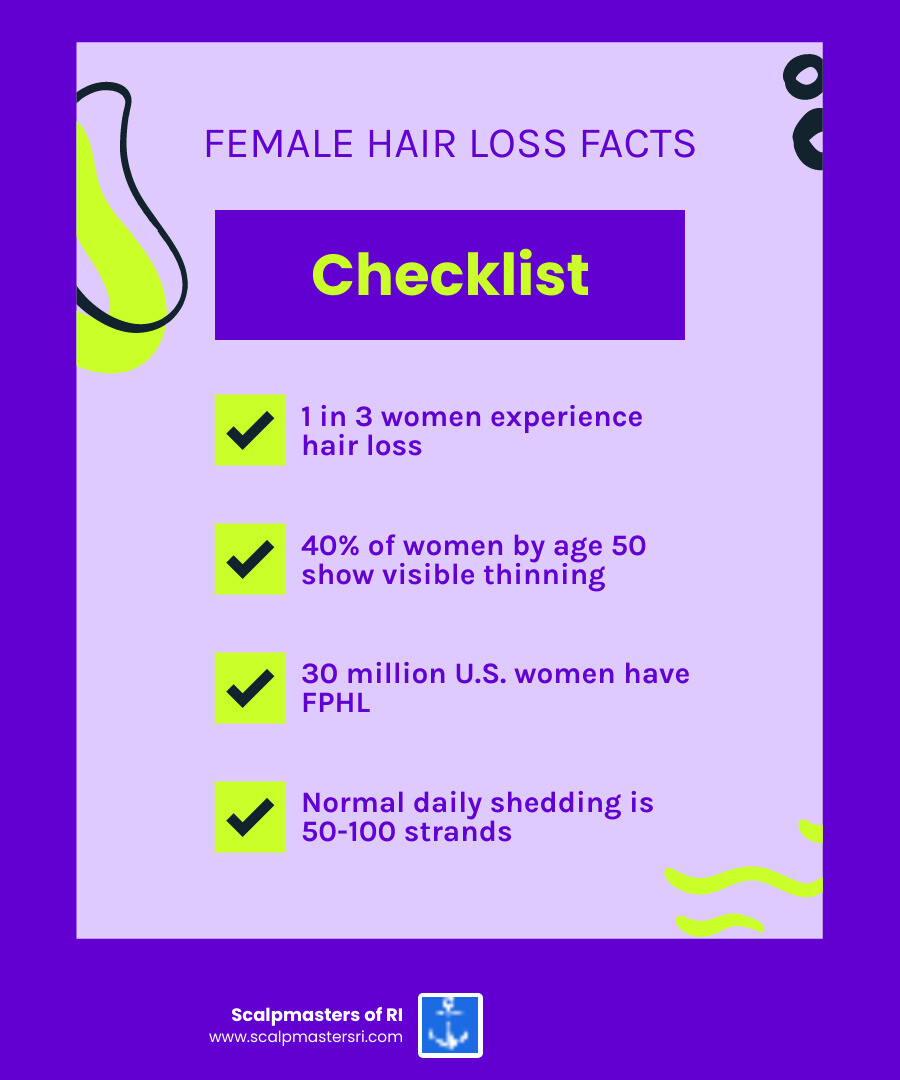
Quick Facts About Female Hair Loss:
- 1 in 3 women experience hair loss at some point in their lives
- 40% of women by age 50 show visible signs of thinning
- 50-100 strands per day is normal shedding
- 30 million women in the U.S. have female pattern hair loss (FPHL)
- 2 out of 3 postmenopausal women experience thinning or bald spots
Hair loss in women looks different than in men. Instead of a receding hairline, women typically notice diffuse thinning across the crown or a widening part. This gradual change can be harder to spot at first, but the emotional impact is significant.
The good news? Understanding why hair loss happens is the first step toward finding the right solution. Whether your thinning is caused by hormones, stress, genetics, or medical conditions, there are both medical treatments and advanced cosmetic solutions like scalp micropigmentation that can help restore your confidence.
It's normal to lose between 50 and 100 hairs each day. If you're seeing more than that—or noticing visible thinning—it's worth investigating the cause with a healthcare provider or dermatologist.
Understanding Hair Loss for Women
When we talk about hair loss for women, we are often referring to a condition called Female Pattern Hair Loss (FPHL). While men often lose hair in a very specific "M" shape or develop a bald spot on the back of the head, women tend to experience what we call diffuse thinning.
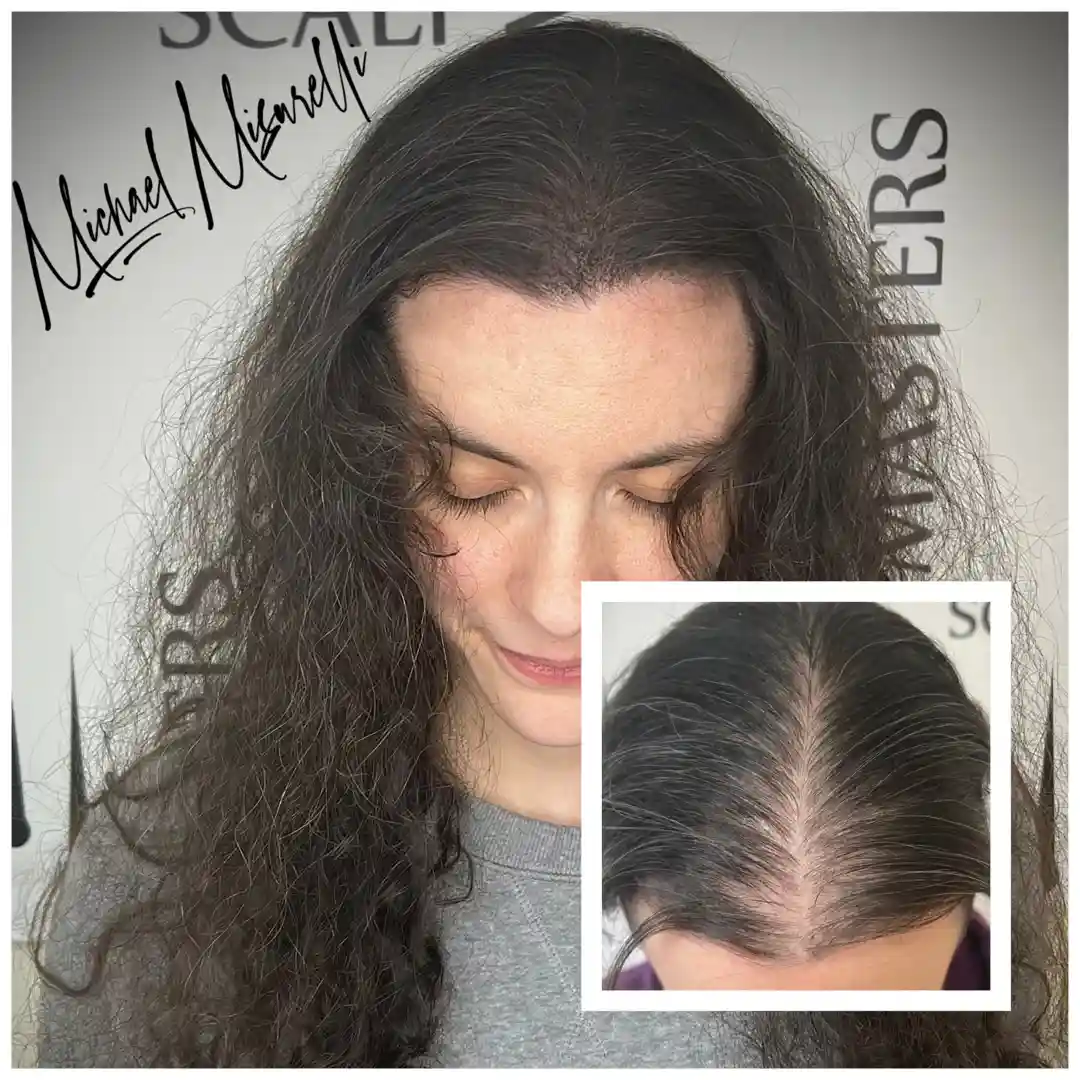
In FPHL, also known as androgenetic alopecia, the hair thinning is spread across the top and crown of the scalp. You might notice that your ponytail feels lighter, your part looks wider, or your scalp is becoming more visible through your hair. This condition is heavily influenced by a genetic predisposition, meaning if your mother or grandmother experienced thinning, you might be more likely to as well.
To get a deeper grasp of how this affects the scalp, it is helpful to start understanding hair loss in women as a biological process rather than just a cosmetic one. It is a polygenic condition, meaning multiple genes are involved, and it can be inherited from either side of your family.
Common Causes of Hair Loss for Women
While genetics play a massive role, our bodies are complex, and several internal factors can trigger or accelerate thinning. Hormonal shifts are among the most frequent culprits we see in our New England clinics.
- PCOS (Polycystic Ovary Syndrome): This condition often leads to an excess of androgens. While these "male" hormones can cause unwanted hair growth on the face, they often lead to the opposite on the scalp—thinning and loss.
- Menopause: As estrogen and progesterone levels drop during menopause, the influence of androgens becomes more pronounced. This often leads to follicular miniaturization, where the hair follicles shrink and produce thinner, shorter hairs.
- Pregnancy: Many women experience "postpartum hair loss." During pregnancy, high estrogen levels keep hair in the growth phase. Once the baby is born and hormone levels crash, a large amount of hair enters the shedding phase all at once.
- DHT (Dihydrotestosterone): This is a byproduct of testosterone that can bind to receptors in scalp hair follicles, causing them to shrink. Understanding the role of DHT in women is crucial because it is a primary driver of FPHL.
The Hair Growth Cycle and Shedding
To understand why hair falls out, we have to look at how it grows. Every hair on your head is at a different stage of a three-part cycle.
- Anagen (Growth Phase): This lasts between 2 to 7 years. About 90% of your hair is in this phase at any given time.
- Catagen (Transition Phase): This is a short, two-week period where the hair follicle shrinks and detaches from the blood supply.
- Telogen (Resting/Shedding Phase): This lasts about 3 months. At the end of this phase, the hair falls out, and a new hair begins to grow in the same follicle.
In a healthy scalp, this cycle repeats indefinitely. However, with hair loss in women, the anagen phase becomes shorter, and the telogen phase stays the same or gets longer. This leads to "follicular miniaturization," where the hair grows back thinner and finer each time until the follicle eventually stops producing hair altogether.
Types and Diagnosis of Female Alopecia
Not all hair loss is the same. Identifying the specific type of alopecia is the only way to choose the right treatment path.
- Telogen Effluvium: This is a temporary form of hair loss usually triggered by a shock to the system—like a high fever, surgery, extreme stress, or a crash diet. It can cause up to 300 hairs to shed daily but usually resolves once the trigger is removed.
- Alopecia Areata: This is an autoimmune condition where the body attacks its own hair follicles, often resulting in round, smooth bald patches. For some, scalp micropigmentation for alopecia is a life-changing way to camouflage these patches.
- Traction Alopecia: This is caused by repeated tension on the hair, often from tight ponytails, braids, or extensions. Over time, this can permanently damage the follicle.
- Scarring Alopecia: This is a rarer, more serious group of disorders that destroy the hair follicle and replace it with scar tissue. In these cases, hair cannot grow back, and early diagnosis is vital to prevent further loss.
How Female Pattern Hair Loss is Diagnosed
If you are concerned about thinning, your first stop should be a professional. A dermatologist is the primary specialist for hair loss. The diagnostic process usually involves:
- Medical History: Discussing your diet, stress levels, and family history.
- Scalp Examination: Looking for patterns of thinning or signs of inflammation.
- Blood Tests: These are essential to check for thyroid imbalances, PCOS, or iron deficiencies. Anemia is a very common (and treatable) cause of hair thinning in women.
- Scalp Biopsy: In some cases, a small piece of skin is removed and examined under a microscope to determine if the loss is due to scarring or FPHL.
Scalp Micropigmentation and Non-Surgical Solutions
For many women, medications like minoxidil (Rogaine) or spironolactone offer some help, but they require indefinite use and don't always provide the density women desire. This is where Scalp Micropigmentation (SMP) has become a option.
What is Scalp Micropigmentation (SMP)?
SMP is a non-surgical, cosmetic treatment that uses specialized pigments and micro-needles to deposit tiny dots into the scalp. For women, we don't usually create a "shaved look" like we do for men. Instead, we perform "density work."
By placing pigment between existing hairs, we reduce the contrast between the hair and the scalp. This creates the illusion of a much thicker, fuller head of hair. It is particularly effective for those with a widening part or diffuse thinning across the crown.
Benefits of SMP for Female Hair Loss
The beauty of scalp micropigmentation for women is that it is immediate and requires no daily maintenance. Unlike hair transplants, there is no surgery or downtime. Unlike topical fibers, it won't wash out in the rain or rub off on your pillow.
At Scalpmasters of RI, we specialize in matching the pigment to your natural hair color and skin tone, ensuring the results are virtually undetectable. Whether you're in Cranston, Providence, or Boston, our goal is to give you back the appearance of the hair you once had.
Managing Hair Loss for Women with Advanced Non-Surgical Therapies
SMP is highly versatile. It can be used to treat various conditions beyond standard pattern thinning.
- Alopecia Areata: We can fill in the patchy areas so they blend seamlessly with the rest of your hair.
- Traction Alopecia: We can redefine a thinning hairline or temples caused by years of tight styling.
- Thinning Hair: For many women, SMP is the perfect "finishing touch" that makes thinning hair look voluminous again.
Because every woman's hair loss journey is unique, scalp micropigmentation for alopecia is always customized to the individual’s specific pattern and goals.
Lifestyle Changes and Emotional Support
While we focus on restoring your look, we also believe in a holistic approach to hair health. Your lifestyle plays a supporting role in how your hair grows and sheds.
- Stress Reduction: High levels of cortisol can push hair into the shedding phase. Activities like yoga, meditation, or even talking to a professional can help.
- Gentle Hair Care: Avoid harsh chemical treatments and high-heat styling. If you're experiencing thinning, give your follicles a break from tight hairstyles.
- Nutritional Support: Your hair needs vitamins like Biotin, Vitamin D, and Iron to thrive. Always consult your doctor before starting vitamins or supplements to ensure you are actually addressing a deficiency.
Perhaps the most important factor is emotional well-being. Hair loss can be devastating to a woman's self-esteem. It is important to remember that you are not alone, and seeking support is a sign of strength. We encourage our clients to explore beyond hair loss: exploring the emotional impact and support resources to find communities that understand what they are going through.
Frequently Asked Questions about Female Hair Loss
Is it normal to lose 100 hairs a day?
Yes! It sounds like a lot when you see it in the drain, but the average person has over 100,000 hairs on their head. Losing 50 to 100 is just the natural conclusion of the telogen phase.
Can stress-related hair loss grow back?
Usually, yes. Telogen effluvium (hair loss caused by stress or trauma) is typically temporary. Once the stressor is managed, the hair cycle usually returns to normal within six to nine months.
How does scalp micropigmentation help women with hair loss?
SMP helps by "shading" the scalp. When your hair thins, the bright scalp skin reflects light, making the thinning look more obvious. SMP darkens the scalp to match your hair, which creates the visual appearance of density and hides the "see-through" effect.
Conclusion
At Scalpmasters of RI, we understand that hair loss for women is more than just a physical change—it’s a challenge to your confidence. From our home base in Cranston, Rhode Island, we serve women across New England, including Massachusetts and Connecticut, providing a safe, artistic, and professional environment for hair restoration.
Our founder's extensive experience ensures that every SMP treatment is a work of art, custom specifically to your needs. We are dedicated to scalp micropigmentation for women: breaking the stigma and helping you feel like yourself again.
If you're ready to explore how we can help you regain your confidence and restore the look of a full head of hair, reach out to us today. Your journey to restoration starts with a single, personalized step.
Learn More
What's New
Latest Hair Loss Solutions & Guides