
White Bulb At End Of Hair - What It Is and What You Can Do
Club Hair: What It Is and What You Can Do
Have you ever noticed a small white bulb at the end of a fallen hair? Maybe you're seeing the early signs of pattern baldness, or maybe you just find a few strands on your pillow each morning. Either way, some of those hairs come away with a tiny white bulb on the end — and it's natural to wonder what it means.
That white bulb is called a club hair, and on its own it's usually nothing to worry about. But if you're losing club hairs more and more often, it can be one of the first signs that your hair is thinning. The good news: you have options — and at Scalpmasters of RI in Cranston, scalp micropigmentation (SMP) can restore the look of a full, freshly shaved head or denser hair, no matter how far along the thinning is.
Here's what that white bulb actually means, and what to do if it's pointing to something more.
What is the White Bulb at End of Hair?
The white bulb at the end of your hair is essentially a small bundle of protein called keratin. Its job is to anchor the hair to the scalp so the strand can grow until it's naturally shed. Importantly, the white bulb is not the hair root; it's the protein bulb that forms during a specific phase of the growth cycle, sitting at the part of the follicle closest to the root.
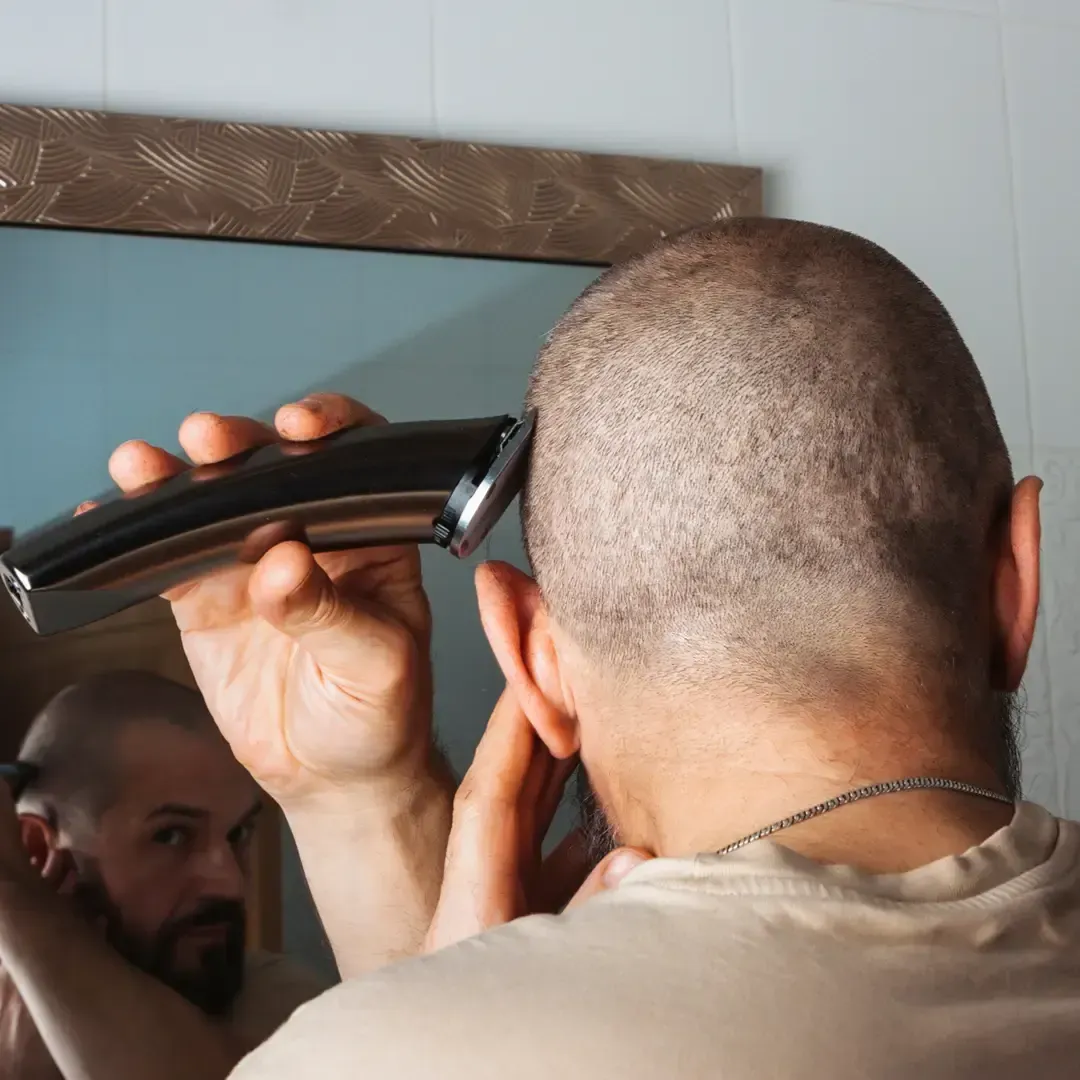
Losing a club hair here and there is nothing to worry about. But if you're noticing white-bulb hairs more often than not, or seeing your hairline, crown, or part line change, it can be one of the first signs of pattern hair loss or alopecia. That's the moment it's worth understanding your options rather than waiting and watching.
What are the Hair Growth Cycle Phases?
Losing a hair with a white bulb at the end of it is an indication that the hair was in the telogen phase of the hair growth cycle. In order to better understand how your hair grows, develops and sheds, it's important to know the various phases of the hair growth cycle. These phases include:
- Anagen — The anagen phase is an active phase of growth in which the hair cells divide rapidly and the length of the hair strand is determined. Most hair follicles are in the anagen phase for two to six years before moving onto the next phase of the hair growth cycle.
- Catagen — The catagen phase begins when the anagen phase ends, and it is largely defined as a traditional stage. The hair strand is in this phase for a much shorter period of time, only about two to four weeks. During the catagen phase, hair growth stops.
- Telogen — The telogen phase is a resting period. During this phase, a new hair is developing and beginning the anagen phase. It pushes the strand away from the follicle with the white bulb.
- Exogen — The exogen phase is when the hair strand falls out. There is generally an anagen hair that immediately replaces it.
Keep in mind that not all of your hair is going to be in the same phase of the growth cycle at once. In fact, you may lose up to 100 strands of hair per day and not be experiencing pattern baldness or permanent hair loss. At any given time, approximately 80 percent of your hair is in the anagen phase, while the other strands are in the other three phases of the hair growth cycle.
Why Does My Hair Fall Out with a White Bulb?
As long as it is not happening excessively or you are not noticing it on every hair strand that falls out, losing hair with a bulb at the end of it is perfectly normal. It just means that you lost the hair in the third phase of the hair growth cycle rather than during the fourth phase. There are sometimes environmental factors that can impact hair loss. Those include:
- Damage done to the hair through color dying, bleaching or using excessive products.
- Overexposure to the elements, including the sun and heat.
- Insufficient protein in your daily diet.
If you are noticing that most of your hairs are falling out with a white bulb at the end of it, it may be time to contact a hair restoration specialist to learn more about the options that are available to you.
Will Hair with a White Bulb Grow Back?
In most cases, yes. Because the white bulb is the protein bulb and not the root, there's very likely a new anagen hair already growing in right behind the one you lost. Where regrowth slows or stops, however, the visible result is gradual thinning, and that's where a proven restoration solution can make a real difference in how you look and feel.
What Should I Do If I am Experiencing Hair Loss?
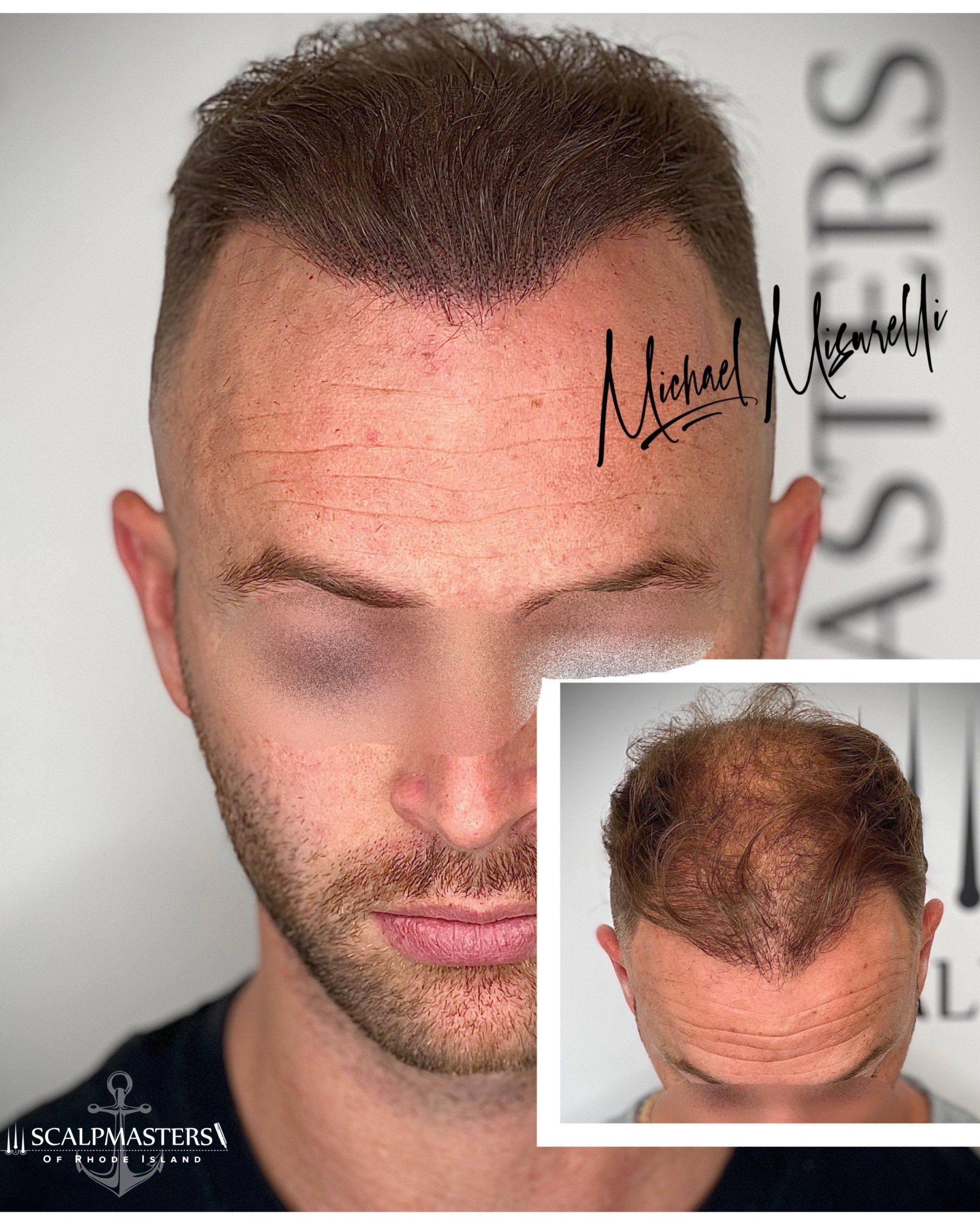
It's easy to feel like you just have to accept thinning or a receding hairline, but you don't. One of the most effective non-surgical solutions is scalp micropigmentation (SMP), a precise treatment that deposits tiny pigments into the scalp to replicate the look of real hair follicles, creating the appearance of fuller, thicker hair and a sharp, natural hairline. There's no surgery, no scarring, and no daily upkeep.
At Scalpmasters of RI in Cranston, founder Michael Misurelli has performed over 2,000 SMP treatments since 2016, blending 20+ years of barbering experience with an artist's eye for natural, seamless results. Explore your options: SMP for men, SMP for women, SMP for alopecia, and SMP for scars.
A white bulb on a stray hair usually isn't cause for concern, but if you're seeing more scalp than you'd like, you don't have to guess. Book a free, no-pressure consultation with Scalpmasters of RI. Call (401) 867-1097 or request your free consultation online today.
Learn More
What's New
Latest Hair Loss Solutions & Guides