Don't Sweat the Small Stuff: Why Your Uneven Hairline is Probably Perfectly Normal
Why Your Uneven Hairline is More Common Than You Think
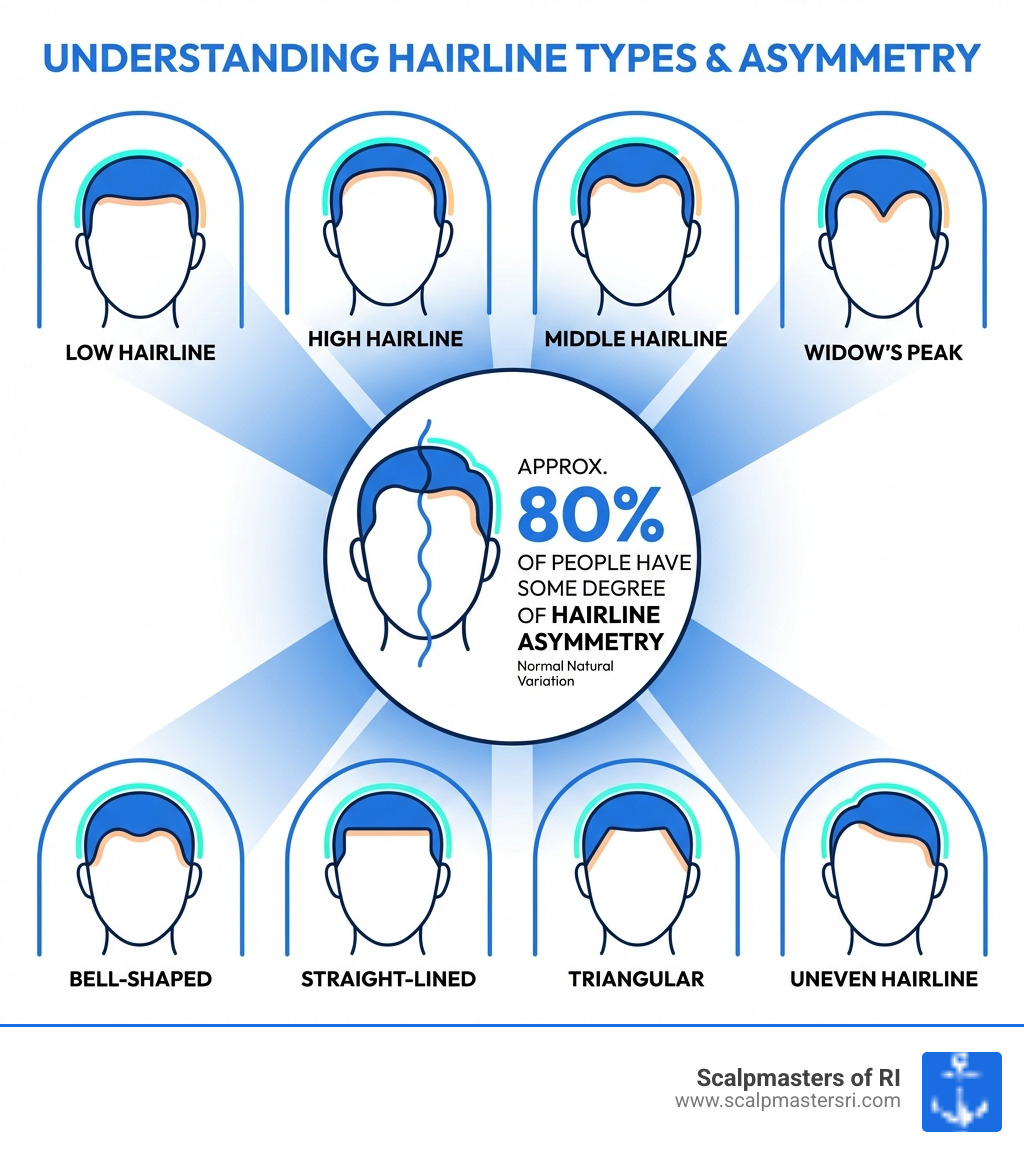
Is an uneven hairline normal? Yes, absolutely. In fact, approximately 80% of men have an uneven hairline due to genetic predisposition, and it's just as common in women. Most people don't have perfectly symmetrical faces or bodies, and your hairline is no exception.
Quick Answer:
- Uneven hairlines are extremely common and usually nothing to worry about
- Most are caused by genetics- it's simply how you were born
- Facial asymmetry is normal- research shows minor asymmetries develop naturally as the body grows
- Not all uneven hairlines indicate hair loss- many people have naturally asymmetrical hairlines their entire lives
- One side being slightly higher than the other is perfectly normal
Have you ever taken a close look at your hairline in the mirror and noticed one side sits slightly higher than the other? Maybe you've compared old photos and wondered if something's changed. You're not alone in this concern.
Your hairline is simply the line where your hair begins to grow on your forehead and temples. An uneven hairline means one side doesn't match the other perfectly - and that's completely normal for most people.
Why is this so common? Our bodies aren't designed to be perfectly symmetrical. Research shows that minor asymmetries can develop naturally as the body grows, including in the face and hairline. Just like how one eye might be slightly larger than the other, or one ear sits a bit higher, hairline variations are a natural part of human diversity.
The key is understanding whether your uneven hairline is:
- A natural feature you were born with
- Part of normal hairline maturation as you age
- A sign of hair loss that needs attention
In this guide, we'll help you understand exactly what's happening with your hairline, when an uneven hairline is perfectly normal, and when you might want to explore solutions like styling techniques or cosmetic options such as Scalp Micropigmentation.
So, is an uneven hairline normal from birth?
Yes, for many of us, an uneven hairline is simply a natural variation we're born with. Just as every person's face is unique, so too is their hairline. There isn't one "normal" type of hairline; rather, there's a wide spectrum of shapes, heights, and patterns that are considered perfectly natural.
Think about it: our bodies are rarely perfectly symmetrical. Research consistently shows that minor asymmetries can develop as the body grows, and this includes our facial features and, of course, our hairlines. So, if one side of your hairline sits a little higher or has a slightly different curve than the other, it's often just a subtle genetic blueprint playing out.
Genetic factors play a significant role in determining the shape and characteristics of your hairline from birth. If your parents or other family members have a similar hairline, it’s highly probable that your uneven hairline is an inherited trait. For instance, a distinctive V-shape in the hairline, known as a widow's peak, is believed to be passed down through dominant alleles (variant forms of genes). Likewise, those quirky swirls of hair that grow in a different direction, called cowlicks, are also natural genetic variations.
So, rest assured, for many people, an uneven hairline is not a flaw but simply a part of their unique genetic makeup. Perfect symmetry is, in fact, quite rare.
The Main Causes of an Uneven Hairline
When we look at the reasons behind an uneven hairline, we find that it's often a blend of natural factors and, sometimes, external influences. Understanding these causes is the first step in deciding whether your hairline is simply part of your charm or if it warrants further attention.
Our hair grows from tiny structures in our skin called hair follicles. The overall health and pattern of these follicles determine the shape and density of our hairline. Let's explore the primary culprits behind hairline unevenness.
Genetics and Natural Asymmetry
As we've touched upon, genetics are a powerful sculptor of our physical traits, and our hairline is no exception. The inherited shape of your hairline is a significant contributor to its natural asymmetry. Just as facial asymmetry is often a result of genetics, the specific contours of your hairline are frequently inherited traits.
If you look at old family photos or observe your relatives, you might notice similar hairline patterns. This family history can be a strong indicator that your uneven hairline is simply how you were designed. Features like a widow's peak, for example, are well-documented genetic traits. So, if others in your family display an uneven hairline, it's very likely a genetic characteristic passed down to you. Our natural facial structures rarely conform to perfect mirror images, and our hairlines reflect this inherent beauty in asymmetry.
Maturing Hairlines: What to Expect
Beyond genetics, another common and perfectly normal reason for a hairline to appear uneven is the natural process of maturation. We all start with a "juvenile" hairline in childhood—typically lower and more rounded. However, as we transition from our late teens into our 20s and early 30s, this juvenile hairline often gives way to a "mature" hairline.
This isn't necessarily a sign of hair loss, but rather a subtle, gradual adjustment. A mature hairline typically shifts slightly higher, usually by about one to two centimeters. It's a symmetrical and stable change, where the hairline simply settles into its adult position, often becoming more defined. Men, for instance, are likely to see the development of a mature hairline between the ages of 18 and 29.
Here's a simple comparison to help you distinguish between a juvenile and a maturing hairline:
| Feature | Juvenile Hairline | Maturing Hairline |
|---|---|---|
| Timing | Childhood, adolescence | Typically 18-30 years |
| Pattern | Lower, rounded, fuller | Slightly higher, more defined, retains density |
| Speed of Change | Stable, minimal change | Gradual, then stabilizes |
| Hair Density | Generally very dense | Retains good density, no significant thinning |
Many people find that their mature hairline, even if slightly uneven, suits their adult appearance. It's a natural part of growing older, and for many, it corresponds with their age and simply feels right.
Is an uneven hairline normal if it's from hair loss?
While many uneven hairlines are perfectly normal, it's true that an uneven hairline can sometimes be an early indicator of hair loss. This is where the distinction between a "maturing" hairline and a "receding" hairline becomes crucial. A receding hairline signals progressive hair loss, which can manifest unevenly.
The most common culprit for progressive hair loss is Androgenetic Alopecia, commonly known as male pattern baldness or female pattern hair loss. This condition affects a significant portion of the population; for example, male pattern baldness affects 30-50% of men by age 50. It's a genetic condition where hair follicles become sensitive to dihydrotestosterone (DHT), a hormone that causes them to shrink over time, leading to thinner, shorter hair, and eventually, no hair at all.
When hair loss begins, it often doesn't happen uniformly. For men, hair loss frequently starts at the temples, creating an "M-shaped" pattern where the corners recede faster than the center. It's perfectly normal for one side to recede more quickly than the other, giving the appearance of an uneven or imbalanced hairline.
For women, female pattern hair loss typically presents as diffuse thinning across the top of the head, or a widening of the part. While women rarely experience the dramatic "M-shape" recession seen in men, this thinning can still lead to a perceived unevenness in the hairline, with one side appearing sparser than the other.
If you're noticing significant or rapid changes, it's wise to consider whether it's more than just a mature hairline. Tools like the Norwood Scale can help classify the stages of male pattern baldness, but for a personal assessment, observing the speed of change and overall density is key.
Lifestyle and Styling Habits: Traction Alopecia and Other Factors
Beyond genetics and natural maturation, certain lifestyle choices and styling habits can also contribute to an uneven hairline, primarily through a condition called Traction Alopecia.
Traction Alopecia is a type of gradual hair loss caused by prolonged or repetitive pulling force on the hair follicles. This often manifests as thinning hair and uneven hair growth along the temples, the front of the hairline, or the back of the head. It's particularly prevalent in individuals who frequently wear tight hairstyles that put constant tension on the hair roots. Common culprits include:
- Tight ponytails
- Braids (especially cornrows or dreadlocks)
- Buns
- Hair extensions that pull on the natural hair
While traction alopecia is reversible if caught early and styling habits are changed, prolonged tension can lead to permanent damage to the hair follicles. You can find more in-depth information about this condition from medical resources like the DermNet NZ page on traction alopecia.
Other lifestyle factors can also play a role in overall hair health, which might indirectly contribute to perceived hairline unevenness:
- Stress-induced hair loss (Telogen Effluvium): Significant physical or emotional stress can push a large number of hair follicles into a resting phase, leading to excessive shedding a few months later. While often temporary and widespread, this can make existing hairline unevenness more noticeable.
- Nutritional deficiencies: A poor diet lacking essential vitamins and minerals (like iron, zinc, and biotin) can impact hair growth and strength. While not a direct cause of unevenness, compromised hair health can make any existing asymmetry more prominent.
Addressing these lifestyle factors, such as managing stress and maintaining a balanced diet, can support overall hair health and potentially mitigate some forms of temporary hair loss.
Uneven Hairlines in Men vs. Women: What are the Differences?
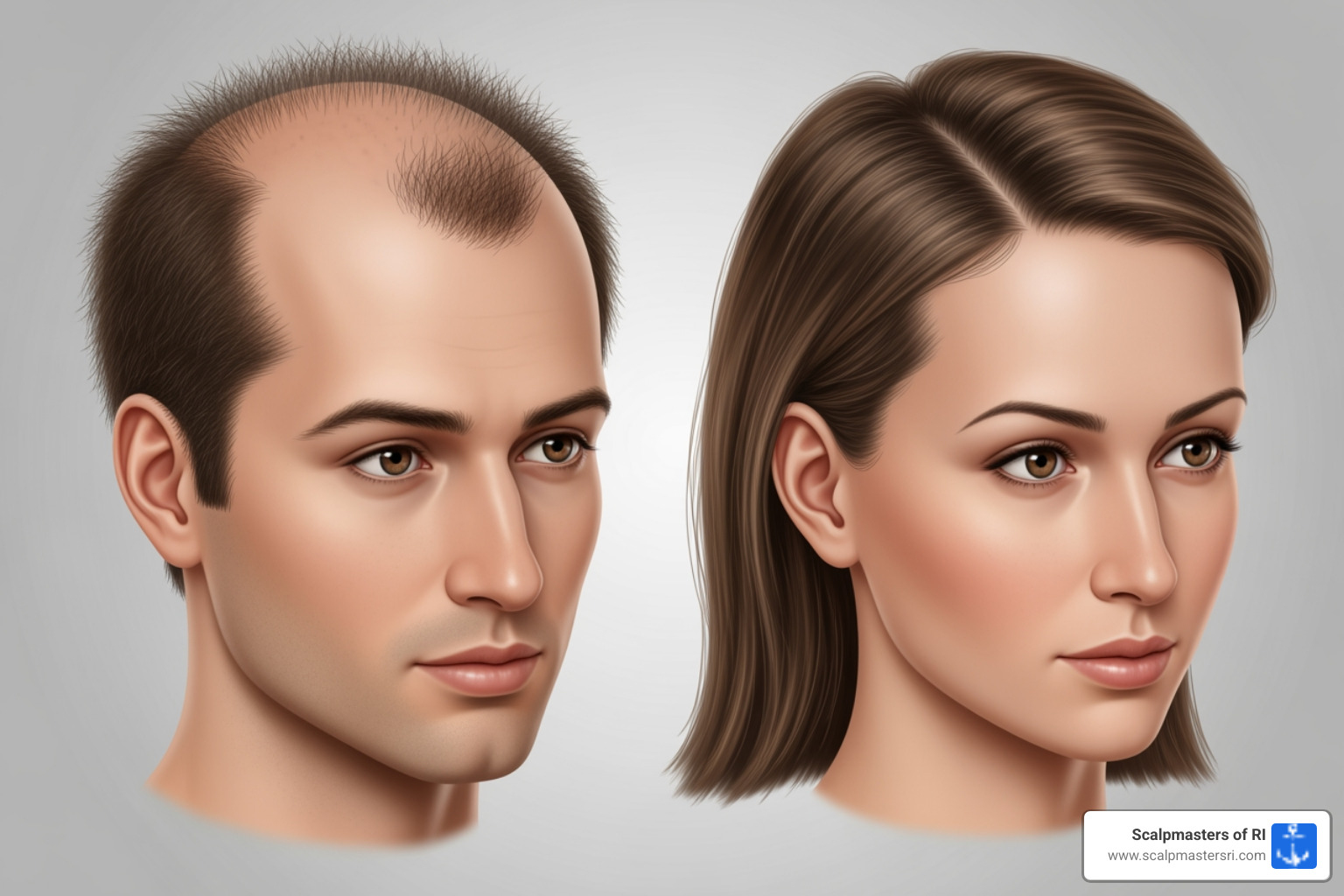
While the core reasons for an uneven hairline – genetics, maturation, and hair loss – apply to everyone, how these factors manifest can differ significantly between men and women. This is largely due to hormonal differences and the typical patterns of hair loss associated with each gender.
Typical Presentation in Men
In men, an uneven hairline often becomes noticeable during the process of a maturing hairline or the onset of male pattern baldness.
- M-shape Recession: The classic sign of male pattern baldness is often an "M-shaped" recession, where the hair recedes at the temples and the mid-frontal hairline remains more advanced. It's common for one temple to recede faster or more deeply than the other, making the hairline appear uneven.
- V-shape: Some men naturally have a V-shaped hairline (widow's peak), which can become more pronounced or appear uneven if one side thins more than the other.
- Temple Hair Loss: Hair loss frequently begins at the temples. If this recession is asymmetrical, it contributes directly to an uneven hairline.
- Crown Thinning: In addition to the hairline itself, thinning at the crown (the top back of the head) is also a common part of male pattern baldness, and observing this can help determine if the uneven hairline is part of a broader hair loss pattern.
For a deeper dive into the specific challenges and considerations for men, we encourage you to explore our guide on Understanding Hair Loss in Men.
Typical Presentation in Women
Hairline unevenness in women tends to present differently than in men, primarily because female pattern hair loss follows a distinct pattern.
- Diffuse Thinning: Instead of a distinct receding hairline, women often experience diffuse thinning across the scalp, including the front. This can lead to a general reduction in hair density along the hairline, making one side appear sparser or less defined than the other.
- Widening Part: A common sign of female pattern hair loss is a widening of the central part, which can sometimes extend unevenly.
- Hairline Density Loss: While the overall shape of the hairline might remain, the density of hair follicles along it can decrease, leading to a less full or "see-through" appearance on one side. Women generally maintain their frontal hairline, even as hair thins behind it, but this doesn't preclude unevenness in density.
Traction alopecia can also be a significant factor for women, especially those who frequently wear tight hairstyles, leading to uneven hair loss specifically around the hairline. For more comprehensive information on this topic, read our article on Understanding Hair Loss in Women.
How to Accept or Camouflage an Uneven Hairline
Whether your uneven hairline is a natural trait, a sign of maturation, or due to hair loss, you have options. Many people choose to accept their unique hairline, recognizing it as a part of their individual appearance. Others prefer to camouflage it through styling or cosmetic solutions. The most important thing is to feel confident and comfortable in your own skin.
For inspiration on embracing your unique features and boosting your self-esteem, check out our insights on Confidence Boosters: Embracing Your Hairline.
Styling Tricks and Haircuts to Minimize Appearance
Sometimes, all it takes is a clever haircut or styling technique to make an uneven hairline less noticeable or even turn it into a stylish feature. Here are a few ideas:
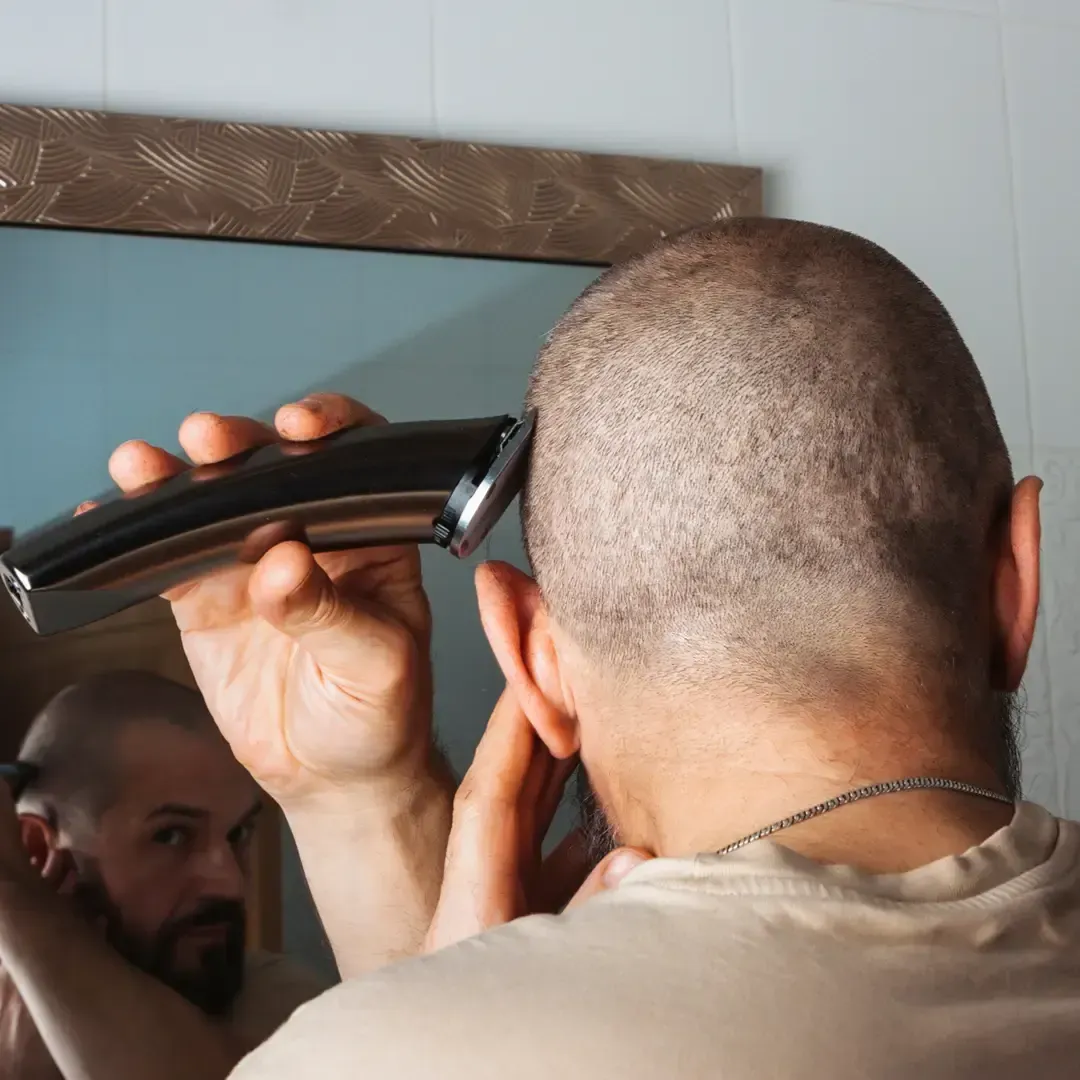
- The Buzz Cut: This classic, low-maintenance style can be a game-changer. By keeping your hair uniformly short, a buzz cut minimizes the visual difference between the higher and lower points of an uneven hairline, creating a clean, balanced look.
- Messy Fringe/Textured Quiff: Longer hair that falls forward can effectively cover an uneven hairline. A messy fringe or a textured quiff adds volume and movement, drawing attention away from the hairline itself.
- Side Part: A deep side part can be strategically placed to make a higher or more recessed side appear fuller. It creates an intentional asymmetry that camouflages any natural unevenness.
- Slicked Back: For those with sufficient hair length, slicking the hair back can create a sleek, uniform appearance, especially if the unevenness is subtle. This works well if the overall hair density is still good.
The goal is to find a style that makes you feel good. For more detailed advice, explore our Styling Tips to Minimize the Appearance of a Receding Hairline.
Cosmetic Solutions: The Power of Scalp Micropigmentation (SMP)
If styling isn't enough, or if you're looking for a more permanent and impactful cosmetic solution, Scalp Micropigmentation (SMP) offers an incredible way to address an uneven hairline.
SMP is an innovative cosmetic tattooing technique where skilled practitioners use micro-fine needles to deposit natural pigments into the scalp. These tiny, layered dots replicate the appearance of individual hair follicles, creating the illusion of a fuller, more evenly defined hairline. It's like a permanent, undetectable shadow of hair growth.
One of the greatest advantages of SMP is its non-invasive nature and immediate results. You walk out with a refreshed look, a new hairline, and a renewed sense of confidence. For those in Rhode Island, Cranston, Massachusetts, Boston, Connecticut, and across New England, Scalpmasters of RI specializes in delivering high-quality SMP treatments. Our unique selling proposition lies in our founder's extensive experience and artistry, ensuring precise, natural-looking hairlines and density that truly restore confidence.
Whether you're looking to redefine a naturally uneven hairline, create the appearance of more density, or camouflage areas affected by hair loss, SMP can be custom to your specific needs. It's an excellent solution for those who want a defined, symmetrical, yet completely natural-looking hairline without surgery. To learn more about this transformative procedure, visit What is Scalp Micropigmentation and How It Can Help.
Is an uneven hairline normal enough to ignore, or should you see a specialist?
Understanding whether your uneven hairline is simply a normal variation or a sign of something more is key to your peace of mind. For many, an uneven hairline is a subtle, natural feature that doesn't cause concern. However, for others, it might be a source of self-consciousness or an indicator of underlying hair loss.
We encourage a simple self-assessment: compare your current hairline with old photographs. Has the unevenness always been there, or has it changed significantly over time? Observe your parents' hairlines; if they have similar patterns, it's likely a genetic trait. You can also monitor changes by taking a photo of your hairline every month to track its progression. If it remains stable and you're comfortable with its appearance, it's probably normal enough to simply accept and enjoy. However, if you notice significant changes or it begins to bother you, it might be time to take action.
Key Signs It's Time to Seek Professional Advice
While many uneven hairlines are benign, there are specific signs that suggest your hairline unevenness might be linked to progressive hair loss, warranting a conversation with a specialist. These include:
- Rapid Hair Loss: If you observe a quick or noticeable change in your hairline's position or density, especially if one side is receding much faster than the other, it's a red flag.
- Excessive Shedding: Finding an unusual amount of hair in your brush, in the shower drain, or on your pillow could indicate active hair loss contributing to an uneven hairline.
- Visible Bald Patches: The appearance of thinning areas or actual bald spots, particularly if they are asymmetrical, suggests more than just a maturing hairline.
- Unusual Scalp Symptoms: If your hairline unevenness is accompanied by persistent itching, redness, soreness, or inflammation of the scalp, it's important to get it checked out.
If you're experiencing any of these concerns, or if your uneven hairline is causing you significant distress, we recommend seeking professional advice. A hair loss specialist can help determine the root cause and guide you toward the best course of action. For more insights on when to seek help, consider reviewing our Q&A with a Hair Loss Specialist.
What to Expect During a Consultation
When you decide to consult with a hair loss specialist, you can expect a thorough and personalized approach. Here’s what typically happens during a consultation:
- Detailed Scalp Examination: The specialist will carefully examine your scalp and hairline to assess the pattern of unevenness or hair loss, looking for signs of miniaturization (hair thinning) and overall scalp health.
- Discussing Medical History: You’ll be asked about your general health, any medications you’re taking, and any past medical conditions, as these can sometimes influence hair growth.
- Family History Review: Understanding your family’s history of hair loss can provide crucial clues, especially for genetic conditions like male or female pattern baldness.
- Diagnosis: Based on the examination and your history, the specialist will work to diagnose the specific cause of your uneven hairline or hair loss.
- Personalized Plan: Once a diagnosis is made, the specialist will discuss a personalized plan custom to your needs and goals. This might involve recommendations for cosmetic solutions like Scalp Micropigmentation, which can effectively redefine and balance an uneven hairline.
The goal is always to provide clarity, reassurance, and effective solutions, ensuring you leave with a clear understanding and a path forward.
Conclusion: Accept Your Look with Confidence
We've explored the many facets of uneven hairlines, from their common genetic origins to their potential as indicators of hair loss. The overarching message is clear: an uneven hairline is often perfectly normal, a natural part of human asymmetry, and rarely a cause for alarm. Our bodies, including our hairlines, are wonderfully unique, and perfect symmetry is more an ideal than a reality.
However, we also understand that an uneven hairline, whether natural or due to hair loss, can impact your confidence. The good news is that you have options. Whether you choose to accept your unique look, strategically style your hair to camouflage unevenness, or opt for a cosmetic solution, the power to feel good about your appearance is in your hands.
For those seeking a highly effective and natural-looking solution to redefine or balance an uneven hairline, Scalp Micropigmentation (SMP) offers a remarkable cosmetic option. At Scalpmasters of RI, based in Cranston and serving clients across Rhode Island, Massachusetts, Connecticut, and all of New England, our expertise lies in creating natural-looking hairlines and density that truly restore confidence. Our founder's extensive experience and artistic precision ensure results that are both transformative and incredibly realistic.
If you're ready to explore how SMP can help you achieve a more confident look, we invite you to learn more about the Scalp Micropigmentation procedure. Your hairline is a part of you, and with the right understanding and tools, you can wear it with pride.
Learn More
What's New
Latest Hair Loss Solutions & Guides